ACT Alianza y el CMI deciden celebrar en Suecia reuniones estratégicas en 2018

COMUNICADO DE PRENSA

ACT Alianza y el Consejo Mundial de Iglesias (CMI) anunciaron hoy de manera conjunta que celebrarán consecutivamente dos reuniones estratégicas de sus órganos rectores en Uppsala (Suecia) en el otoño de 2018. La Asamblea General de ACT Alianza, que tendrá lugar a finales de octubre, reunirá a más de doscientas personas de su membrecía en todo el mundo en su reunión cuatrienal. Después, el Comité Ejecutivo del CMI y miembros de la Asamblea General de ACT se reunirán el 1 de noviembre para compartir un día de aprendizaje y trabajo sobre el concepto de la diaconía ecuménica y el desarrollo sostenible, al que seguirá la reunión habitual del Comité Ejecutivo del CMI.

Miembros de ACT, la Iglesia de Suecia y Diakonia acogerán conjuntamente la Asamblea de ACT. Los anfitriones del Comité Ejecutivo del CMI serán la Iglesia de Suecia, la Iglesia Unida en Suecia y el Consejo Cristiano de Iglesias de Suecia.

Comentarios del CMI:
“La idea de celebrar una reunión conjunta surgió durante la Consulta internacional sobre la relación entre las iglesias y los ministerios especializados que se celebró en Malawi en septiembre de 2014. Una de las medidas específicas propuestas en el informe era contribuir a mejorar la relación de las iglesias y los ministerios especializados y debatir el papel de la diaconía”, dijo el Rev. Dr. Olav Fykse Tveit, secretario general del CMI.

Tveit añadió: “Con el fin de volver a nuestras raíces y nuestro origen, echamos la vista atrás a los modelos a seguir. Uno de ellos es el arzobispo sueco Nathan Söderblom, que ayudó a crear lo que más tarde se convertiría en el CMI. En 1930 recibió el Premio Nobel de la Paz por sus iniciativas transfronterizas”.

Comentarios de ACT Alianza:
“Tener la oportunidad de reunirse con el Comité Ejecutivo del CMI para pasar un día debatiendo sobre la diaconía ecuménica –el ministerio del servicio– será una excelente oportunidad para que los miembros de ACT Alianza profundicemos en nuestras ideas sobre la labor que realizamos, particularmente en el ámbito del desarrollo sostenible, junto con nuestros colegas del CMI”, dijo John Nduna, secretario general de ACT Alianza. “Esta conversación será una forma adecuada de concluir nuestra Asamblea y confiamos en que también sea un comienzo emocionante para el Comité Ejecutivo del CMI”.

Comentarios desde Suecia:
“La Iglesia de Suecia se congratula de acoger la Asamblea como una expresión visible de nuestro compromiso con ACT Alianza y una manera de compartir nuestro contexto con todos los miembros de la alianza”, dijo Erik Lysén, director de Asuntos Internacionales de la Iglesia de Suecia.

“En vista de los desafíos mundiales, como el cambio climático, el éxodo masivo y la pobreza, es imperativo que las iglesias y las organizaciones de desarrollo sean una voz profética a favor de la justicia en el mundo”, dijo Bo Forsberg, secretario general de Diakonia.

El Comité Ejecutivo del CMI, que se organizará inmediatamente después de la Asamblea de ACT, tendrá como anfitriones a la Iglesia de Suecia, la Iglesia Unida en Suecia y el Consejo Cristiano de Iglesias de Suecia.

En 2018 se cumplirá el 50º aniversario de la IV Asamblea del CMI, que tuvo lugar en 1968 en Uppsala, y el 70º aniversario de la creación del CMI en 1948 en Ámsterdam. Celebrar la Asamblea General de ACT y el Comité Ejecutivo del CMI en Uppsala en 2018 brinda la oportunidad de conectar con un importante hito de la labor del movimiento ecuménico sobre la justicia y la paz que ha determinado lo que ACT Alianza y el CMI son en la actualidad, y lo que serán en el futuro.
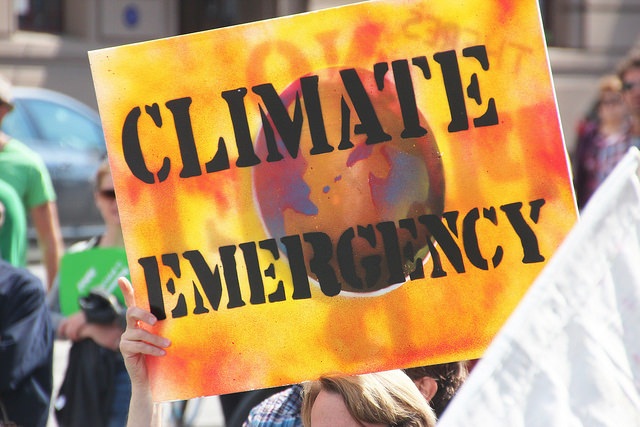
Climate emergency: COP22 and Civil Society Expectations

Photo: 3.bp.blogspot.com


Today the world already faces the beginnings of the worst impacts of climate change. A large number of poor and marginalised communities in developing countries face severe consequences due to increasing incidences of extreme weather events, sea level rise and unusual temperature variations.

Among the 13 deadliest floods faced across the globe in last five years, six were recorded in South Asia alone[1]. Small island countries such as Tuvalu are facing a crisis of their very existence due to rising sea levels. Unusual rising temperatures in various regions have not only disrupted the lives of people, but also severely impacted the flora and fauna of our living planet.

A large number of civil society groups are actively engaged across the globe in developing, advocating for, and promoting better adaptation interventions within vulnerable communities and raising climate justice issues within global platforms such as the UN climate talks, COP22, which started this week in Marrakesh, Morocco.

Within the series of COP processes, COP21 in Paris last year was a landmark event during which an ambitious agreement came into existence to address climate change. COP22, therefore, is a crucial COP during which further modalities of operation will need to be decided. We are at such a critical point in time to adequately address climate change that countries must now take immediate actions to raise their pre-and post-2020 ambition levels if we are to remain below the global average temperature 2℃. Therefore, we are expecting a great focus on renewable and energy efficiency measures from this meeting, which may set us on a path towards zero carbon development by 2050.

According to the Paris Agreement progress on adaptation will be tracked with a specific goal as it is linked with the five-year stock take mechanism; and civil society groups expect a clear cut road-map to achieve this goal in the spirit of this agreement. Clear guidance is also expected on the scaling up of finance for adaptation by 2020, as well as a well-defined role of the Adaption Fund referred to in the Paris Agreement. Loss and damage is rightly reflected as a separate focus within the Agreement, and it is expected that within the next year it should be adequately addressed under the Warsaw International Mechanism (WIM) and its Executive Committee (ExCom).

Of course, finance is the key for effective implementation of the Paris Agreement. It is expected that commitments made towards reaching USD 100 billion for climate finance will be fulfilled by 2020, and same amount annually for the period from 2020-2025. Furthermore, it is expected that climate funds from both public and private sources will be subject to strict social and environmental safeguards, and instruments will be in place that directly channel the funding to women and gender rights groups.

The world needs a successful COP22, in which agreements made in Morocco lead to better safeguards for the most poor and marginalised people across the globe struggling to adapt to the climate change emergency today. We hope world leaders come to this stage with a positive mindset and commitment to resolving each and every hurdle towards an adequate and ambitious implementation of the Paris Agreement.

____________

dinesh-vyasDinesh Vyas. Working as a Development Professional with CASA India since 1999 on issues related to Socio-Economic and Political Empowerment of poor and marginalized communities in India. Experienced in integration of Climate Change and DRR issues with regular development interventions. Closely associated with various Indian Networks on Climate Change. Engaged with recent Climate Change Advocacy related issues with UNFCCC processes. Currently, following progress on INDCs, Sustainable Development Goals (SDGs) and various other policies related to Development and Climate Change.
Earthquake in Ecuador – Voices from the people we serve

Credit: CLAI
Credit: CLAI


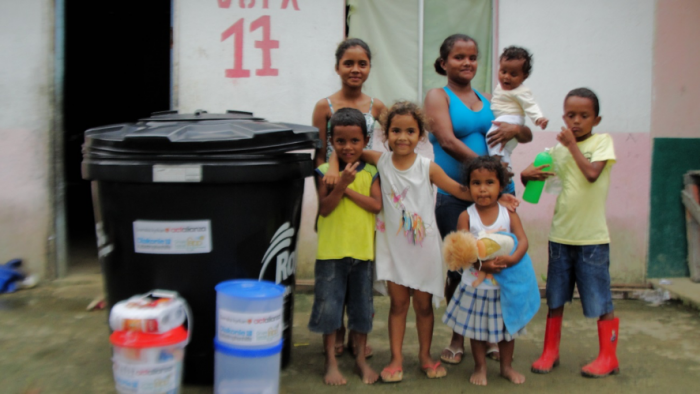
My name is Maria Isabel Gracia, I have four children and I live in Daule community, in central Guayas, Ecuador.

It is very difficult to express what happened that day. It was around seven in the afternoon and I was taking care of the baby when the earthquake started. I could not move and I was terrified because I lost sight of my three children, my baby fell down from my arms and everybody was screaming all around. My mother and father were laid down on the floor and I thought everybody was going to die. When it finished I realized that my house was very affected. Two interior walls fell down and many cracks were visible in the structure.

I felt alone, my husband was in shock and could not react. Finally, we decide to abandon the house and join the community in the front yard. We did not have any food at all, but after some hours many people started bringing relief aid for us.

I am very grateful because all my family is safe and nobody was injured during the earthquake. We would not have overcome without the support provided by all the generous people and organizations. The goods that we have received are very useful for us. The container where we stored the water is dirty and grows worms. If we want to drink safe water, we have to buy it and when we do not money, we need to go to the river but that water is salty.

We are happy to receive the water purificator because it is something we have never had before and will contribute to my family wellbeing.

Interview and picture by Carmiña Guerrero, CLAI

Refugees in Armenia – The story of Abdullah Haddad

Armenia
Photo: ART


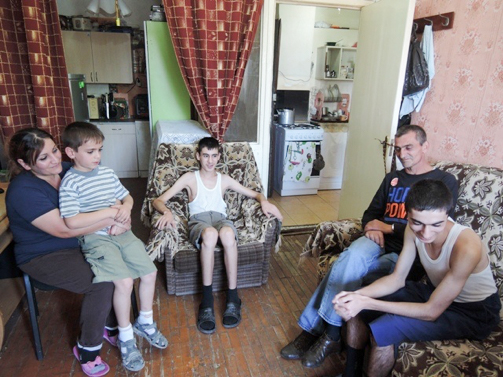
Abdullah Haddad, 46-year-old, is a hand master, preparing and repairing different things, though the current situation does not help him to provide for his family. The two elder sons were born with mental disorders. The elder one is 21 and the other one Shiraz is 18. They both attend a specialized center and the interaction with people helped them feel better, they started to speak and draw a little.

“I wish my sons were healthy and Syrian war hadn’t started,  said Abdullah who fled from Syria to Armenia in 2011 with his wife and three sons.

Photo: ART
Photo: ART

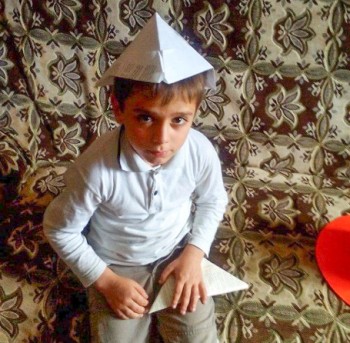
The younger boy is 8 years old. He attends an ordinary school and wishes to have a bicycle and colored pencils. He needs to color the paper hats that he makes himself and sells on holidays for 20-50 Armenian drams (0,04-0,05 USD) in the streets to buy ice-cream for his brothers. Anna, their mother can’t think of a job as she takes care of the boys.

Several NGOs assisted refugees families from Syria with a two-room flat – social housing (that is a real ruin), some furniture, a gas stove and refrigerator that is almost empty.

Yet, social protection is still a blurred concept to many refugees in Armenia. Access to good health care is not free.

According to humanitarian standards, “social protection is a human right which guarantees a minimum standard of living for all”. In close cooperation with other NGOs, the ACT Armenia forum has prepared and identified a list of the most vulnerable refugees requiring immediate assistance through the proposed action to the refugee crisis.

Do you want to help? Click HERE to read the ACT Appeal.

Message in a bottle

On the eve of the UN Summit on Migration and Refugees, ACT Alliance calls for increased investment in improving living conditions in fragile states and regions, more focus on the protection of vulnerable groups, and commitment to creating safe passages to Europe.

Syrian refugees walk in the countryside outside Messstetten, Germany. They have applied for asylum in Germany and are awaiting word on the government's decision. Meanwhile, they live in a room in a former army barracks in Messstetten, where church groups and other community members have provided a variety of hospitality. Photo: Paul Jeffrey
Syrian refugees walk in the countryside outside Messstetten, Germany. They have applied for asylum in Germany and are awaiting word on the government’s decision. Meanwhile, they live in a room in a former army barracks in Messstetten, where church groups and other community members have provided a variety of hospitality. Photo: Paul Jeffrey


1,046,600. That’s the number of refugees who applied for asylum in the European Union last year. A crisis for some. A tip of the iceberg for others – compared to the 65 million people forcibly displaced from their homes by conflict and persecution, including 21 million outside their home countries. For sure, Europe is no longer impermeable to migratory pressures and it highlights all the more that displacement is a global phenomenon, which has to be tackled globally, with a global sharing of responsibilities in solidarity.

Sadly, there is no sign at the moment that Europe – or rather the European Union – is ready to take its share of the responsibility. A quick glance at the policy put in place last year reveals one overriding objective: the fewer refugees that enter the European Union, the better.

Faced with the influx, Europe was overwhelmed and a self-preservation instinct prevailed. On 13 September 2015, Germany re-established border controls, even though it nonetheless welcomed 1.1 million asylum seekers last year. It was followed by Austria, the Czech Republic, Slovakia and Sweden. Hungary and Slovenia erected fences to prevent crossings. And the Balkan route was eventually completely sealed, leaving 55,000 asylum seekers trapped in Greece.

On 22 March, the EU signed a deal with Turkey in which it pledged to pay Turkey €3 billion for its help in stemming the migratory flow into Europe. This meant that all migrants and refugees who then crossed into Greece illegally – including Syrians – were to be sent back. In exchange, the EU committed to resettle 70,000 Syrian refugees from Turkey.

This model of externalising migration flows is the new trend. The European Commission and European Council are paving the way for other bilateral agreements of a similar kind, starting in the African continent. The effective blocking of migrants from reaching the EU and the readmission of deportees is planned as a key condition for the release of development funds.

The EU congratulates itself for destroying the human smugglers’ business models in the Aegean Sea and reducing the number of illegal and dangerous crossings. Still, an estimated 292, 246 asylum seekers and migrants have entered Europe since the beginning of the year, while 3, 198 have died or are missing over the same period in the Mediterranean Sea.

Progress on the resettlement and relocation of refugees has been extremely slow. In July 2015, EU member states agreed to resettle 22,000 refugees and in September 2015 to relocate 160,000 refugees from Greece and Italy. As of 5 September, 4,519 out of the 160,000 refugees had been relocated and 7,272 of the 22,000 resettled.

As faith-based organisations we have the knowledge and possibility to reach actors and areas that few other organisations can and work with people in need of protection in the Middle East, Africa and Latin America.  The idea of a society welcoming protection seekers and promoting solidarity is particularly important to us. Nonetheless, our call on European governments to take in their fair share of people in need of protection – from an EU internal as well as a global perspective – is grounded not only on moral and theological arguments. We understand that the drivers for migration are not going to disappear overnight. However, we fear that the envisaged approach, which combines border externalisation and protracted shelter can fuel more instability.

Interestingly, research by the Clingendael Institute of international relations says that “attempts to deal with the Syrian refugee crisis in the region of origin are likely to continue to be insufficient as long as the greater political and funding imperatives are geared mostly towards preventing irregular migration to Europe.”

The research states that leaving critical refugee protection and resilience objectives to governments who are motivated predominantly by a desire to prevent long-term settlement, obstructs refugees from establishing decent livelihoods.  It also «puts [pressure] on resources for host communities [that] may prompt both groups to resort to alternative or negative coping strategies, leaving them at risk of exploitation or recruitment by extremist groups”.

In ACT Alliance’s work with refugees and migrants in the horn of Africa, the Middle East and Latin America for example, we see that the voices of women and children are often in the shadows. Child marriages are common in refugee camps and among people seeking a safe space. A study by our members found that protection seekers are often at risk of sexual violence.

As the UN Summit for Refugees and Migrants takes place on 19 September in New York, we ask the EU to press for clear commitments and to invest in improving living conditions in fragile states and regions; to increase the focus on the protection of vulnerable groups and to create safe passages to Europe. These are critical for those in need of international protection and badly needed for migrants seeking resettlement, humanitarian admission, family reunification, worker mobility across all skill levels and student visas.

___________

agnesAgnès Bertrand has more than ten years’ experience in EU external affairs and human rights. She is currently the European refugee crisis advocacy officer for the ACT Alliance, based in Brussels, Belgium, since May 2016 and was previously the Middle-East policy officer for ACT Alliance EU. In her current position, she is charge of advocacy to the European Union in relation to its policies vis-à-vis refugees. Agnes is holds a PhD in International law from the School of Oriental and African Studies (University of London) and a masters in European law from the Sorbonne. She taught international law at SOAS and external relations of the

European Union at Science Po Lille.

Leave no one’s dignity behind

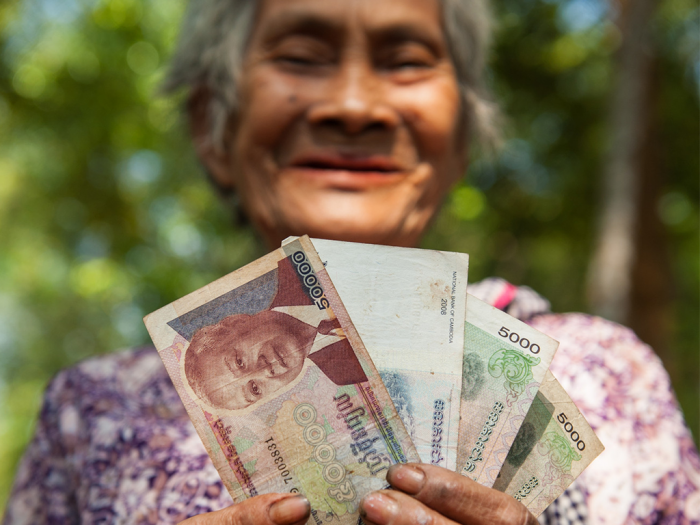
‘I plan to use this grant money to buy a sack of rice for my family," said Lim Ean (79), from Cambodia. ACT members provide CASH transfer in several emergency responses. Photo: Paul Jeffrey

‘I plan to use this grant money to buy a sack of rice for my family,» said Lim Ean (79), from Cambodia. ACT members provide CASH transfer in several emergency responses. Photo: Paul Jeffrey


A group of mostly elderly women in Zinga village in Tanzania tell me what it’s like to receive cash transfers from Tanzania’s flagship social protection programme the Productive Social Safety Net. Since the cash transfer is targeted to the “poorest of the poor” (about 10 percent of the village), I ask what reactions they get from neighbours who do not get the transfer. The reply is that some of their neighbours say “they are only getting the cash because they are old and useless women”.

There has been a great deal of talk about social protection in Agenda 2030. Five of the Sustainable Development Goals (SDGs) goals explicitly highlight social protection as a tool for reaching them. Yet, social protection is still a fuzzy concept to many. Access to health care and education, perhaps, sound more familiar. Or pensions and child grants. All of these make up social protection. Things like cash transfers, free school lunches and free access to child care, schools and clinics. Most importantly, social protection is a human right which guarantees a minimum standard of living for all.[1]

Cash-in-hand in particular has proven to be one of the most efficient forms of poverty eradication, and is also rapidly gaining attention in humanitarian work. It rests on the assumption that people living in poverty know best for themselves what they and their families need, therefore they should have the choice on how to spend the money rather than development agencies.

It is when we combine poverty eradication with reducing inequalities that social protection gets really powerful. This means advocating for public social protection as a part of economic justice and fair redistribution of wealth. It includes stopping illicit financial flows and tax dodging by multinational companies, and calling for transparency in government spending as a necessity to make funds for social protection sustainable.

What stake do churches have in this? Religious actors of all faiths have a long tradition of discussing the issues brought out by high inequality – both in terms of the necessity to share with the poor, but also possibly the problematic sides of wealth. Churches and faith based organisations are often providers of social services and assist people living in poverty through diaconal activities. Churches have also many times, as parts of civil society, played an important role in calls for social justice. This gives faith based actors a voice in the discussion about inequality and social protection.

Two ACT Alliance members have initiated a collaboration on social protection as a tool to fight inequality: Church of Sweden, which works extensively with promotion of social protection as a rights-based tool for poverty eradication, and Norwegian Church Aid, which addresses the issue of global inequality through campaigning against tax evasion and capital flight from developing countries.

Back in Zinga village, at a workshop on tax funded social protection with partner organisations, we learnt that there is also another role for faith based actors to play in reaching the Sustainable Development Goals.

Because it is not just to give out cash transfers anyhow that does the trick. Many social protection programmes that are funded by development partners, such as the one in Tanzania, are targeted to the very poorest. Not only does such a programme design bring challenges in terms of accuracy and costly poverty assessments. It also goes against the human rights approach to social protection – to receive a benefit not because you are considered as “old, poor and useless” but because you are a human being entitled to social and economic rights.

Guided by the belief that every human being has the right to a life with dignity, faith based actors should speak up for rights-based social protection initiatives that leave no one behind, and compromises  no-one’s dignity.

To end poverty and reduce inequality with everyone’s dignity preserved all the way, that is what I hope that faith based actors will advocate for during this year’s High Level Political Forum underway this week in New York, and onwards to 2030.

__________

[1] Universal Declaration of Human Rights (art. 22), International Covenant on Economic, Social and Cultural Rights (art. 9, 10).


gunilla_smallGunilla Palm is a policy adviser for social protection and sustainable livelihoods at Church of Sweden, a member of the ACT Alliance. Her background is within human rights and conflict research. She tweets @GunillaPalm.
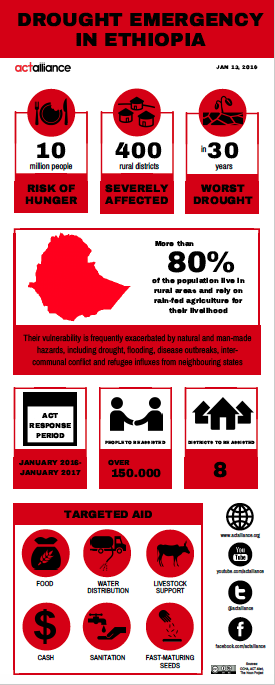
 

[INFOGRAPHIC] Drought emergency in Ethiopia

The current food insecurity crisis in Ethiopia appears to be a result of a combination of factors, including the pre-El Niño failure of the spring rains and the El Niño induced late onset, erratic and early cessation of the main summer rains.

Click on the image to see the infographic

Screen Shot 2016-01-18 at 09.48.56


París establece una señal para un clima futuro resiliente y más equitativo

COMUNICADO DE PRENSA

El red international de desarollo ACT Allianza, bienvenida el borrador del Acurdo Global de cambios climáticos que es adoptado ahora en Paris despues de anos de negociasiones entre los países.

» Cientos de ciudades, regiones, empresas e iglesias han demostrado un fuerte compromiso para eliminar las energías basadas en fósiles para mediados de siglo. Esto marca un hito histórico en la lucha contra el cambio climático y nos muestra un futuro esperanzador, más sostenible, resiliente y equitativo”, dice el Arzobispo y el embajador mundial de la Alianza ACT Thabo Makgabo, de Sudáfrica.

El acuerdo de París universal incluye por primera vez el compromiso de todos los estados para mantener el calentamiento del planeta por debajo de 2 grados. Con el objetivo de mitigación a largo plazo, un mecanismo para aumentar dinámicamente los compromisos de cada uno de los países con el tiempo, las normas comunes de transparencia así como un paquete de apoyo a las personas más vulnerables, están todos los elementos necesarios a bordo para seguir adelante en la lucha contra el cambio climático.

«Ahora hacemos un llamamiento a todos los gobiernos nacionales para cerrar los flecos que quedan todavía y aquellas cuestiones que aparecen indebidamente en el acuerdo debido a los países que no están dispuestos a asumir su responsabilidad», dice Mattias Söderberg, jefe de la delegación alianza ACT.

Mattias Söderberg continúa: «Se necesita mayor acción contra el cambio climático y que ésta sea más rápida para abordar adecuadamente las preocupaciones fundamentales de las personas más pobres y vulnerables. La aplicación del Acuerdo de París debe ser aumentada e incrementada por medidas a nivel nacional y la cooperación internacional”.

Arzobispo Thabo Makgabo dice: «Todas las personas somos parte de la Creación, y mientras estamos agradecidas por esto, también tenemos que reconocer nuestra responsabilidad de cuidar de la tierra. Esta responsabilidad nos fue dada por Dios, y por lo tanto nosotros y nosotras, como los grupos religiosos de todo el mundo tienen que liderar el camino »

Las delegaciones religiosas conjuntas de la Alianza ACT, la Federación Luterana Mundial y el Consejo Mundial de Iglesias han estado formadas por más de cien personas durante las dos semanas cumbre contra el cambio climático.

Para más preguntas: Jefe de la delegación de la Alianza ACT, Mattias Söderberg, en msd@dca.dk o + 45-29.700.609.

Paris agreement must ensure resilience for future generations

PRESS RELEASE

International humanitarian and development network ACT Alliance welcomed the decision to label Thursday 3 December as “Future Generations Day” at the UN climate talks, stating that decisions in Paris will be of a huge importance for children and youth for generations to come.

“Negotiations here in Paris refer to 2050,» said Signe Cecilie Mathiassen, a youth delegate from the ACT Alliance. «However, how many of the delegates will actually see the results themselves in 2050? They should deliver an agreement they can be proud to hand over to their children and grandchildren.»

While highlighting the need to consider future generations, the negotiations to reach an agreement are continuing, with some progress being made in talks about loss and damage.

“On a day where we are asked to consider youth and future generations, I am happy to note that there is some progress in the negotiations, particularly on the issue of Loss and Damage,» said Mattias Söderberg, head of the ACT Alliance delegation at the Paris talks. “Developed and developing countries have very different views on the need to address situations where it is no longer possible to adapt to the effects of climate change. This is unfortunate as this represents the exact worst-case scenario for the poorest and most vulnerable people. With no possibility to adapt, they are forced to migrate, or even to become refugees.»

“We are happy to note how parties now start to look for common ground and that developed countries, including the US, start to acknowledge the need to address loss and damage,» he continued. «The COP21 agreement must answer to the needs of the poorest and most vulnerable people, and we cannot leave Paris with an agreement where loss and damage is not a solid part of the text.”

ENDS

For more information contact Mattias Söderberg, head of the ACT delegation, on is +45 297 006 09.

Faith leaders urge action at UN climate talks

Over 20 faith leaders, with youth, political and civil society representatives sat down for a unique lunch at COP21 at a table with knives and forks but no food, in a public demonstration of their hunger for climate justice. The stunt was part of the Fast for the Climate initiatives on December 1st in Paris.

Yeb Saño, former Philippines’ chief climate negotiator, the Most Rev. Dr Thabo Makgoba, Archbishop of Cape Town, and Imam Ibrahim Saidy of Norway were among the ‘diners’ taking part in the Fast For The Climate at the UN climate summit in Paris.

The event was a chance for the campaigners to tell gathered journalists and COP delegates why they had chosen to abstain from food: to show solidarity with communities worst affected by global warming and make a compelling call for climate justice.

Other faith leaders at the empty lunch table included Archbishop Antje Jackelén, Primate of the Church of Sweden, a member of the World Council of Churches (WCC), Bishop of Salisbury the Rt. Rev Nick Holtam, and the Rev. Dr Martin Junge, general secretary of the Lutheran World Federation (LWF).

Together with 10,000 people worldwide, they were part of the global initiative, which takes place on the first of every month. Besides the demonstration, the Fast for the Climate day at COP21 also included an official side event at the climate conference and the celebration of the breaking of the fasting.

Commenting on the inter-faith initiative, Junge stressed the spiritual aspect of fasting. “Since time immemorial, we have fasted in order to get space in our minds and hearts for renewal. So when I fast for the climate, I’m fasting first to get that mental space, that very strong focus, on vulnerable people suffering the most from climate change“, said the head executive of LWF.

“Climate change is an issue of inter-generational justice. That’s why I am fasting for the climate with a particular focus on the youth, who are already taking – and will take – the brunt of what will happen if we remain inactive on this issue”, added Junge.

For Archbishop 
Dr Antje Jackelén fasting is always a powerful reminder of the interdependence among people and with the planet. “Fasting for the climate is an expression of the global commitment in the worldwide church”, she said. “For all of our churches involved in the initiative, this has to do with leadership, values, lifestyle and justice”, added the Swedish church leader.

ACT Alliance general secretary Dr John Nduna fasted in solidarity with those who don’t have food on the table due to climate change. “It’s our responsibility, as an international community, to ensure that climate change is addressed and to reverse the problems that communities are facing, for the sake of those who have nothing to eat, whose children go to bed hungry», he said.

Later the same day, Fast for the Climate enthusiasts gathered in a small church downtown Paris for the breaking of 24-hour fast and feast to celebrate unity and the solutions for a better future. Organizers estimate that about 10,000 people worldwide were fasting for climate action.

Addressing the participants of the celebration, Yeb Saño, who inspired the Fast for the Climate campaign, emphasized that the initiative is also a mechanism of pressure upon negotiators gathered at COP21. “We want to tell the world leaders here in Paris, that, please, don’t disappoint the world. The whole world is watching”, he said.