 ACT Alliance is the largest Protestant/Orthodox alliance in the world that engages in humanitarian, sustainable development and advocacy work, with over 140 members present and working in 125 countries around the world.
Together, we strive for a world where all may live with dignity, justice, peace and full respect for human rights and the environment.
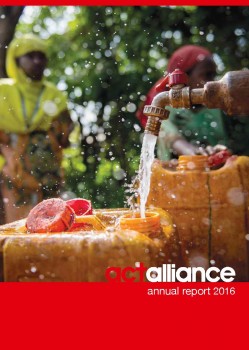
Annual Report 2016 ENG
Annual Report 2016 ESP
The 2030 Agenda for Sustainable Development, including Sustainable Development Goals (SDGs), adopted by the UN General Assembly in September 2015 brings together 17 goals with 169 targets in an ambitious and comprehensive programme to transform the world by 2030. As such, it presents both huge opportunities and challenges. Much has been written about the SDGs, and it is beyond the scope of this paper to analyse the framework itself. However for ACT Alliance, as it moves to develop a strategic approach to its engagement with the framework, as important as the goals themselves, are the set of common principles that underpin it and which parallel ACT’s own understanding of transformational development.
ACT Strategy on SDGs (ENGLISH)
ACT Strategy on SDGs (SPANISH)
ACT Strategy on SDGs (FRENCH)
ACT Alliance recognises the importance of enabling the empowerment of its local, national, regional and global structures to raise the visibility of, and engage people in, humanitarian, development and advocacy issues relevant to their contexts under the ACT Alliance brand. Branding under the ACT Alliance brand enables members to show they are part of an international collaboration.
However, ACT Alliance also recognises that social media, regardless of the localisation of the content, has a global reach that can impact positively or negatively not only on those groups involved in social media communication, but also on the over 140 member organisations that associate with the ACT Alliance brand.
This is because the ACT Alliance brand represents not only individual member organisations or groups, but a global network which must be taken into account in all forms of global communication. Social media content and messaging in the name of the ACT Alliance brand that is not in line with the ACT Alliance policies and values risks damaging the ACT Alliance brand for all members of the alliance.
This policy serves to ensure consistent messaging and communication in the name of ACT Alliance across social media channels in line with the ACT Alliance brand. In this way the brand can be managed, protected and preserved. The policy stipulates the requirements and responsibilities with which the ACT Alliance secretariat staff, ACT Alliance structures such as ACT Forums, Communities of Practice and Advisory Groups, and staff of ACT Alliance member organisations must comply when communicating through social media channels under the banner of, on behalf of, or in the name of ACT Alliance.
ACT Social Media Policy June 2017 (English)
ACT Política-Redes Sociales junio 2017 (Spanish)
ACT Politique-médias sociaux juin 2017 (French)
ACT National, Sub-Regional and Regional Forums policy
ACT forums are shared platforms or spaces comprising ACT members and observers who are engaged in a particular country, sub-region or region. The main objective of an ACT forum is to increase the effectiveness and impact of the humanitarian assistance and development work being undertaken by members through improved coordination.
National, Sub-regional and Regional Forums
In most cases, forums are most effective when members work together at the national level as they can undertake joint analysis of the country together and explore opportunities for collaboration in their humanitarian, development and advocacy work. However, at times, it is more effective for members to work together in sub-regional and regional forums; for example, in regions where there are few local ACT members (e.g. the Pacific, Eastern Europe and the Middle East) or when the work of members transcends national borders (eg: refugees, food crises, political conflict etc). In some regions, national ACT forums have also met together regionally to share information and develop regional strategies (e.g. Europe and North America). This Policy is therefore applicable to both national, sub-regional and regional forums.
An ACT forum is part of ACT Alliance and is not a separate entity. ACT does not promote the establishment of formalised structures with statutes, by-laws etc but rather encourages members to develop cooperative ways of working which should be defined by a Memorandum of Understanding.
The ACT Alliance National, Sub-Regional and Regional Forums Policy is available in English, French and Spanish.
ACT National, Sub-Regional and Regional Forums Policy 2018
ACT National, Sub-Regional and National Forums Policy 2018 FR
ACT National, Sub-Regional and National Forums Policy 2018 SP
ACT Code of Good Practice, with appendix on non-proselytism statement

The ACT Code of Good Practice is an organisational level commitment to continuous improvement and movement toward best practice principles. It complements the ACT Code of Conduct 2 which serves as a guide for individual ACT staff to make ethical decisions in their professional lives and at times in their private lives.
The Code of Good Practice for the ACT Alliance sets out common values, principles and commitments that will shape the humanitarian, development and advocacy work of ACT members. It outlines the minimum professional and ethical standards required from all ACT members.
The Code of Good Practice provides principles for all ACT members focusing in four key areas:
- Overarching principles – the fundamental principles that guide our work as an alliance
- Organisational principles – the principles that promote professional management, leadership and support in ACT member organisations to guide how we work. They provide the foundations for effective and accountable programming
- Programmatic principles – the principles that guide our actions in ACT member programmes addressing capacities and promoting justice and equality in line with ACT policies and guidance
- Relational Principles – the principles that support ACT members working together and promote collaboration, cooperation and partnership among alliance members
The Code of Good Practice is available in English, French and Spanish.
ACT Code of Good Practice 2024
ACT Code de bonne pratique 2024
ACT Código de Buenas Prácticas 2024

 ACT Alliance is the largest Protestant/Orthodox alliance in the world that engages in humanitarian, sustainable development and advocacy work, with over 140 members present and working in 125 countries around the world.
