Winning the Peace: Peacebuilding and Climate Change in Mali and Somalia

ACT, NCA, DCA Launch Report on Peacebuiling and Climate Change. The report is available here.

Climate change is a reality, and it is happening now. For millions of people, living in poor and vulnerable countries the effects of global warming are a daily challenge. In some countries these effects may also become drivers of conflict, which may escalate
into violence and war.

As development NGOs, with a presence in many of the world’s conflict zones, we are concerned not only about the conflicts themselves, but also about the drivers, which may unleash or fuel the conflicts. To end the conflicts, and to win the peace, the drivers must be addressed.

We commissioned this study to learn more about the links between climate change and conflicts, and more importantly, to explore if efforts to adapt to the effects of climate change, can contribute to peace building.

We selected two countries, Mali and Somalia, where there is a documented effect of climate change, and where people and communities have been facing violent conflicts for many years. We focused on the concerns, and advice coming from people on the ground, people who face both the effects of climate change, and the horror of conflicts.

Their message is clear. There is a need for adaptation, and especially conflict-sensitive adaptation measures on the ground, involving women and youth, as well as those in authority. Governments, donors, and implementing agencies should all listen to their advice. We can win the peace!

A new threat facing Afghanistan Education: COVID-19

At the time of writing, 145 people have been confirmed to have contracted COVID-19 so far with Afghanistan’s very limited testing facilities; the outbreak poses a major challenge to a country already struggling with deep seated poverty, long-running conflict and an extremely fragile health system and lacking school facilities.

Approximately 3.7 million children are out of school, and 60 percent of those children are female. That’s 1 in every 3 girls attending school, a lack of female teachers, specifically in rural areas, may be a reason for low enrollment of girls. In half of all Afghan provinces less than 20 percent of all teachers are female. About one third of girls are married before the age of 18 and are then urged to discontinue their education. In some schools there is lack of sanitation and access to clean and safe private toilets. Children who come from low-income homes are forced to work at school-age. Teachers often find it difficult to provide quality education with a lack of supplies and resources, some classes are held under makeshift tents; others are held out in the open.

Apart from the challenges mentioned, the education ministry announced the closure of all public and private education institutions over fears of the spread of the COVID-19. Afghanistan still has not announced any policy for education while the education institutions are closed. There is complete disconnect between teachers and students. The other challenge is lack of access to internet and technology due to low literacy rate in the target areas. The students are free with no tasks during the day which leaves many students unable to connect to distant learning moreover forgetting what they learned during the year.

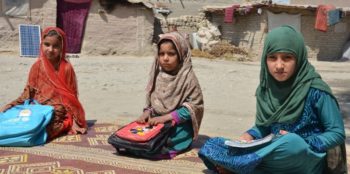
Shazia student of grade 4 with her two sisters in grade 2 and 3 says, “I am student of Kotabzai Girls High School in Mehtarlam, Laghman province. I have not seen my teachers nor have we contacted since the closure of schools. We are free during most of the day with no school work to do. I also visited one of my teacher’s home to ask if there is any work to be done but he was not at home. I want to request the teachers to prepare a small package of learning material for the students to be engaged in while we are at home. I miss my friends at school. We cannot go out to play as well. I try to help my younger siblings in their school work whenever I am able to. But then again, they do not have much to do like me.”

Increasing awareness to prevent Coronavirus in Sindh / Pakistan

In coordination with the Health Department, District Administration and community member, through Health Management Committees and Village Health Committees, Community World Service Asia is implementing its MNCH[1] health projects in Umerkot and Sujawal districts of Sindh since 2015.

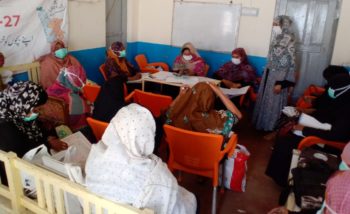
Citing the COVID-19 pandemic in the country, the health team is raising awareness as part of a larger effort to drive social change. The health sessions on coronavirus focuses on limiting movement and avoid gatherings to prevent spreading this further. Poor hygiene is an important factor in the spread of infectious diseases. For this reason, the sessions, delivered in local languages, provide signs and symptoms of the infectious disease. In addition, the community members are sensitized to take precautionary measures to reduce the spread of the disease.

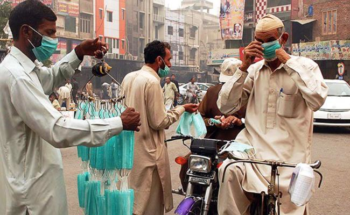
To reduce the risks, people are advised wash hands with soap and water or alcohol-based hand wash. In addition to other precautionary measures, the community members are guided to wear masks and avoid close contacts in public areas, especially.

Community World Service Asia has organized 32 sessions with the project staff, health workers and people in the community. An estimate of 840 have actively participated in the health sessions.

[1] Maternal, Newborn & Child Health

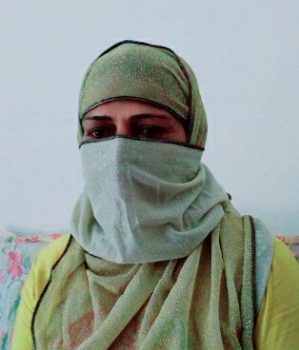
Rukhsana’s life at home during the Pandemic situation in Umerkot, Pakistan

A school teacher shared her story, engaged in the education project[1] in Umerkot, of how her family is coping with the current COVID-19 pandemic.

Rukhsana Yasmeen is a teacher at the Government Boys Primary School, Police Thana. “The education of students in Umerkot have been effected very badly due to the lockdown imposed by the government to control the spread of coronavirus,” shared the concerned Rukhsana, “They will forget all that was taught to them. In addition, school not only serve the purpose of providing education, it also gives children a chance to interact socially and keeping them energized and fresh. With all this shutdown situation, children will be frustrated and baffled. It is difficult to say whether the students will be able to perform well in the final examination to be held in June as assigned by the government.”

The economic situation in Umerkot is tight and restricted nowadays due the lockdown. It has become troublesome for the daily wage labor force to find work and earn the little income they earned before this crisis. “Sitting at home with no or less money increases conflicts among the family members that adds on to the stress, uncertainty of when the situation will be controlled and other issues.”

Rukhsana’s husband is a labor worker who earns a daily wage for his family. In the current situation, he is unable to go out of the house to find work. “I am worried of how we will manage the monthly expenses such as rent, food and other household essentials with the single salary of mine. How long can we bear to live like this?”

The Sindh government has announced the provision of ration bags to people who earn a daily wage for their families. According to Rukhsana, the government officials have been affected by this crisis. The government should take some measures of supporting them as well. In addition, Rukhsana came to know that the Government of Sindh has deducted 5 percent of their salaries for contribution in relief funds. “Our future seems unclear.”

At home, we try to maintain the distance. However, with a house of two rooms only, it is difficult to cope with all this distance. We are trying to follow social distancing as much we can but practically it seems very difficult.”

Keeping the children busy and engaged in study at home throughout the day is not an easy task according to Rukhsana. “There is very little entertainment resources at home. They do study for a while but cannot be engaged in school work the whole day. At the precautionary end, we are try to wash hands from time to time and use clean kitchen utensils when cooking and eating. Moreover, we are not drinking cold water nor taking a bath daily rather on alternative days. We ensure cleanliness at home as it the only way of keeping us safe at home from this pandemic situation.”

“It is good to see how efficiently our government is working to control the spread of this infectious disease. All shops, malls and other public places have been shutdown to avoid social gatherings. Never did we think that we will experience such a stressful state of life. Nevertheless, we will overcome positively and safely.”

[1] Early Childhood care and Education supported by Act for Peace

Community Mobilizer Bharat helping others in this difficult time

In the current COVID-19 pandemic state, it was a good decision to close down offices, shops and malls according to Bharat Kumar, Community Mobilizer at Community World Service Asia in Umerkot. “I will secured and protected when working from home, however, it is not easy. The strict lockdown in the city have deserted the streets and market areas. No one is to be seen in the streets. It is not a comforting sight.

The district administration and security departments are putting all efforts to ensure social distance through the lockdown and barriers all over the roads. It is still disappointing to see how some people are still not taking this situation seriously. They are going out without wearing masks or gloves. The police however is playing an important role in sensitizing the people whenever they see them not wearing the protective gear.

The social media has been filled with many awareness messages and precautionary measures the families have to take to prevent the spread of coronavirus. It is difficult to see children not playing or families not meeting their relatives or friends. We hope that this situation settles down soon and people can move around freely like they used to.

Partan Rai, residing in Umerkot, shared that fear of disease is not as frightening as the fear of running out of food. People working in the labor force, earning daily wages for their families have been most vulnerable in this situation. They are unable to find work which does not allow them to earn money. It is difficult to make ends meet for them especially.

We are trying to stay at home as it is the safest option. As a humanitarian worker, I feel vulnerable as I am unable to help those in need at these gravest times. I have been nominated to be part of the Corona Relief Committee to serve my community. I feel proud and am prepared to perform any task appointed by my organization to help those who have been affected by this difficult situation.”

Building Awareness to Prevent the Spread of Coronavirus in Umerkot, Pakistan

Mukesh working with Community World Service Asia in Umerkot shares his experience of the current situation. “The closure of offices have put on hold all activities. People are living in isolation, shops are closed and no one is risking going out.

Mostly daily wagers are suffering due to the current lockdown situation. They do not have the resources to serve to their families as they cannot earn money at this time. During my interaction with some people regarding COVID-19 awareness, a labourer, Ghulam Hussian, shared that fifteen workers, including him, have not been able to work at the construction site as a result of the lockdown. Jobs have been finished as the contract ended.

Government and district administration are taking initiatives to combat with the virus. They have formed committees to build awareness and sensitize people regarding coronavirus. A local shopkeeper, Ramzan, in Malkani Sharif shared that he has limited resources to sell in his shop. He fears that if he run out the resources, it will get difficult for the people in the community as there are limited shops that sell essential goods in Malkani Sharif. People will have to travel long distances which is more crucial as the lockdown has forced public transportation to stop.

This is a scary situation for my family. I am the sole bread earner in my family. If the situation is not controlled and this lockdown is extended for more months to come, it will become difficult to manage resources. I am very anxious due to the current situation, because there are some people who are not taking this situation seriously. They need to take preventive measures in order for things to become normal again.

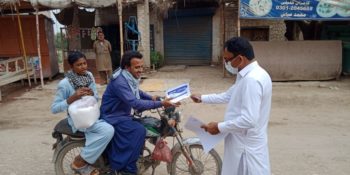
As a responsible citizen, I am taking steps to build awareness among my family and relatives. I am constantly sharing news and updates on social media and advising people around me to follow the instructions given by the government of self-isolation, staying at home and avoiding gatherings. Moreover, a group of us, mostly my friends, have distributed one thousand brochures which provide information to prevent the spread of this disease in Badin and Umerkot districts. In addition, we have also provided food assistance to the vulnerable communities.”


Strengthening Humanitarian Response during Emergency of COVID-19

COVID-19 is rapidly spreading globally and taking many precious lives from more than 177 countries. To mitigate the current situation, Sphere has developed a document, Sphere standards and the Coronavirus response, which can help organizations build awareness on how individuals, communities and humanitarian actors best respond to the COVID-19 outbreak? How can the Sphere Handbook guide our response? The document is available on Sphere website.

In Pakistan, Community World Service Asia, took the initiative to translate the guidelines from English to Urdu and Sindhi for the organizations working in response of COVID 19. The translated version of guidelines have been shared with Accountability Learning and Working Group (ALWG) and with Asian Disaster Reduction and Response Network (ADRRN) for further sharing with their partner organizations. The guidelines have also been disseminated to groups on WhatsApp.

The Capacity Enhancement Program (CEP) team is regularly conducting Skype meetings with different organizations and networks regarding the current emergency of COVID- 19 to know their strategies in current situation and what measures they are taking to overcome the losses. Below are the glimpses of discussion points.

  • Most NGOs & INGOs working from homes, following the instructions of government.
  • Only the health and awareness related activities are commencing through different methods.
  • Many organizations like Agha Khan Foundation, Secours Islamique France (SIF), Pak Mission Society, Doaba Foundation are devising their strategy to work in this emergency.
  • In discussion people shared that this emergency is very unique and we don’t have any experience in this emergency, so we need time to devise the strategies.
  • As we are in capacity building program, we are proposing few online courses for people who need assistance regarding COVID-19.

The labor class and daily wage workers are most vulnerable because their livelihood is disturbed.

Haris, bringing hope to fight against COVID-19

Haris resides in Rawalpindi, Pakistan and works as a Human Resource (HR) officer for the Community World Service Asia, based in Islamabad. His duties comprise organizational and project based recruitment, staff care, calculating and managing employee compensation & benefits, performance management and working on identifying staff capacity building training and development opportunities.
 
“As an HR staff, we ensure that our employees are safe and that is why we had allowed work from home policy during this pandemic. We also ensure that every employee is calm, doesn’t worry about the global economic crisis”, he states.
What is his experience during this difficult time?

“Since Corona became a pandemic, our lives have changed a lot. Everyone is staying at home to prevent the spread of the deadly disease. We have been directed to continue our official work from home.

 There are pros and cons of working at home. The two hours consumed in the travel time, to and from home to office, are being utilized in work. However, I miss spending time with my colleagues as they served as a source of motivation and energy during work. The lunch breaks at the office were a time to mingle and socialize with everyone in the office. The refreshed us physically and mentally. Asking colleagues how they are doing or how their day been so long or playing small games after lunch brings joy and relief to us. That is what I miss the most.

When I look out from the window of my room I see cars parked in the streets outside their homes. The streets are deserted streets which is stressful sight. But it is a relief to see that families are safe and sound at their homes.

 I had to go to the hospital to vaccinate my one month old daughter. The streets and markets in Islamabad were quiet, with no one out. The Government has ordered businessmen to close all shops other than pharmacies, hospitals, grocery stores and petrol pumps. My visit to the grocery store was not pleasing as well. A person or two were to be seen wearing protective masks and gloves. Even the shop keepers have gloves and masks on to protect them.

 The Pakistan Army and policemen our working together and are stopping people who they seem are in groups and giving them awareness regarding the steps that they can take in prevention of this disease. They are encouraging people to stay at home rather than going outside with no urgent purpose in mind.

 The fast pace life did not gave us much time to spend with our families. This critical situation, however, has forced every person to stay at home and spend time together at home. I am very hopeful that things will get back to normal soon, hopefully in a few months. We must be hopeful at this difficult time!”


News from ACT Japan Forum, April 2020

In April 2020, CWS Japan launched a new project called “Citizen Social Worker Development Programme” with two other FBOs in Japan. To start with, we have recently published a training guidebook for citizen social workers for emergency disaster response.
 
During the last operation for Typhoon Hagibis, we witnessed some cases of vulnerables left behind who were elderly with dementia and family with intellectual disabilities. These cases are only the tip of the iceberg. These people tend to be isolated from communities even in peace time. In this project, we focus on elderly, disabled people, migrants and minorities who could be vulnerable to disasters. When disasters occur, all the public services including welfare services become dysfunctional due to the overflow of information and requests from ordinary citizens.
 
We are currently establishing a framework for mutual help in communities through citizen social workers’ training as well as networking with churches and FBOs in Japan as a part of our DRR scheme for ACT Japan Forum. At the time of next disaster, ACT Japan Forum would like to play a role in dispatching caseworkers and volunteers to rescue those vulnerable people in the affected sites.
 
Additionally, we also developed a questionnaire sheet for evaluating the vulnerabilities of target groups as an annex to the booklet which will be used for household surveys. By utilizing these tools, We are hoping to make invisible vulnerable people to disasters to be more visible to serve.
 
For more information please contact Ms. Yukiko Maki, CWS Japan, E-Mail y.maki@cwsjapan.org.