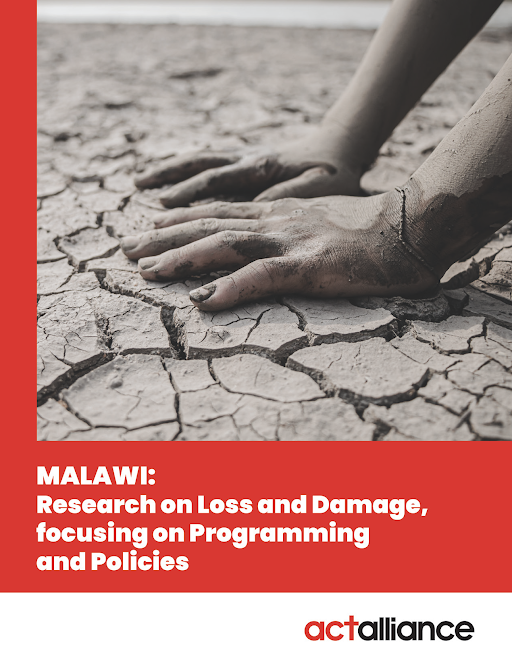
The ACT Malawi Forum, in partnership with its national member the Foundation for Sustainable Community Development, has released a new report examining climate-related loss and damage policies and programming in Malawi. The study provides a comprehensive assessment of the country’s policy, financing, and data landscape, highlighting critical gaps that are undermining effective response, recovery, and long-term resilience.
The report underscores the urgent need for a more coordinated, well-funded, and inclusive approach to addressing loss and damage, particularly as climate impacts intensify across vulnerable communities.
Key findings from the report include:
- Malawi lacks a dedicated Loss and Damage framework: While policies such as the National Climate Change Management Policy and Disaster Risk Management frameworks exist, they do not adequately address loss and damage, particularly in recovery, compensation, and long-term resilience planning. The report highlights the need for a standalone national strategy with clear roles, financing mechanisms, and implementation pathways.
- Significant financing gaps are limiting response efforts: Malawi has no dedicated funding mechanism for loss and damage and relies heavily on unpredictable external funding. Climate-related damages far exceed available resources, with events such as Cyclone Freddy causing losses estimated at MWK 750 billion, compared to far lower national allocations for climate action.
- Access to global climate finance remains constrained: Despite the establishment of international mechanisms such as the Loss and Damage Fund, Malawi faces barriers including complex application processes, strict eligibility criteria, and delays in disbursement, limiting timely recovery and reconstruction.
- Data limitations are undermining effective planning: Inadequate data systems hinder accurate assessment of both economic and non-economic losses. The report notes gaps in tracking slow-onset events such as drought and land degradation, as well as the absence of localised vulnerability assessments to inform targeted interventions.
- Institutional capacity and coordination challenges persist: Limited technical expertise, fragmented coordination across ministries and stakeholders, and weak monitoring frameworks reduce the effectiveness of loss and damage programming. Overlapping mandates and poor communication further constrain impact.
- Legal and governance frameworks are insufficient: Malawi lacks enforceable legal mechanisms to address climate-induced loss and damage, including compensation frameworks and protections for displaced communities. The report also highlights limited community participation in decision-making processes.
- Non-economic losses remain largely unaddressed: Cultural heritage, biodiversity, mental health impacts, and displacement linked to climate change are not adequately captured in current policies, despite their significant impact on communities.
- Early warning systems and community engagement need strengthening: While progress has been made, gaps remain in reaching remote communities and translating climate information into accessible, actionable insights.
The report further highlights that Malawi has established a strong foundation of climate and disaster-related policies, including the National Adaptation Plan, National Resilience Strategy, and Disaster Risk Management Act. However, these frameworks require stronger integration of loss and damage considerations, improved coordination, and enhanced community inclusion to be fully effective.
Key recommendations include:
- Developing a comprehensive National Loss and Damage Strategy aligned with global frameworks and national development priorities.
- Establishing dedicated financing mechanisms, including national funds, insurance schemes, and improved access to international climate finance.
- Strengthening data systems to capture both economic and non-economic losses and support evidence-based decision-making.
- Building institutional and technical capacity across government, local authorities, and civil society.
- Enhancing legal frameworks to protect vulnerable populations and ensure accountability and climate justice.
- Improving early warning systems and ensuring climate information reaches and is understood by at-risk communities.
- Promoting inclusive, community-driven approaches that integrate local knowledge and strengthen participation in planning and implementation.
The full report is now available on the ACT Alliance website. It offers critical insights for policymakers, development partners, and climate justice practitioners working to strengthen loss and damage responses and build resilience in Malawi.