Bangladesh: Rohingya Refugees Response – BGD251

The Cox’s Bazar crisis represents one of the world’s most protracted humanitarian emergencies, originating from the mass influx of over 745,000 Rohingya refugees from Rakhine State, Myanmar, in August 2017. Currently, around 1.14 million refugees live in 33 densely populated camps across Ukhiya and Teknaf upazilas, alongside a vulnerable host community. The situation has evolved beyond an acute emergency into a complex humanitarian-development challenge marked by severe food insecurity, deteriorating health conditions, and growing socio-environmental strain. Overcrowding within camps aggravated by high birth rates averaging 30,000–35,000 new births annually continue to stretch already limited resources, increase demand for maternal and child health services, and exacerbate sanitation challenges.

The demographic composition of the refugee population remains weighted toward vulnerable groups: 52 percent are women and girls, 49 percent are children under 18, and about 4 percent are older persons (UNHCR, July 2025). The majority are stateless ethnic Rohingya who remain fully dependent on humanitarian aid. Recurrent funding shortfalls have directly worsened living conditions. Since 2023, WFP has been forced to reduce food rations by up to 30 percent due to severe funding gaps, cutting monthly entitlements and pushing thousands of households into crisis-level food insecurity. Malnutrition rates have consequently risen, with Global Acute Malnutrition (GAM) fluctuating between 8.6 and 12.7 percent (UNHCR, 2024).

The Joint Response Plan (JRP) and ISNA/J-MSNA assessments identify the most acute shortfalls in food security, health (including disease surveillance and primary care), nutrition, WASH, shelter-CCCM, protection (child protection, GBV), and education, with the greatest concentration of unmet needs in the most congested camps and in adjacent host-community. The JRP’s hyper-prioritization for 2025 lists food security, health & nutrition, shelter, protection, site management and WASH among the first-priority gaps to avoid a collapse in life-saving services (JRP 2025-26).

ACT Alliance members CCDB, Cordaid, HEKS/EPER and RDRS — have developed an appeal to address the urgent, medium- and long-term needs of these refugees in the camp. Detailed appeal is attached to here and a result matrix and budget will be shared upon request.


ACT Appeal BDG251 Rohingya Refugees crises

RRF No.14/2025 – Uganda: Emergency Humanitarian Response for Individuals affected by floods in Sebei Region, Eastern Region, Uganda

Between 29th October and 01 November 205, the Sebei Sub-region in Eastern Uganda, covering Bukwo, Kween, and Kapchorwa districts, experienced heavy continuous rainfall that triggered severe flooding and landslides.

The region’s steep terrain and flood-prone valleys heightened the disaster’s impact, resulting in the loss of 30 lives, with others still missing, alongside widespread destruction of homes, schools, health facilities, and critical road networks.

The epicentres of the disasters are Kaptang Village in Taikut Subcounty, Kween District, and Chesimot Village in Cesower Subcounty, Bukwo District.

ACT Uganda Forum national member, Church of Uganda is planning to respond to the most affected persons by supporting 800 HH with basic needs and psychosocial support.

RRF No. 14_2025 Sebei Landslides

Palestine: ACT Palestine Forum Emergency Response in the Occupied Palestinian Territories – Gaza Conflict – PSE231 – Revision 2

On October 8, 2025, Hamas and the Israeli government reached an agreement on the first phase of a Gaza peace plan proposed by U.S. President Donald Trump, which led to a ceasefire that took effect on October 10, 2025. However, the agreement remained fragile, with serious doubts regarding Israel’s full commitment — particularly as it continued to control the Rafah crossing, the main entry point for humanitarian, food, and medical aid to those affected by the war in Gaza.
Throughout the two years of war, the continuous bombardment across Gaza had forcibly displaced at least 85% of the population and injured more than 179,000 people.
The widespread destruction of civilian infrastructure had left nearly the entire population of Gaza without access to clean drinking water or adequate nutrition. According to UN reports, approximately 2.2 million people were at risk of famine, as noted in the UN update of August 22, 2025, while OCHA estimated that 0% of the population in Northern Gaza had access to safe drinking water. Gaza’s healthcare system had completely collapsed, with medical staff and patients repeatedly targeted and denied safe access to services, in blatant violations of international humanitarian and human rights law.

PSE231-Appeal-Gaza-Conflict Narrative Revision 2- Nov 13

PSE231_Results framework Nov 13 2025

Please find the previous version of the appeal here.


South Sudan: Emergency response, development and peace initiatives for flood affected IDPs, Refugees and affected communities in South Sudan. – SSD 241 (Revision 1)

As of 5th September 2025, South Sudan continues to face severe flooding, affecting over 1.4 million people and exacerbating public health risks, particularly the cholera outbreak (UNOCHA). The floods have destroyed vital infrastructure, including roads, bridges, and other communication networks. This in some areas has isolated flood affected populations, making it difficult for humanitarian agencies to access the affected communities.

An estimated 273,000 people are affected in 12 counties across four states, with Jonglei and Unity States accounting for over 91 per cent of those impacted.

Escalating violence and conflict in South Sudan since February 2025 have triggered renewed displacement and growing humanitarian needs across the region (UNHCR), following a sharp escalation of violence and insecurity since February 2025 (UNHCR).

Flood water has submerged farmland, homes, humanitarian compounds a disrupted access to education, health, nutrition and water services (UNOCHA).

SSD-241-Final_Emergency-Response-development-and-peace-initiatives-among-flood-affected-IDPs-Refugees-and-host-communities Revision 1


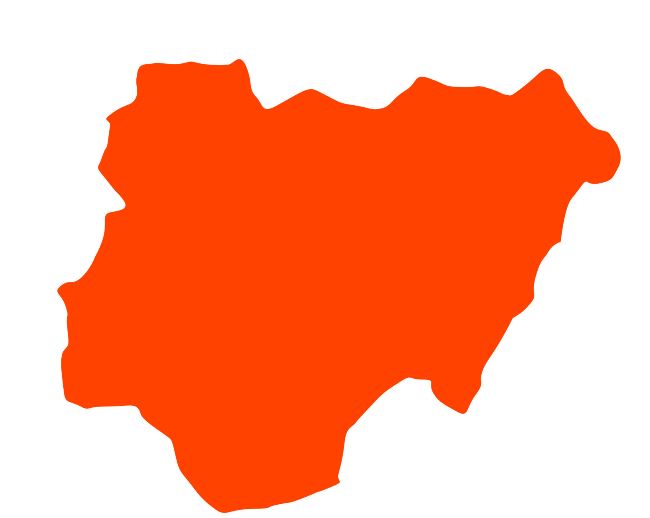
RRF 13/2025 – Nigeria: Humanitarian Response For Vulnerable Populations Affected by Flood In Kaduna North and Zaria, Kaduna State

Heavy rains, flash floods, and windstorms in Northern Nigeria on 20 September 2025 caused widespread destruction, isolating communities and submerging farmland. ACT Nigeria Forum classifies it as a medium-scale emergency across seven states in Niger State, with 163 deaths, 115 missing, and 121,224 displaced. An additional 339,658 people suffered losses, and 681 sustained injuries. Affected states include Adamawa, Taraba, Yobe, Borno, Gombe, and Jigawa, where rain is expected to continue.

The Christian Council of Nigeria (CCN) will support people affected by the floods through cash assistance, WASH kits, and psychosocial support.

RRF 13 2025 Nigeria Kaduna Floods


Ukraine: Emergency and Resilience Response for war-affected communities – UKR251 Appeal 1st revision

Ukraine entered its fourth year of full-scale war and the eleventh year of conflict, the humanitarian
crisis remains severe and prolonged. 12.7 million people, 36% of the population, require
humanitarian assistance. The first half of 2025 saw intensified hostilities, mass displacement, and
worsening access constraints. Nearly one-third of households in front-line oblasts, including
Kharkivska, reported food insecurity as a major concern. Access to healthcare was severely limited
due to repeated attacks and rising costs.Between March and August 2025, Kharkiv experienced a
significant deterioration in its security and humanitarian situation due to intensified Russian military
operations and repeated attacks on civilian infrastructure. UNICEF reported 240 attacks on
educational facilities by June 2025, with many children unable to attend school due to safety
concerns.
Aid organizations reached 3.6 million people across Ukraine by June 2025, focusing on front-line
oblasts like Kharkivska. However, humanitarian access was increasingly restricted due to hostilities
and staff conscription. The UN launched a Winter Response Plan for 2025–2026, seeking $277.7
million to assist 1.7 million vulnerable people.

Five  members of the ACT Ukraine Forum ( CWS, Diakonia CRD, HEKS/EPER, HIA and LWF) are actively responding with an appeal to raise USD 14,307,294 until February 2027 to address the humanitarian situation in Ukraine thgrough activities that balance emergency aid with early recovery.

UKR251 Appeal Narrative 1st Revision

UKR251 Results Framework 1st revision

RRF 12/2025 – Philippines: Emergency Response to Impacts of Magnitude 6.9 Earthquake in Cebu

On September 30, 2025, a magnitude 6.9 earthquake struck near Bogo City, Cebu, affecting over 669,000 people and causing 72 deaths and 559 injuries, including fatalities in a typhoon Haiyan resettlement village. The quake, with a shallow depth of 5 km and maximum intensity VII, severely impacted northern Cebu and was followed by over 7,000 aftershocks, including a magnitude 4.7 tremor felt in Cebu City and Leyte. Families remain displaced, awaiting safety clearances and power restoration. This disaster compounds ongoing humanitarian responses to Super Typhoon Ragasa, Severe Tropical Storm Bualoi, and Typhoon Matmo, which have battered particularly Luzon, Southwestern Luzon, and Bicol regions since late September.

The earthquake prompted 53 local governments to declare a state of calamity due to widespread damage to homes, infrastructure, and essential services. Over 62,000 houses were damaged, eight municipalities experienced water supply interruptions, and power outages affected 89 municipalities, while damaged roads and bridges hindered access to affected areas. Classes remain suspended as aftershocks continue and clearing operations progress. Field assessments by NCCP and its member churches, and faith-based partners highlight urgent humanitarian needs in Cebu province, including shelter repairs, food aid, WASH services, and psychosocial support for both affected communities and responders.

RRF 12 2025 Philippines Cebu Earthquake


RRF 11/2025 – Philippines: Emergency Response to Severe Impacts of Typhoon Bualoi

In September 2025, the Philippines endured a series of destructive typhoons—Super Typhoon Ragasa, Tropical Depression Mitag, and Severe Tropical Storm Bualoi (Typhoon Opong)—which intensified the southwest monsoon and triggered widespread flooding across Luzon including the southwestern region, MIMAROPA. Bualoi made six landfalls between September 25–26, striking Eastern Samar, Masbate, Romblon, and Oriental Mindoro with peak winds of 143 km/h (89 mph), causing severe damage to infrastructure, agriculture, and livelihoods. The cumulative impact affected over 4.1 million individuals, with more than 105,000 evacuated and 37 reported dead. With additional cyclones forecasted for October, the National Council of Churches in the Philippines (NCCP) is mobilizing humanitarian assistance to support affected communities in Masbate, Northern Samar, and Biliran provinces through their regional ecumenical networks.

RRF 11 2025 Philippines Typhoon Bualoi


RRF 10/2025 – India: Humanitarian Assistance to the vulnerable people affected by Floods and Cloudburst in Punjab, Delhi and Uttarakhand States

Punjab is grappling with one of the most devastating flood disasters in its recent history, with all 23 districts affected. Nearly 2 million people across 2,050 villages have been impacted, and 387,898 individuals have been displaced from their homes. The official death toll stands at 48, with three people still missing. Marginalized Dalit families—primarily daily wage laborers—have been disproportionately affected, facing severe disruptions to housing, income, and access to relief. Meanwhile, between 15 and 17 September 2025, Uttarakhand endured a catastrophic weather event marked by intense cloudbursts, heavy rainfall, and severe thunderstorms with lightning. Eight districts were impacted, with Dehradun and Champawat experiencing the highest severity. Haridwar, Pauri Garhwal, Bageshwar, Pithoragarh, Nainital, and Udham Singh Nagar faced moderate impacts. In Dehradun, areas such as Sahastradhara, Maldevta, Tapkeshwar Mahadev Temple, DIT College area, and Bhagat Singh Colony were among the worst hit. Sahastradhara recorded 192 mm of rainfall, followed by Maldevta (141.5 mm), Hathi Barkala and Jolly Grant (92.5 mm each), and Kalsi (83.5 mm). At least 15 people lost their lives, and 16 remain missing due to cloudbursts that triggered landslides and caused rivers to overflow. The Disaster Management Authority confirmed the recovery of 13 bodies in Dehradun, and one each in Pithoragarh and Nainital.

Lutheran World Service India Trust (LWSIT), Church of North India Synodical Board of Social Service (CNI SBSS), and Christian Agency for Rural Development (CARD) will provide cash assistance and food to the affected communities primarily in Punjab and Uttarakhand states, supported by the Rapid Response Fund.

RRF 10 2025 India Punjab and Uttarakhand Floods


Afghanistan: Emergency assistance to earthquake affected communities in eastern Afghanistan – AFG 251

On 2nd September 2025 a 6.0 magnitude earthquake (10 kms in depth) struck eastern Afghanistan near the border with Pakistan. The tremor, was followed by multiple aftershocks, including two measuring 5.2 magnitude. The quake has left a trail of destruction across remote districts of Kunar, including Nurgal, Chowkai, Watapur, Dara e Pech, Asadabad districts, Kuz Kunar and Dari-e-Noor districts in Nangarhar province and several districts in Laghman province.
According to the OCHA flash updates #2 the de facto authorities (DfA) now reporting just over 1,400 people killed, a further 3,100 injured and up to 5,400 homes destroyed.
The affected districts are among the most remote in Afghanistan. Landslides have blocked key access routes, and aircraft have been deployed to support rescue operations and evacuate critical patients to Jalalabad and Kabul.
Entire villages were reportedly “wiped out,” with homes collapsing on terraced slopes. Access challenges due to damaged roads, poor connectivity, and rugged terrain are delaying assessments and aid delivery in these areas. Border regions near Pakistan, where displaced populations and returnees were already living in makeshift shelters, are facing compounded vulnerabilities.
According to initial reports, Food, NFIs, Shelter, Cash Assistance, Health, WASH and Psycho-social are the major needs on the ground for the affected people.
our members in Afghanistan CAID, CWSA, NCA, HIA have developed its appeal to address the urgent and medium team needs of the affected population by providing multipurpose cash assistance, health, wash protection and food & nonfood items.
Requesting members have prepared a detailed result framework which will be shared via email with the members.

Afghanistan EQ Appeal (AFG 251)