Policy updates October 2020

ACT Communications Policy
The Communications Policy in general emphasizes that the ACT Secretariat relies on its members and forums to be sources and mediums of information sharing in communities. The update focuses on bringing the policy into line with the Global Strategy, with additional policies passed since it was last updated, including Child Safeguarding, Social Media, and others, as well as reflecting ACT’s commitment to Quality and Accountability through its CHS certification and the global legal realities of legislation like GDPR which affect communications work. It confirms ACT’s commitment to a localisation sustainable agenda, to a people-centred alliance and the humanitarian development nexus. In its communication work, the ACT Alliance seeks to raise up the voices of these communities accordingly.

Concerning the target audiences, the new policy focuses on ACT members’ staff and volunteers, church leaders and other key stakeholders. It specifies principles of communications at key events just as well as ethics and standards concerning pictures used for media work, informed and implied consent and the sign-off process. Members are further encouraged to assist in translation of ACT material that is of particular concern to them and their audiences.
 
ACT Branding Policy
The second communications-related policy that was updated is the Branding Policy.
Three chapters have been added to the latter: about the use of the word “Act” in member names, about branding in Advocacy contexts and a chapter offering further branding advice. In addition, a branding guide entitled “Leaving No one Behind” accompanies the Branding Policy and contains more technical information about ACT’s branding. 

Q&A webinars organised by Community World Service Asia July until September 2020

Of the 129 specialists following the webinar “Understanding and Handling Misinformation in the COVID-19 context”, 81 were from Asia, most of them joining in order to learn good practices around handling misinformation.

The 213 practitioners joining “New Approaches to Monitor Remote Programming during COVID-19” were asked how their monitoring needs changed as a result of COVID-19. While measuring predicted results is still a top priority (often for accountability purposes), understanding negative/unanticipated impacts on communities and questioning what else can be done to support communities are more important during the pandemic than during normal times. There are however, some things that have not changed: the need for basic information about project and programme delivery, donor requirements for accountability data about programmes and organisational capacity for programming and M&E. The conclusion was that “we must work with what we have” in terms of capacities, resources, relationships and structures, as the pandemic has not given the global aid community the time to prepare and develop ideal strategies to combat the situation.

For upcoming webinars: https://communityworldservice.asia/training-calendar/

ACT Japan Forum’s response on heavy rainfalls in the south

While typhoons, storms, and heavy flooding have hit Japan very hard in recent years, another record-breaking heavy rain hit the prefectures of Kumamoto and Kagoshima in the southern Kyushu early July 2020 in the middle of the East Asian rainy season. It was officially named as “Heavy rain of July Reiwa 2” by the Japan Meteorological Agency. As a result of flooding and landslides, 65 people were confirmed dead and two are still missing as of 24 September. Over 6000 houses were fully or partly destroyed and nearly 3000 houses were flooded.

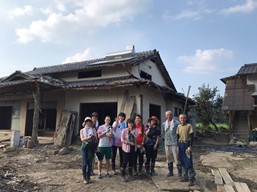
ACT Japan Forum secretariat immediately contacted colleagues of YWCA Kumamoto to confirm their safety and intention of emergency response. As the local government authorities in the affected areas have restricted the entries of aid agencies and volunteers from other prefectures because of the COVID-19 situation this year, we decided to provide financial and logistic support the YWCA Kumamoto’s emergency response.

It’s been only four years since Kumamoto had a big earthquake of magnitude 7.0. Because of their previous experience of disaster response and their local CSO-network, their team immediately made visits to evacuation centers, an inundated hospital and migrant families in HItoyoshi City to deliver food item, sanitary supplies and commodities. Furthermore, they started visiting the most severely affected agricultural area, Ogaki Community in Hitoyoshi City to help inundated households with cleaning and relocating. As three months have passed since the disaster, the assistance has now shifted to their recovery phase. The youth team of YWCA Kumamoto assists the affected local rice farmers with their farm work and selling their rice. Their exchange and assistance will be continued, which would help the affected community in speeding up their recovery. 

Pictures: Japan Forum

Shrinking spaces for civil society: a man-made disaster

As the rise of populist governments worldwide led to a questioning of the value of human rights as well as mechanisms and institutions to protect them, ACT Alliance a few months ago built up a global Project Task Group on Shrinking Spaces. Its objective is to oversee the development of a sub-strategy to address the issue.

The Group hasn’t had the opportunity yet to reach a common definition of shrinking spaces and its manifestations. However, while measures to fight terrorism still might affect a minority of our members, we assume that doing humanitarian or development work in the region, many of us have experiences with MoUs being cancelled, permissions not given, difficult banking procedures and visas not issued. We probably all see that voices advocating for the most vulnerable parts of society as well as critical thinking and questions are not welcome. Democratic rights are cut, societies become less and less equal. While social media might be a great channel for communication for all of us, they also have negative consequences. In order to discredit our work, we can be accused even more easily of spreading false news on purpose, of misinforming the population and of being loyal to the donors overseas only. And finally we assume that after the spread of COVID-19, work has even become more difficult in most countries because of curfews, emergency laws, lockdowns and travel restrictions turning humanitarian work into a high-wire act.

One member compared shrinking spaces to Corona: it affects all of us and it’s hard to protect ourselves, as there is no treatment and no vaccine yet. It’s a man-made disaster.

Our answer as ACT Alliance is solidarity, collaboration and courage based on our faith. Even before ACT’s sub-strategy has been formulated, these three features will move us forward: 

  • The solidarity to stand by and support ACT members and partners who are suffering from the impacts of shrinking space
  • The courage to continue to speak out wherever necessary against measures and policies which constrict civic space further, whatever their origin
  • Collaboration to enable better policy development within the alliance, sharing best-practice models and developing standards and innovative procedures to improve our own and others’ works.

The situation in the Philippines …
ACT-member National Council of Churches in the Philippines (NCCP) wrote in a resolution in November 2019: “Such red-tagging by the state may delay, impede, or even prevent the delivery of much-needed services to marginalized communities especially in the midst of disasters. Organizations like the NCCP should all the more be encouraged and supported especially in a context where human rights are attacked, and fear and insecurity constantly loom”. 

Faith-based organisations and church people from around the world including ACT Alliance have signed a Unity Statement for the Protection and Promotion of Human Rights in the Philippines in September 2020.

Read more on the situation in the Philippines. ((Link to media release))

… and in India ((to follow))

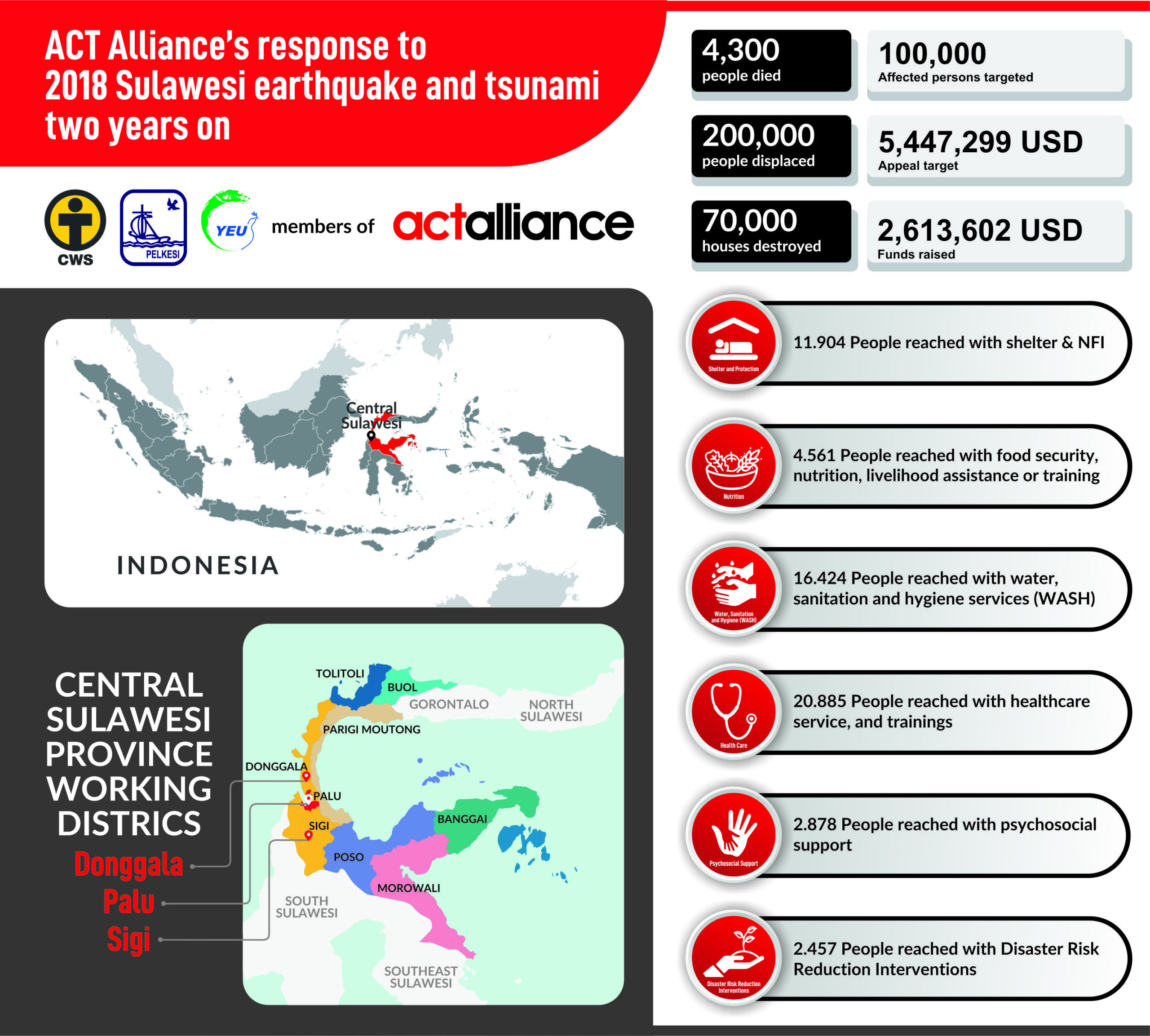
ACT Alliance response to the Sulawesi earthquake and tsunami

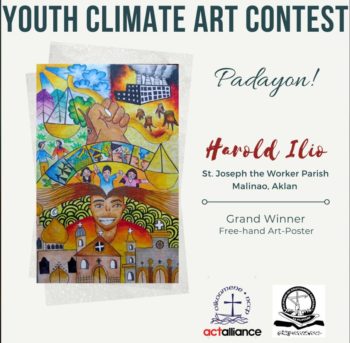
Philippines: the winners of the Youth Climate Art Contest

Congratulations to the winners!

Freehand – Poster making

1st prize: Harold Ilio, Roman Catholic

2nd prize: Wilfred Chavez, Roman Catholic

3rd prize: Shane Dumanhug, UCCP-CYF

Digital Arts

1st prize: Kej Andres, SCMP

2nd prize: Sheny Lane Gapac, IEMELIF-PKKI

3rd prize: Christian Decena, Roman Catholic

Song Making

1st prize: Ryan Base, ECP-SKEP

2nd prize: Rene II Badoy, IFI-YIFI

3rd prize: Benny Ruth Capote & Eljhun Capote, UCCP-CYF and Darryl Ancog, UCCP-CYF


All the winners can be found on the NCCP’s facebook page

News from the ACT Nepal Forum

The Nepal Forum had regular update meetings where each Forum Member informed about their plans and achievements. During the COVID-crisis, all of the ACT Alliance-members in Nepal were very active in emergency response, particularly in immediate food support, awareness raising, WASH activities, providing health kits (masks, gloves, sanitizers, soap), psychosocial support and psychological first aid, livelihood creation and recovery as well as monitoring accountability and transparency of COVID-19 response initiatives implemented at community level.

We would like to take out and present some projects which are unusual and might interest other forums:

Webinar on coffee supply chain

ICCO Cooperation was addressing a particular effect of the lockdown on Nepal’s economy. The prolonged winter resulted in national production to fall up to 40%, while the global lockdown caused by the COVID-19 pandemic is further hurting export, domestic trade, and small and medium enterprises along the coffee value chain. The limited ground that Nepalese coffee had gained in recognition and market share as specialty coffee around the world is under threat, as are jobs, revenue and liquidity. Therefore, the ACT-member organized a webinar session titled: ‘Panel Discussion on Nepalese Coffee Supply Chain Situation Analysis Amidst COVID-19 Pandemic’ in Nepali language. More information can be found in this Summary Report.

Members on air

FinnChurchAid (FCA) and DanChurch Aid (DCA) both went on air in order to raise awareness – both informing vulnerable groups living in remote areas about the consequences of COVID-19 by radio in local languages, reaching thousands of listeners.

Digital psychosocial support

The Nepal Forum members were also highly active in support by online media: Felm created distance learning possibilities in Bhume Rural Municipality and Putha Uttarganga Rural Municipality and 1) and offered psychological first aid and tele counselling by using toll free number and apps (Whatsapp, Viber, Skype). LWF held 389 telecounselling session on psychosocial support and mental health provided to vulnerable people, sent out 14 different SMSs on COVID-19 precaution measures. Other messages related to sexual and gender-based violence and the complaints response mechanism were communicated to rights holders groups through 757 community representatives.

Japan Forum: Wealth disparity becomes explicit in Corona-crisis 

Although we could barely manage to dodge lockdown in Japan, Japanese society has been significantly impacted by COVID-19 particularly, in terms of a national economy as well as any country.  This Corona-crisis has made wealth disparity explicit.  For instance, we now know who can work from home and who can’t.  Apart from medical service workers and civil servants, so-called essential workers engaged in nursing care and sanitation work kept serving even during the state of emergency engaged.  They are the ones who are at risk of infections but at lower pay than office workers. 

The Japanese government decided to pay benefits of JPY 100,000 to all the people living in Japan, however it became evident that those who don’t have permanent addresses cannot be benefited by this new system.  Thus, this inequitable situation motivated us to focus on the essential worker families, the homeless, refugees and emigrants in financial difficulties under COVID-19.  We have learned that these are the ones who are the most vulnerable people and first to be sacrificed by disasters.

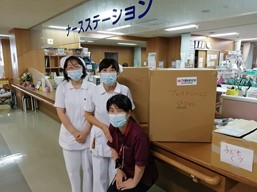
CWS Japan collaborated with a partner FBO (Operation Blessing Japan) to distribute hygiene products such as hand sanitizer and face masks to about 80 supporting groups for homeless, emigrant laborers, children’s feeding programs, DV shelter, nurseries, nursing and healthcare facilities for disables and aged people across Japan.  Most of these recipient organizations were identified by member churches and organizations of ACT Japan Forum.

Through this assistance, we developed a network of those FBOs supporting vulnerable groups.  We will be using this network for our outreach activities for future disaster relief.

Activities of the Myanmar Forum in the first half of 2020

From Livelihood Technical Forum to Street Renovation – The Myanmar Forum has been active on various issues:

  1. Forming Livelihood Technical Forum Meeting among ACT members’ organizations in Myanmar

               ACT member organizations in Myanmar have been holding a “Livelihood Technical Forum Meeting” starting on May, 2020, since most of the project activities are temporarily postponed and almost all staffs are working from home due to Covid-19. A livelihood technical forum meeting was hold in order to foresee the impact on community livelihood and implementation by the pandemic, how the implementation should be continued and what kinds of activities should be prioritized. Partner organizations working with ACT members’ organizations also had a space to participate in the meeting.

               The meeting was held on a monthly basis for one and half hours, and organized through zoom. Eight technical focal staffs from ACT member organizations and three staffs from partner organizations actively participated in the Livelihood Technical Forum Meeting. This pandemic makes us brainstorm what a future implementing strategy should be like.

The following picture was taken during the third Livelihood Technical Forum Meeting through zoom on 22nd June, 2020:

  1. Covid-19 Response in 18 villages in Kayin State, Myanmar

An ACT joint project has been implementing in Kayin State for the sake of their sustainable livelihood through the dissemination of CSA and market orientated approach. During Covid-19, the community living in project implementing villages have been affected.

Karen Baptist Convention (KBC), the implementing partner of the ACT joint project in Myanmar, collected and accessed the information in order to know their implementing villages’ needs. After that, vinyl and posters about hand washing steps and precautions measures regarding Covid-19 were distributed for the sake of health education to the villagers living in hard to reached area. In addition, infrared thermometers and hand washing items such as soaps, hand sanitizers and buckets were made available in 18 villages in Kayin State by collaboration with village development committee members and their association personnel.

               The following pictures were taken meantime Covid-19 response in Mya That Kone Village, Thandaunggyi Township:


  1. Street Renovation Activity in Thandaunggyi Township, Kayin State

Under the ACT Joint project in Myanmar, street renovation activities have been done in February and March. They were implemented in five villages, namely Kya Mine, Myauk Phe’ Boe, Kyauk Phyar, Taw Pyar Kalay, and Ngwe Taung Gyi located in Thandunggyi Township, Karen State.

The activity aimed for better transportation to carry local products to access the market according to the communities’ needs plus the recommendations of the 2019 report. Additionally, the communities save time when there are emergency health cases.

Project staffs and village development committee (VDC) members organized this activity. The ACT Joint project provided 1,500,000 MMK to each village. The VDCs members lead in coordination with township administrative staffs. In addition, the communities added their village development fund which they have been saving benefits from Income Generation Activities (IGA) and Self Help Group (SHG) activities. The communities contributed their labor force to accomplish the activity as well.

Good cooperation among the villagers, and good management and leadership of VDCs can vividly be seen in this implementation.

The following pictures were taken meantime street renovation activities in Kyauk Phyar village:

  1. Elephant Foot Yam Cultivation Training in Hlaing Bwe Township, Kayin State

In February, 2020, an Elephant Foot Yam cultivation training has been conducted at Ywar Kaing Kaung village in Hlaing Bwe Township. The training took two days and 37 farmers including 11 women farmers fully participated.

The training took aim at the farmers knowing and applying sustainable methods for improving their soil and increasing yield. As a result, the farmers can increase their income by reducing the inputs and resulting low cost in elephant foot yam production and then they are able to apply the environmental friendly techniques for crop production as well.

The training covered the following topics: climate change, benefit of elephant foot yam cultivation, process and method of elephant foot yam, preparation of field, transplanting, management of weed, water, pest and disease, soil and fertility. For the sake of understanding, practical sessions were also added. The ACT joint project staffs will continue to support and provide technical guidelines to partner communities in applying.

The following pictures were taken during the Elephant Foot Yam Cultivation training. The first photo is showing the participants making natural composts by using farm waste and the second photo is a group photo of the training participants: