COP28 Press release: media stunt- house of cards collapse to highlight crumbling climate financial architecture
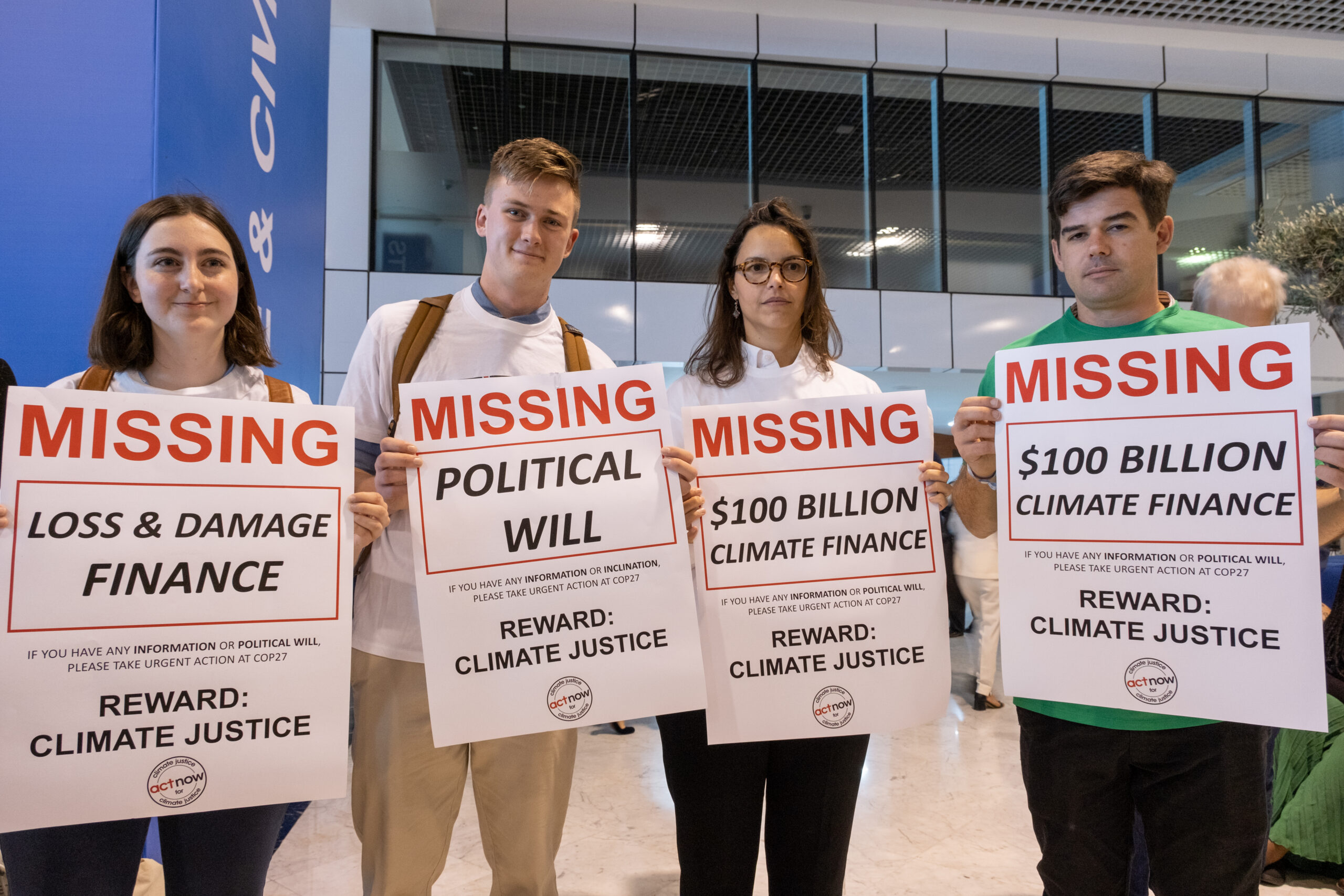
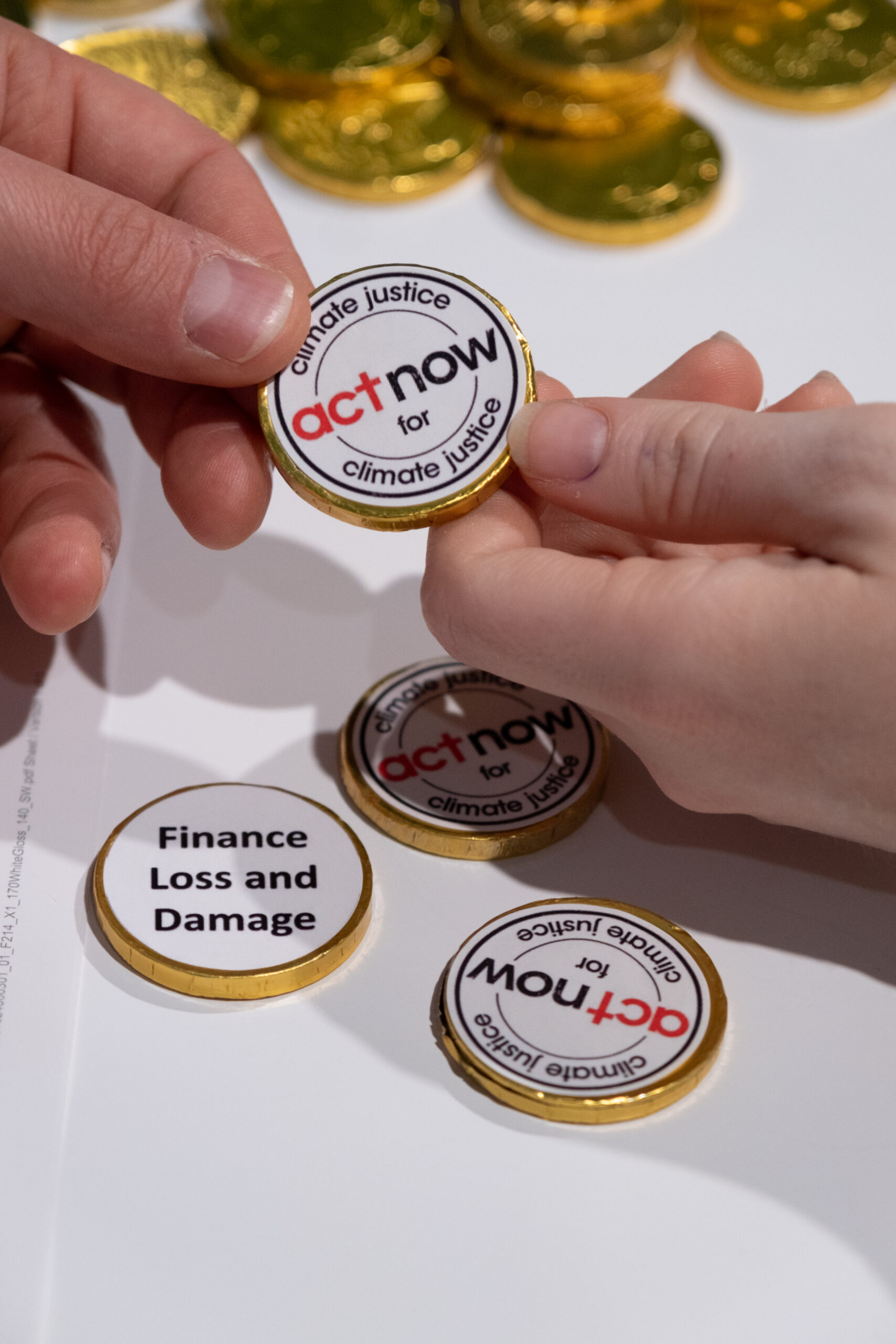
Dubai, United Arab Emirates, 8 December 2023 – ACT Alliance will be holding a media action at COP28 highlighting the weakness of the climate financial architecture, which has been failing to deliver for vulnerable countries who urgently need support to deal with the growing impacts of climate change.
The media action will consist of activists with banners, chanting, telling stories of the need for climate finance and climate justice, and building a house of cards, which will then be collapsed representing the dangers of a lack of robust climate financial architecture. Interviews will be available with global faith based climate activists.
Where: Action zone 9, near the main entrance to the Blue Zone
When: December 8, 16:00-16:30
Climate finance is essential to implementing climate action, yet so far rich countries have failed to deliver on their promises. At COP28 this year, the Global Stocktake (GST) is predicted to affirm what we already know: we are completely off track to meet our international climate goals.
Meeting the goals of the Paris Agreement will be impossible without the immediate mobilisation of finance, to support countries to reduce carbon emissions, adapt to the advancing impacts of climate change, or compensate for the loss and damage already happening. At COP28, ACT Alliance will be reiterating its call for rich countries to pay up, by pledging significant levels of climate finance which is new and additional, public, and grants based.
Media contact:
Simon Chambers, Director of Communications, ACT Alliance
WhatsApp: +1-416-435-0972 simon.chambers@actalliance.org
COP28 Press release: Climate crime scene media action
Climate crime scene media action
Time: 5th December 2023, 11h30
UPDATED Location Action Zone 9 (near the main entrance)
This visual stunt hosted by ACT Alliance and Don’t Gas Africa looks at a climate crime scene, with the outline of a body on the ground. But who is the victim? On energy day at COP28, join us to hear from vulnerable communities facing the brunt of the impacts of climate change, which speaks to the urgency of phasing out fossil fuels forever.
Powerful advocates from around the world will communicate how climate change disproportionately impacts communities across Africa and the Global South, who have done the least to contribute to climate change but are facing the worst of its effects.
Media Contact:
Simon Chambers, Director of Communications, ACT Alliance
WhatsApp: +1-416-435-0972 simon.chambers@actalliance.org
COP28 Press statement: Two sides of the same coin: Climate and Gender Justice
Two sides of the same coin: Climate and Gender Justice
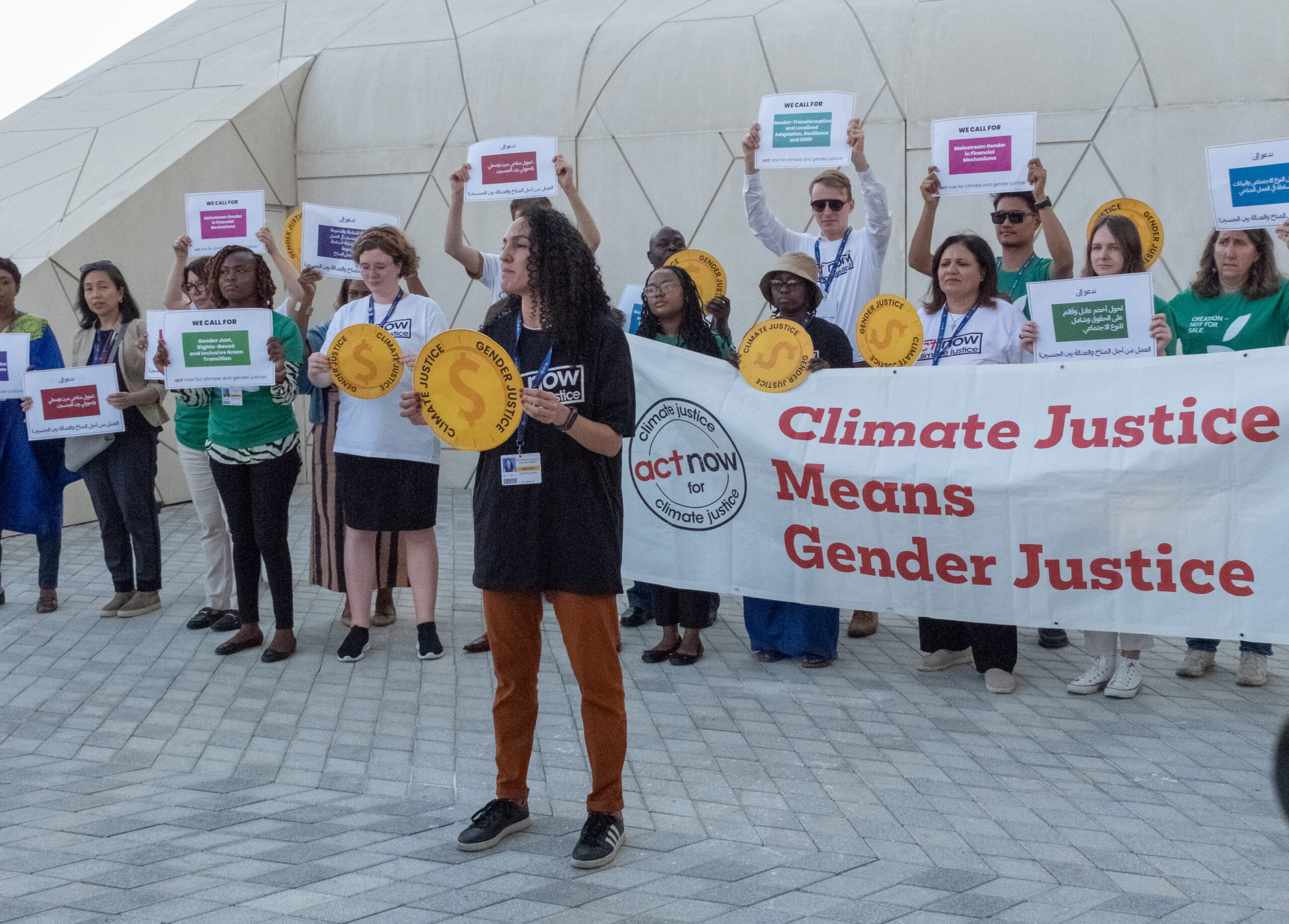
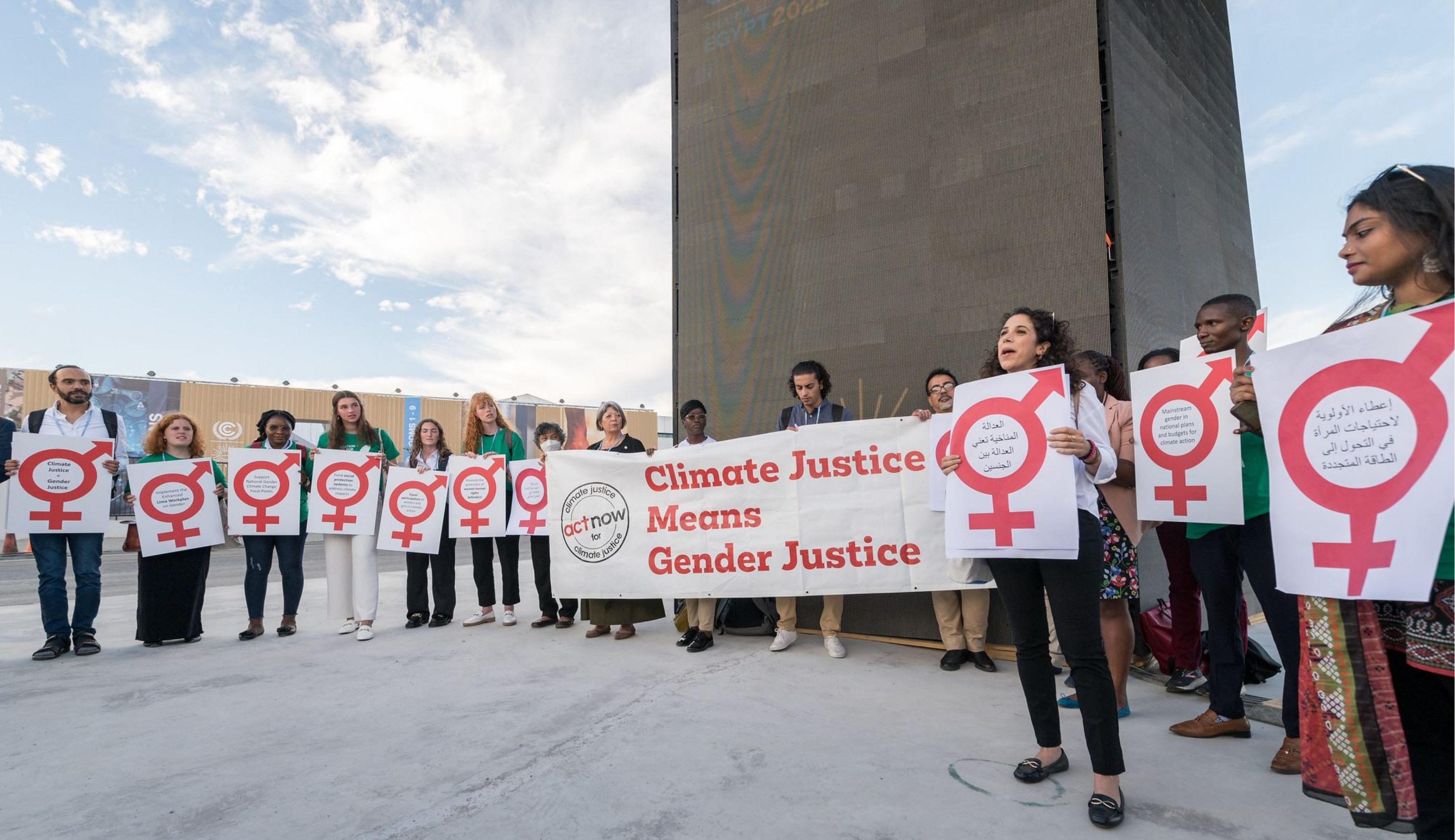
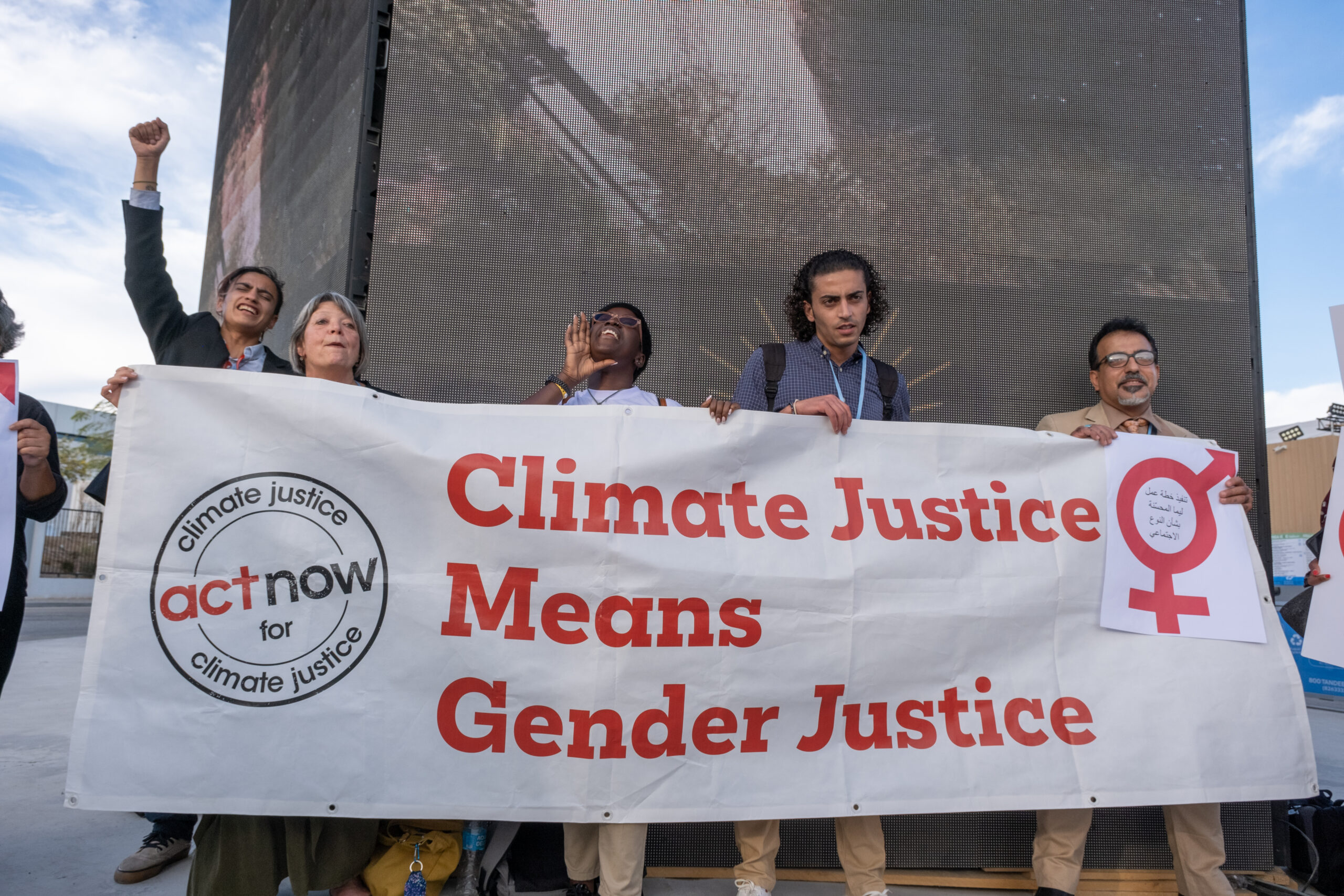
Dubai, UAE- Climate justice and gender justice are two sides of the same coin – there can be no climate justice without gender justice. The climate emergency is not gender neutral. Women and girls in all their diversity are on the frontlines, often first and worst impacted by the climate crisis.
Research has shown that women and girls are 14 times more likely to die in a disaster than men, and we know that many disasters are a result of the climate emergency. As these disasters get more frequent and severe as global temperatures continue to rise, there is a risk that gender inequalities are exacerbated, unless gender-transformative action is taken, including in climate finance.
Extractive economic models, human rights and land violations, and structural gender barriers, require transformative and interconnected struggles for justice.
ACT Alliance has released a new report today Climate finance and gender: Lessons from Nordic efforts to integrate gender equality in climate-related development finance. The report’s recommendations to the Nordic countries include advocacy, tracking of finance with a gender lens, that transformative gender approaches be used and more. The report can be downloaded here.
ACT Alliance calls on COP28 to:
fulfil the human rights-related promises that are a key part of the updated Gender Action Plan adopted at COP25.
ensure that COP28 climate finance decisions are gender-responsive and that financing reaches women and girls in all their diversity.
that the Gender Action Plan influences all decision-making at COP28.
Quotes
Gloria Pua Ulloa, SEDI Asociacion Civil, Argentina “There’s no climate justice if women and girls, in all their diversity, are not included in all decision-making processes related to climate change.”
Hanna Soldal, Act Church of Sweden, Sweden: “Gender justice and climate justice are two faces of the same coin. Women and girls are 14 times more likely to die from climate induced disasters than men. There can be no climate justice without gender justice.”
Christina Cosby, Presbyterian Church of the USA “Youth, Indigenous Women, and local communities, most affected by climate change, offer valuable wisdom for innovative solutions. In climate finance at COP28, their engagement must move beyond ‘involvement’ to meaningful action for a more equitable and fruitful policy. Drawing on our faith traditions, they guide us by understanding our past, have the key to where we need to go, and the wisdom on how to get there. Climate Finance and Gender Justice are two faces of the same coin—you cannot have one without the other.”
Media contact
Simon Chambers, director of communications, ACT Alliance WhatsApp: +1-416-435-0972 Email: simon.chambers@actalliance.org
COP28 Press release: Media action- Two sides of the same coin: Climate and Gender Justice
Time: 4th December 2023, 16h00
Location UPDATED:Action Zone 9 (B1 near the entrance)
This visual stunt will showcase calls for critical investment in gender-transformative climate finance.
The climate emergency is deepening gender inequalities. Extractive economic models, human rights and land violations, and structural barriers related to finance, education and health services, contribute to women and girls being 14 times more likely to die in a disaster than men.
Powerful advocates from around the world will communicate how climate and gender justice are two sides of the same coin, and collectively call for gender-transformative and rights-based climate adaptation, finance, mitigation and disaster risk reduction Interviews can be made available with:
Gloria Pua Ulloa, SEDI, Argentina (English, Spanish)
Dr. Nahed Ayoub , Bishopric of Public, Ecumenical and Social Services (BLESS), Egypt (English, Arabic)
Hanna Soldal, Act Church of Sweden, Sweden (English, Swedish)
Media Contact:
Simon Chambers, Director of Communications, ACT Alliance WhatsApp: +1-416-435-0972 simon.chambers@actalliance.org
Press conference at COP28: Global faith voices join together at Interfaith Talanoa Dialogue in Dubai
3 December 2023
FOR IMMEDIATE RELEASE
MEDIA ADVISORY
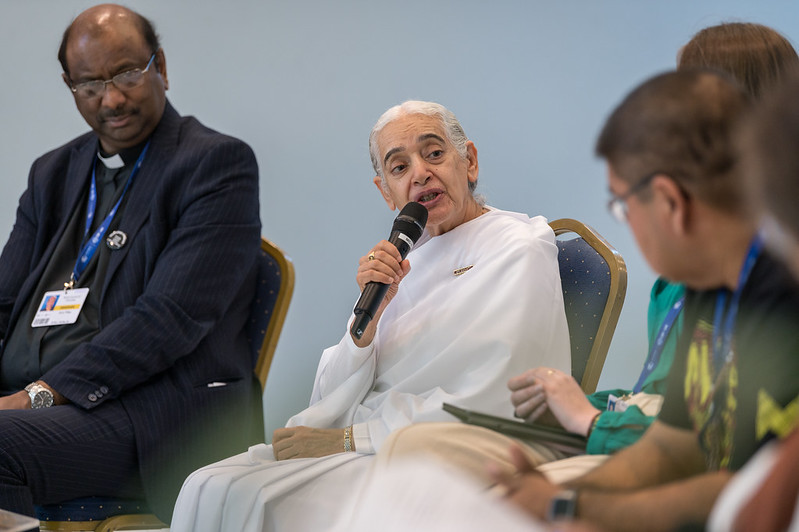
Dubai, United Arab Emirates: People of faith have been engaging in climate justice work for decades. Over 150 people of faith from around the world came together at the Interfaith Liaison Committee’s Talanoa dialogue on November 30 to discuss the three questions of a Talanoa: Where are we at, where do we want to go, and how do we get there in our work for climate justice at COP28.
As the World Leaders’ Summit has wrapped up, the ILC is working on its call to the COP for increased action to achieve climate justice and help keep global temperature rise to under 1.5C.
People of faith (Christian, Muslim, Sikh, Brahma Kumaris, and many others) bring the experiences of communities on the front lines of the climate emergency, they bring a moral dimension to the debate, and they also bring technical expertise through their engagement in combating climate change and in climate justice advocacy.
85% of the world’s population ascribe to a faith tradition, and faith communities are part of all communities in the world. They work as part of these communities together with local leaders and communities to address the impacts of climate change.
The Interfaith Liaison Committee to the UNFCCC brings together faith constituencies working to achieve climate justice to raise their voices together and share their stories from their traditions and experiences around the world.
What: Calls from people of faith from around the world for concrete action at COP28 towards achieving climate justice for the most vulnerable, and sharing stories of the impacts of climate change in communities around the world.
Who:
Sister Jayanti Kirpalani Additional Administrative Head of the Brahma Kumaris Rev. Chebon Kernell, Indigenous, World Council of Churches Ms. Lucy Plummer from youth from Soka Gakkai International Mr. Harjeet Singh, head – global political strategy, CAN international Ms. Valériane Bernard, Brahma Kumaris representative to the United Nations, Geneva- Moderator
Where: Press Conference Room 2 Zone B6 building 77 and online
When: Monday, December 4, 2023 13:30-14:00 Dubai time
Why: Faith communities bring concrete experiences of the impact of climate change on the most vulnerable people, including women and girls in all their diversity and people on the move, who have done the least to cause climate change and are facing the brunt of its impacts. Faith groups are on the front lines, responding to climate change through mitigation, disaster risk reduction, adaptation, and more.
# # # # #
MEDIA CONTACT Simon Chambers- WhatsApp: +1-416-435-0972, Email: simon.chambers@actalliance.org Director of Communications, ACT Alliance
ACT ALLIANCE APPEAL UPHELD
ACT ALLIANCE APPEAL UPHELD
Independent Appeal Panel upholds appeal by ACT Alliance.
Geneva, Switzerland – Following HQAI’s decision to suspend ACT Alliance’s certification and the subsequent appeal by ACT Alliance against that decision, the Appeal Panel mandated by HQAI’s Advisory and Complaint Board (ACB) has stipulated that the audit report does not provide sufficient objective evidence to support the major corrective action request (CAR) M2023-8.4and requests the HQAI Secretariat to withdraw the major finding and lift the suspension of the certificate with immediate effect. The HQAI Secretariat has also been asked to allocate additional resources and time to the next audit so that there can be a specific focus on issues identified in the now-revoked major corrective action.
What does this decision concretely mean?
The suspension of ACT Alliance’s certificate is lifted with immediate effect. The major CAR M2023-8.4 (The ACT Alliance Secretariat does not have the management and staff capacity to deliver the effective operation of its humanitarian mechanism – Appeal and RRF – in compliance with the CHS) has been withdrawn, and the audit report is subsequently being updated.
It confirms ACT Alliance’s unwavering commitment to Quality and Accountability and the CHS, as demonstrated through its longstanding audit journey since its initial CHS Certification in 2017.
ACT Alliance is committed to addressing all CHS audit findings, and the next certification audit (maintenance audit 2025) will follow its progress on ensuring sufficient management and staff capacity to deliver its humanitarian mechanism in compliance with the CHS. Before finalising and sharing the 2025 public audit report, HQAI will report detailed findings back to the ACB.
The appeal decision clearly demonstrates the impartiality of the ACB in its decisions and corroborates HQAI’s commitment to professionalism, impartiality, and objectivity. The independent accreditation body Accredia annually assesses HQAI’s impartiality as one of its audit criteria against ISO/IEC 17065:2015.
HQAI welcomes and values complaints and appeals and will use every case as an opportunity to learn and continue offering independent, adapted quality assurance services. HQAI will embark on a meaningful reflection and comprehensive analysis of the Appeal Panel’s findings to ensure that HQAI’s interpretation of audit findings is systematically substantiated by factual and objective evidence and clearly conveyed to our partners.
Background
On August 09, 2023, HQAI’s audit report identified a major corrective action request (major CAR M2023-8.4) on ACT Alliance’s renewal audit, leading to the suspension of the CHS certificate, which was communicated to ACT Alliance on August 11, 2023. ACT Alliance appealed against the audit decision on August 24, 2023. The subsequent investigation and decision by the Executive Director of HQAI to uphold the audit findings was not accepted by ACT Alliance and motivated ACT’s request for the appeal to be escalated to the ACB of HQAI, dated September 22, 2023. An independent Appeal Panel of two ACB members was formed to conduct a review process evaluating all the documents and records submitted by both parties to the appeal. The Appeal Panel decided to uphold the appeal. The decision is binding for both parties.
It should be noted that provisional suspensions are common practice in certification schemes across various sectors and can typically last up to six months. They are used to indicate situations where the management system of a certified organisation has undergone significant changes that impact the organisation’s ability to comply with a given standard or when one or more minor CARs could not be addressed within the specified timeframe. Unfortunately, despite being a normal part of the HQAI audit process of CHS, suspensions may still cause reputational damage to audited organisations even if, like ACT Alliance, they have consistently proven their long-standing commitment to Quality and Accountability and the CHS. It is therefore acknowledged that a better sector-wide understanding of the CHS certification process, its transparency and purpose, is necessary to ensure that audited organisations’ commitments to quality and accountability are recognised and valued. HQAI is committed to furthering this understanding.
Members of the ACT Alliance and ecumenical delegations call for more climate finance for the Global South, rather than more empty promises from rich countries around the world. Photo: Simon Chambers/ACT
Temperatures around the world are peaking. In some of the most vulnerable countries floods, droughts and cyclones are devastating communities and households. Climate change is a reality and deserves to be called a crisis.
After two weeks of UN (United Nations) negotiations in Bonn, the parties seem to have forgotten what is at stake if we collectively fail to solve this crisis. Talks instead focused on what to prioritise on the agenda, processes for future agreements, and dialogues meant to help parties understand each other.
As Mattias Söderberg, co-chair of the ACT Alliance Climate Justice group and a member of the ACT Alliance delegation at the Bonn talks, says,
These talks are out of touch with reality. Rather than engaging in real discussions, parties gave speeches based on old positions and arguments, without reflecting on the crisis we are facing.
As an international Christian network, we in Act Alliance are committed to caring for all creation. However, with the current system of world development, we, as humanity, are not living up to our responsibility.
All parties are aware of the need to address the climate crisis. However, there is no agreement on who should act.
Sostina Takure, ACT Alliance Zimbabwe Forum coordinator and ACT Bonn delegation member, says,
The climate crisis is also a justice crisis. Communities with the smallest carbon footprints pay the highest price, while countries with the largest historic responsibility continue their emissions. Rich countries must take the lead in the fight against climate change.
Climate justice must be reflected in the negotiations. Developed countries should deliver on their promises to mobilise climate finance and increase their support to adaptation.
The need for climate finance is clear. Without funds, there will be no action. This was also stressed during the talks about future climate finance in Bonn.
In ACT Alliance we believe that future climate finance must build on the needs of vulnerable communities, and not on political compromises.
As Mattias Söderberg says,
Climate finance must be delivered to the most vulnerable countries as grants. The climate crisis must not be turned into a debt crisis.
All financial flows in both developed and developing countries must contribute to the fulfilment of the Paris Agreement goals. However, this commitment should not be confused with developed countries’ obligations to mobilise climate finance.
At the upcoming climate summit, COP28, parties will adopt a global goal on adaptation. This goal will guide continued collaboration to enable successful and adequate adaptation for all. In Bonn, parties were expected to make progress in talks about this goal. In particular, they were expected to develop a better understanding of the goal. However, these talks did not deliver more than a commitment to continue talking.
As Sostina Takure says,
The progress in adaptation policy has been described as sluggish. Bonn offered little to no progress in identifying the global goal, and that is a genuine disappointment. Without adaptation funding people and communities are at risk when they face climate-related disasters and events.
Countries must work out the global goal on adaptation in detail to achieve our shared aspiration of overcoming climate impacts and building resilience.
Lack of adaptation finance will increase climate-related loss and damage. This was an important topic on the Bonn agenda, yet once again parties left the meetings with very different views.
As Mattias Söderberg says,
We want the upcoming climate summit, COP28, to deliver the loss and damage fund as promised by ministers last year. The fund is important, as people on the frontlines of climate change are already experiencing loss and damage.
The loss and damage fund should guarantee rapid and scaled up finance to vulnerable communities to protect lives, recover livelihoods, and for reconstruction following climate disasters.
Media contacts:
Mattias Söderberg
ACT Alliance Climate Justice Co-chair,
+45 29700609
Fiona Connelly
ACT Alliance Communications Coordinator
+1 416 466-2428
About ACT Alliance
We are a global faith-based coalition organized in national and regional forums operating in more than 120 countries.
Through our more than 140 members, we work on humanitarian aid, gender
and climate justice, migration and displacement, and peace and security to support local communities. Our goal is to promote a locally-led and coordinated approach to advocacy, humanitarian and developmental issues.
Basic Facts about the Alliance
ACT Alliance is composed of more than 140 faith-based member organisations working in long-term development, advocacy and humanitarian assistance.
Our members work in more than 120 countries
Our members employ more than 30,000 staff and volunteers globally
Our members mobilise approximately more than $ 2 billion each year
The alliance is supported by an international Secretariat of more than 25 staff based in Geneva, Bangkok, New York, Toronto, Amman, Bogota, Nairobi and Brussels.
ACT Alliance was established on 1 January 2010 by bringing together the vision, resources, the people of the organisations who have been working together since 1995 as ACT International and since 2003 as ACT Development.
During solidarity visit to Türkiye, ACT and WCC witness great needs yet great collaboration: “the churches are all working together”
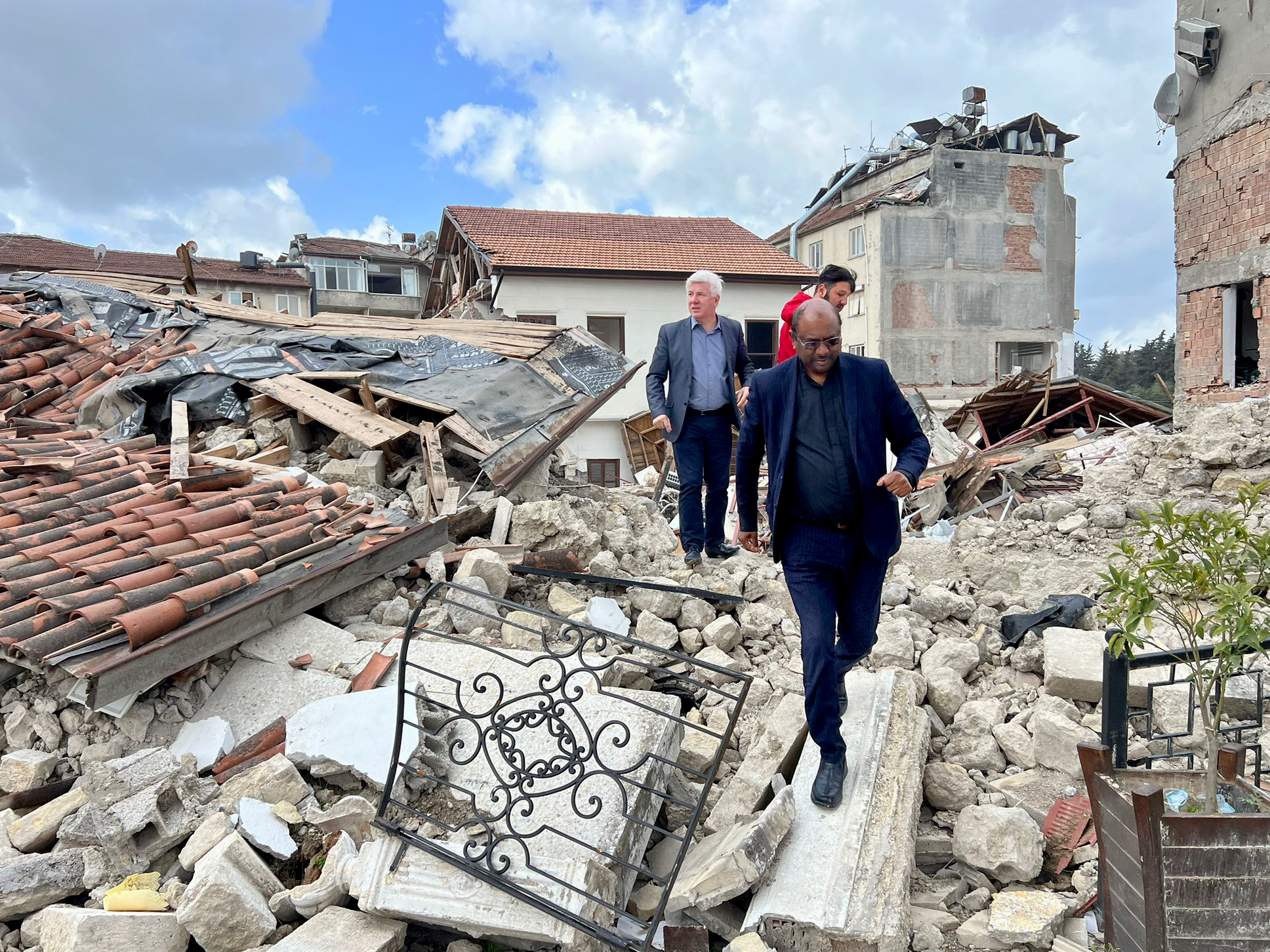
Visiting communities in southern Türkiye from 4-6 April 2023, the delegation met with churches in Mersin, Iskenderun, and Antioch, including communities in the Greek Orthodox Patriarchate of Antioch, Armenian Patriarchate of Constantinople, Latin Catholics and others.
After returning from a solidarity visit to Türkiye, World Council of Churches (WCC) general secretary Rev. Prof. Dr Jerry Pillay and ACT Alliance general secretary Rudelmar Bueno de Faria appear in a video interview speaking about what they saw, how churches are working together, and their unique reflections on their visit—held 4-6 April—took place during western Holy Week.
Accompanied by Laki Vingas, archon of the Ecumenical Patriarchate and former elected representative of minority foundations in Türkiye, they visited Mersin, Iskenderun, and Antioch.
“The WCC and ACT Alliance’s presence in these particular places indicate that we care, we are concerned about what has taken place, and we want to find out how we can actually be of assistance,” said Pillay. “I might also stress that it was important for us to do this together.”
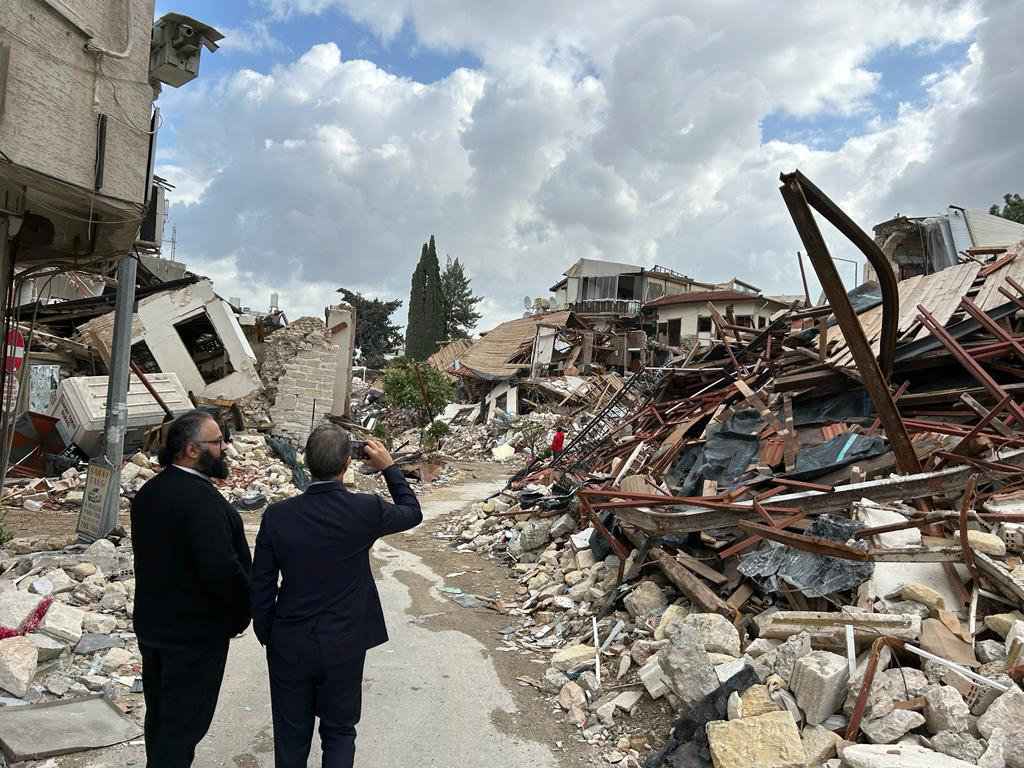
Both Pillay and Bueno de Faria said that they were very sad to see the devastation and damage left by the quake, which killed over 45,000 people in Türkiye alone. There is grave need related to the lack of food, water, and healthcare, and many first responders continue to work under extremely aggravated circumstances.
“What stood out to me first was the powerful impact of the earthquake on the infrastructure and the life of the people,” said Bueno de Faria, who is a survivor of earthquakes in Central America in 2001. “Comparing what I saw in Türkiye, it was shocking to see what people faced and the stories about how people were affected directly or indirectly and also communities as a whole.”
Watch the full interview
Bueno de Faria said that ACT Alliance is responding to the humanitarian needs of the most vulnerable both in Türkiye and Syria through ACT’s appeal, which has raised almost $8.5M to date. Churches play a vital role in humanitarian response as they are integrated in the communities, able to provide key needs assessment data to responders, and food, shelter, cash assistance, psychosocial support, and much more direct aid to affected families.
Pillay and Bueno de Faria met many people with uncertain futures and are concerned—particularly in Antioch—that people will not return, and the historic city will lose its lively Christian presence.
“Much time and effort is going to be put into the reconstruction of people’s homes and churches and buildings, and so forth,” assured Pillay. “One of the great things happening at the moment, from what we have seen, is the great ecumenical collaboration. The churches are all working together.”
Being in Türkiye during Holy Week was an important time for reflection, Pillay concluded.
“I could reflect on the suffering of Jesus and then reflect on the suffering of people who have been displaced from their homes and their livelihoods, and where the earthquake has robbed them of their continuity of life,” he said.
ACT Alliance, WCC delegation on solidarity visit to Türkiye
Visiting communities in southern Türkiye from 4-6 April 2023, the delegation met with churches in Mersin, Iskenderun, and Antioch, including communities in the Greek Orthodox Patriarchate of Antioch, Armenian Patriarchate of Constantinople, Latin Catholics and others. Photo: WCC/ACT
A delegation from the World Council of Churches and ACT Alliance is visiting Türkiye this week, expressing solidarity and support for churches on the ground responding to grave needs in the wake of the 6 February earthquake.
Visiting communities in southern Türkiye from 4-6 April, the delegation met with churches in Mersin, Iskenderun, and Antioch, including communities in the Greek Orthodox Patriarchate of Antioch, Armenian Patriarchate of Constantinople, Latin Catholics and others.
“The visit is tremendously symbolic during western Holy Week, and during the last week of Great Lent in the eastern calendar,” said WCC general secretary Rev. Prof. Dr Jerry Pillay. “It is really sad to see the devastation and damage brought about by the earthquake in Türkiye. Apart from the destruction of buildings, homes, properties and churches are the emotional and psychological scars endured by many people who have lost loved ones and almost everything.”
Pillay said: “We visited Mersin, Iskenderun, and Antioch. I was deeply broken to see most of Antioch totally destroyed and now very empty. Church leaders are very concerned about the diminishing numbers of Christians in Türkiye and now whether Christians will return to this land that has so much of biblical history.” He added “We pray that they would be able to continue to sustain a lively Christian presence in this very historic city.”
“The greatest need right now is to provide housing for the displaced people and funding to rebuild the destroyed cities,” underlined Pillay. “The churches are trying to build temporary houses for people and seek assistance.”
In the wake of the earthquake, there is grave need related to the lack of food, water, and healthcare, and many first responders continue to work under extremely aggravated circumstances.
The quake in Türkiye and Syria caused enormous destruction in terms of both lives and property: in Türkiye alone, 45 thousand people died under the over 230,000 collapsed buildings, 1.7 million were forced into tents, nearly 3 million were made homeless, and the livelihoods of some 9 million people were severely affected.
ACT Alliance general secretary Rudelmar Bueno de Faria said: “In the aftermath of the earthquake, churches did what they have always done—opened their doors, their hearts, and their hands to help their neighbours who were affected by this tragic event.”
Bueno de Faria added, “During this visit, we have seen the commitment of the churches to this work, to continuing to serve those impacted by the earthquake in the spirit of ecumenical diakonia.” He concluded, “The need of international financial support is critical, as the reconstruction will take time and will be costly.”
ACT Alliance partners and many other churches across the world have raised funds and sent humanitarian experts to conduct assessments and prepare relief, many closely cooperating with local partner organizations in the region.
According to an ACT Alliance situation report, the priority needs of earthquake-affected people are rehabilitation and repair of damaged homes, mental health and psychosocial support, food assistance, hygiene and dignity kits, shelter, water, sanitation, food, and cash assistance.
Many children continue to exhibit signs of distress, and there remains a significant need for psychosocial support services, recreational activities, child-friendly spaces, medical aid, and services for people with disabilities and the elderly.
Pillay concluded, “We encourage the WCC members and others to offer continued prayers and support for the people in Türkiye and other parts of the world affected by earthquakes and disasters. During this time of Easter, we are reminded that the suffering servant is with the suffering people of God on earth. May the Risen Lord, Jesus Christ, give us hope and peace in these troubled and difficult times. In Christ is our hope!”
The WCC-ACT delegation is comprised of Rev. Prof. Dr Jerry Pillay, general secretary, World Council of Churches; Rudelmar Bueno de Faria, general secretary, ACT Alliance; and Laki Vingas, archon of the Ecumenical Patriarchate and former elected representative of minority foundations in Türkiye.
ACT’s revised Syria 2023 appeal, which includes the earthquake response, can be found here.
The WCC’s article on the appeal can be found here.
ACT Armenia Forum issues statement on closure of humanitarian Lachin corridor
The ACT Armenia Forum draws attention to the massively deteriorating humanitarian situation in Nagorno-Karabakh, and has issued this statement:
Since December 11, 2022 Azerbaijan has blockaded the region of Artsakh by closing the only humanitarian corridor (the Lachin corridor) and cutting gas supplies to the region. With these actions, Azerbaijan is creating a dramatic humanitarian crisis and emergency situation for 120,000 ethnic Armenian residents, including 30,000 children, 20,000 elderly and 9,000 people with disabilities, who are in critical need of food, medication and all life necessary goods.
1,100 people (of which 270 are minors) are unable to return to their homes, and 350 people are unable to receive medical treatment. This situation is a blatant violation of the tripartite agreement that ended the six-week war of 2020, of international humanitarian and human rights law, and of the most fundamental moral principles.
All parties, without exception, must respect their obligations under international humanitarian law and take constant care to spare civilians and civilian infrastructure so that they are protected, their houses preserved, and essential services remain.