November 2026
Summary
Climate justice and tax justice are interconnected dimensions of the broader pursuit of economic and social justice. Both address structural inequalities, the distribution of resources and responsibilities, and the need for international rules that support more equitable and sustainable development. As governments seek to mobilise the resources needed for climate action, ongoing discussions on international tax cooperation offer an important opportunity to strengthen public financing, address inequalities in the global economic system and ensure that those with the greatest capacity contribute fairly.
At their core, both agendas concern the same fundamental questions: Who benefits from the existing global economic system? Who bears its costs? And how can international rules distribute resources and responsibilities more fairly?
For ACT Alliance, connecting these two streams of work presents an important opportunity to strengthen our advocacy on climate finance, economic justice and sustainable development.
The ongoing negotiations for a United Nations Framework Convention on International Tax Cooperation offer a new avenue for addressing some of the structural inequalities that undermine climate action. By reforming international tax rules, governments could increase their capacity to mobilise public resources, address corporate tax avoidance and ensure that those with the greatest economic capacity contribute more fairly to addressing the climate crisis.
This is particularly relevant to developing countries, many of which face a combination of high climate vulnerability, growing debt burdens, insufficient international climate finance and limited capacity to tax multinational economic activity.
The objective is not to replace existing climate finance commitments with domestic taxation. Rather, it is to recognise that a fairer international tax system and a more equitable climate finance architecture are complementary elements of climate justice.
With COP31 taking place in Antalya, Türkiye, from 9 to 20 November 2026, followed by the sixth round of UN Tax Convention negotiations in Nairobi from 30 November to 10 December, there is an immediate opportunity to establish stronger links between the two processes.
This paper examines the connection between climate justice and tax justice, identifies areas of convergence with ACT Alliance’s existing climate advocacy, and proposes common policy priorities and advocacy messages.
- Climate Finance Is Also a Question of Economic Justice
Climate finance remains one of the most contentious issues in international climate negotiations. Developing countries require substantial and predictable financial support to adapt to climate impacts, transition towards low-carbon economies, protect vulnerable communities and respond to increasingly frequent climate-related disasters.
Yet despite successive international commitments, the resources made available remain insufficient to meet these needs.
At COP29, governments agreed on a new collective quantified goal of at least USD 300 billion annually for developing countries by 2035, alongside a broader objective of scaling climate finance to USD 1.3 trillion annually. These commitments have been widely criticised for falling short of actual needs and for leaving unresolved questions concerning the provision, accessibility and quality of financing.
At COP30 in Belém, ACT Alliance continued advocating increased public and grant-based finance, stronger support for adaptation and loss and damage, and a just transition that does not exacerbate existing inequalities. These concerns remain central to ACT’s engagement ahead of COP31.
However, discussions about climate finance frequently begin from the assumption that public resources are scarce and that governments must find additional financing through voluntary contributions, borrowing or private investment.
Tax justice organisations challenge this assumption.
In its June 2025 report, Reclaiming Tax Sovereignty to Transform Global Climate Finance (https://taxjustice.net/2025/06/16/reclaiming-tax-sovereignty-to-transform-global-climate-finance/), the Tax Justice Network argues that the climate finance gap is not simply a problem of insufficient resources. It also reflects an international economic system in which enormous concentrations of wealth and corporate profits remain undertaxed, while many countries lack the effective ability to raise revenue from economic activity taking place within their territories.
According to the report, progressive wealth taxation and measures to curb cross-border tax abuse could mobilise significant additional resources for climate action.
This perspective broadens the climate finance debate.
The question is not only how governments can mobilise more money, but also why existing economic structures allow substantial resources to escape taxation while communities face growing climate costs.
A just response must therefore consider both the international obligations of developed countries to provide climate finance and the structural reforms needed to strengthen countries’ capacity to mobilise public resources.
- How the International Tax System Affects Climate Action
International tax rules determine, among other things, which countries have the right to tax profits generated by multinational businesses and how governments cooperate to prevent tax avoidance and evasion. These rules have important implications for climate justice.
Many developing countries host economic activities involving multinational corporations, including extractive industries, energy production, agriculture and the exploitation of natural resources. However, their ability to tax the profits associated with these activities may be constrained by international tax arrangements, profit shifting, tax incentives and limited access to financial information.
As a result, countries can lose revenue that could otherwise support essential public services, climate adaptation and economic transformation.
The consequences are particularly significant for countries facing the greatest exposure to climate impacts.
For example, governments need public revenue to invest in flood protection, drought-resistant infrastructure, water systems, sustainable agriculture, early-warning mechanisms and climate-resilient health services.
When tax revenues are insufficient, countries may become more dependent on international assistance or additional borrowing.
This can create a cycle in which climate vulnerability, fiscal constraints and indebtedness reinforce one another.
Reforming international tax rules could help address part of this structural problem through several mechanisms:
- Fairer allocation of taxing rights. Developing countries should be able to tax an appropriate share of profits generated through economic activity within their territories, including activities involving multinational corporations.
- Stronger action against tax abuse. International cooperation can reduce opportunities for profit shifting, tax evasion and financial secrecy that deprive governments of public revenue.
- Progressive taxation of wealth and corporate profits. Better international cooperation can enable governments to tax highly mobile wealth and multinational profits more effectively, reducing the disproportionate burden placed on ordinary taxpayers.
- Improved international transparency. Greater access to information about corporate activities, beneficial ownership and cross-border financial arrangements can strengthen accountability and tax administration.
- These reforms would not automatically guarantee increased climate spending. Governments would still need to make political decisions about how additional revenues are allocated, and democratic oversight would be essential.
Nevertheless, they could provide countries with greater fiscal space to pursue their development and climate priorities.
For ACT Alliance, this connection is especially relevant to our commitment to localisation and community-led development. Stronger public finances can enable governments to invest in national and local systems rather than rely exclusively on external financing mechanisms.
- Making the Polluter Pays Principle a Reality
A central principle of climate justice is that those who have contributed most to climate change should bear a fair share of the costs of addressing it. This principle is closely linked to the concept of common but differentiated responsibilities and respective capabilities under international climate agreements.
Historically, industrialised countries have contributed disproportionately to cumulative greenhouse gas emissions and have benefited economically from carbon-intensive development. At the same time, emissions and economic benefits are distributed unequally within countries.Wealthy individuals and large corporations can have significantly greater carbon footprints and financial interests in carbon-intensive industries than ordinary households.
Yet the costs of climate change are frequently transferred to communities, governments and future generations through destroyed infrastructure, lost livelihoods, food insecurity, health impacts and the need for adaptation investments.
Tax justice offers tools for addressing this imbalance. Progressive wealth taxation, the effective taxation of multinational corporate profits, taxes on exceptional profits and carefully designed measures targeting polluting activities could all contribute to a fairer distribution of fiscal responsibility.
Greenpeace International has increasingly emphasised this connection. In October 2026, it called on governments to tax wealthy individuals and major corporate polluters, including fossil-fuel companies, and to support a strong UN Tax Convention capable of addressing harmful international tax practices.
This reflects growing convergence between climate justice organisations and the global tax justice movement. However, different tax measures perform different functions. Some primarily raise revenue, others redistribute wealth, while environmental taxes can discourage harmful activities. Their effectiveness depends on their design, implementation and broader policy context.
Care must also be taken to ensure that the burden of environmental taxation does not fall disproportionately on low-income households.
A tax imposed on household energy consumption, for instance, may have regressive consequences unless accompanied by appropriate protections or redistribution. By contrast, progressive taxation of corporate profits, wealth and high-emitting investments can target economic actors with greater capacity to contribute.
For ACT Alliance, the principle should be clear: Climate-related fiscal policies must reflect responsibility and ability to pay, protect vulnerable populations and contribute to a just transition.
The objective is not simply to raise more revenue, but to change the distribution of costs and responsibilities within the economy.
- The UN Tax Convention: Why It Matters for Climate Justice
The United Nations is currently negotiating a Framework Convention on International Tax Cooperation, following the decision by the UN General Assembly to establish an intergovernmental negotiating process.
The Convention aims to create a more inclusive and effective framework for international tax cooperation.This is significant because international tax standards have historically been developed largely through processes in which many developing countries have had limited influence.
The UN negotiations create an opportunity for all participating states to engage in shaping international tax rules through a more universal intergovernmental process.
For climate justice, the importance of the Convention lies principally in its potential to address structural constraints on public revenue mobilisation.
A strong Convention could support fairer taxation of cross-border economic activities, cooperation on highly mobile wealth, greater transparency and stronger measures against tax abuse. These reforms could improve the capacity of governments to finance climate adaptation, mitigation and sustainable development. They could also help wealthier countries mobilise additional public revenue to support international climate finance commitments.
The Global Alliance for Tax Justice and more than 150 civil society organisations, including ACT Alliance, and trade unions submitted recommendations on the zero draft Convention in September 2026, advocating stronger international tax cooperation and more equitable rules.
- How Tax Justice Can Reinforce ACT Alliance’s Climate Priorities
ACT Alliance already works across several climate justice priorities where stronger international tax cooperation could add value.
- 5.1 Climate Finance and Debt Justice: ACT has consistently advocated scaled-up, predictable and grant-based public climate finance, particularly for developing countries facing significant climate impacts. The growing reliance on debt-creating instruments remains a central concern. Tax justice can contribute to this agenda by strengthening domestic revenue mobilisation and identifying additional progressive sources of public finance. If countries are better able to collect taxes on corporate profits and wealth, they may have greater capacity to invest in public infrastructure and development without relying as heavily on borrowing. For developed countries, progressive tax reform can also support the mobilisation of resources for international climate finance. Nevertheless, additional domestic revenues cannot substitute for external grants, especially in countries with limited taxable resources and exceptionally high climate vulnerability. The common advocacy position should be that international tax reform strengthens fiscal sovereignty while developed countries remain responsible for meeting their climate finance commitments.
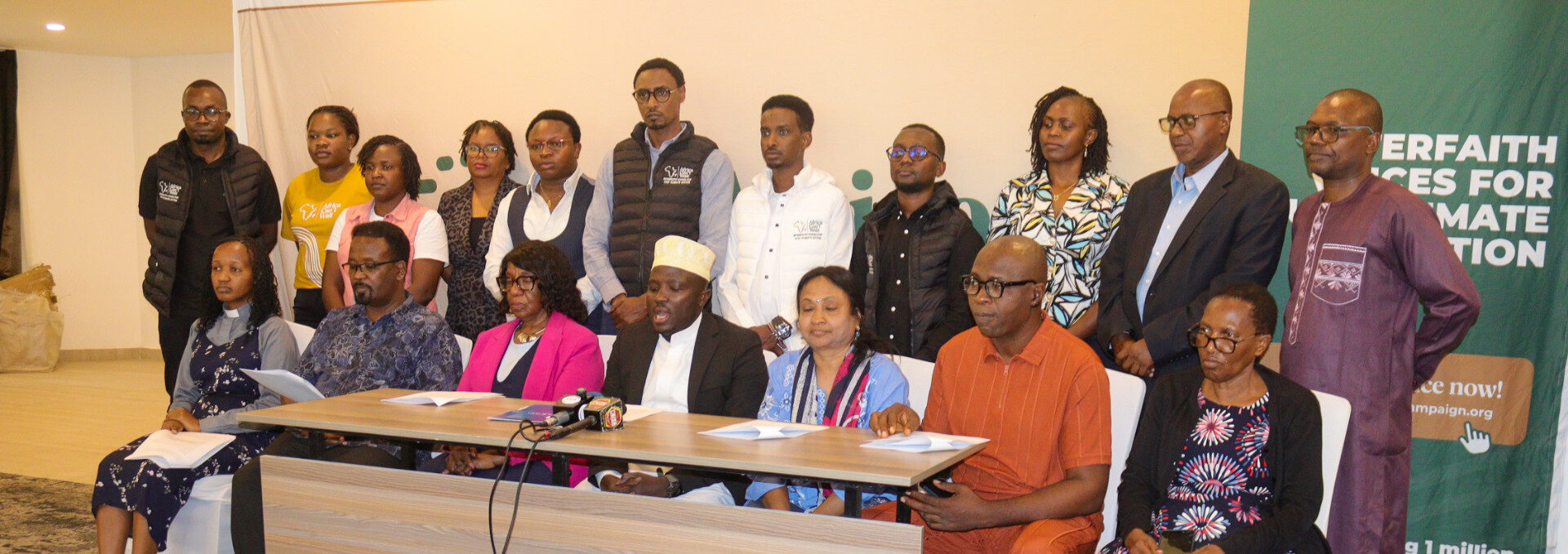
- 5.2 Adaptation and Locally Led Climate Action: Adaptation requires sustained investment in local infrastructure, agriculture, water management, disaster preparedness, public health and community resilience. ACT Alliance and its members work directly with communities experiencing these challenges and advocate approaches that place local leadership at the centre of climate action. In October 2026, African faith leaders participating in the Africa Can’t Wait campaign called for credible adaptation finance, locally led implementation and greater accountability ahead of COP31. Stronger public revenue mobilisation could help reinforce these objectives by enabling governments to allocate more resources to national and local adaptation priorities. However, effective local investment would also require transparent public budgeting, decentralised financing and meaningful community participation. This illustrates why tax justice should be understood as more than revenue collection.It must also involve accountability for how public resources are used and whose needs they serve.
- 5.3 Loss and Damage: Communities facing devastating floods, droughts, storms, rising sea levels and other climate impacts often lack the resources needed to recover. ACT Alliance has advocated adequate and accessible finance through the Fund for Responding to Loss and Damage, with particular attention to the needs of vulnerable communities. Tax justice offers a potential additional financing pathway. Progressive taxation of extreme wealth, corporate profits and certain polluting activities could contribute to national or international public financing mechanisms. However, such financing would require deliberate policy arrangements, including agreements on contributions, allocation and accountability. For countries facing severe climate impacts, international transfers will remain essential. The polluter pays principle could help guide the design of additional financing instruments, provided these are consistent with international equity principles and do not shift responsibilities onto countries least able to contribute.
- 5.4 Just Transition: A just transition requires more than a shift away from fossil fuels. It also requires investments in workers, public services, renewable energy, sustainable industries, social protection and economic opportunities for affected communities. The financing requirements are substantial. Progressive taxation can help governments mobilise public investment while ensuring that the costs of economic transformation are not disproportionately transferred to workers and low-income households. At the same time, tax policies should be designed to avoid perpetuating extractive economic relationships or encouraging further environmentally destructive activities merely to generate additional revenue. This is particularly relevant to countries seeking to develop renewable energy industries and participate more fairly in global value chains. The connection between tax sovereignty and just transition is therefore not only about financing change, but also about creating more equitable economic opportunities.
- 5.5 Gender Justice : Gender equality is a cross-cutting priority in ACT Alliance’s climate and economic justice work. Climate impacts, fiscal policies and public expenditure decisions can have different consequences for women and men, particularly where women experience unequal access to income, assets, public services and decision-making. Progressive tax reform and stronger public investment can contribute to gender equality by financing essential services, social protection and climate adaptation.mConversely, regressive taxation or reductions in public spending can exacerbate existing inequalities and increase unpaid care burdens. Connecting climate and tax justice therefore creates an opportunity to reinforce ACT’s gender-responsive approach across both negotiating processes. The shared objective should be to ensure that fiscal and climate policies are assessed not only by the revenue they generate or emissions they reduce, but also by their consequences for equality, rights and well-being.
- The Added value of ACT Alliance
ACT Alliance is particularly well positioned to make this connection.
Our members work with communities already experiencing the consequences of climate change, while our advocacy seeks to address the political and economic structures that reinforce poverty, exclusion and inequality.
This combination of community experience and international advocacy provides a basis for connecting highly technical debates on taxation with their consequences for people’s lives.A community struggling to rebuild after repeated flooding is affected by more than climate change alone. Its capacity to recover also depends on public infrastructure, social protection, accessible finance and government resources.
Similarly, the ability of governments to invest in resilience is affected not only by their domestic fiscal decisions, but also by international economic rules. ACT can therefore contribute a perspective that connects local realities with global governance. Faith-based organisations also have an important role in articulating the moral and ethical dimensions of these debates.
Climate justice and tax justice both involve questions of responsibility, solidarity, dignity and the fair distribution of resources.
For ACT Alliance, connecting climate justice and tax justice is ultimately about ensuring that international economic rules serve people and the planet, rather than reinforcing the inequalities that make communities more vulnerable.
- Proposed Advocacy Messages
The following messages could provide a common foundation for ACT’s climate justice and tax justice teams, while allowing each to adapt them to the relevant negotiating process.
Message 1: Climate justice requires economic justice
The climate crisis is also a crisis of inequality. Communities that have contributed least to global warming are often those paying the highest price, while enormous concentrations of wealth and corporate profits remain insufficiently taxed. Climate justice requires international economic rules that distribute resources, responsibilities and opportunities more fairly.
Message 2: Fair taxation is part of the solution to the climate finance crisis
Governments repeatedly point to a lack of resources to finance adaptation, mitigation and loss and damage. Yet, significant public revenue is lost through international tax abuse, profit shifting and the undertaxation of extreme wealth. Reforming international tax rules can help governments mobilise additional public resources and strengthen the financing of climate action.
Message 3: Those who pollute most and have the greatest capacity must contribute fairly
The costs of climate change should not fall disproportionately on vulnerable communities and low-income households. Progressive taxation of extreme wealth, corporate profits and polluting activities can help ensure that those with the greatest responsibility and capacity contribute more fairly to addressing the climate crisis.
Message 4: Developing countries need both climate finance and fiscal sovereignty
Developing countries should not be forced to choose between investing in climate resilience, financing public services and servicing debt. Fairer international tax rules can strengthen their capacity to mobilise domestic resources. At the same time, developed countries must fulfil their international climate finance obligations through predictable, accessible and primarily grant-based support.
Message 5: The UN Tax Convention is an opportunity to address structural climate injustice
The negotiations for a UN Framework Convention on International Tax Cooperation offer an important opportunity to establish fairer international rules and strengthen developing countries’ taxing rights. A strong Convention can contribute to climate justice by helping countries recover resources lost through tax abuse and by enabling more equitable public financing.
Message 6: Climate finance must reach the communities that need it most
Mobilising more public revenue is only part of the solution.Climate financing must be transparent, accountable, gender-responsive and accessible to local communities. Whether resources come from domestic taxation or international climate finance, decisions about their use must uphold human rights, community leadership and the principles of a just transition.
Message 7: International economic and climate governance must work together
The climate crisis cannot be addressed through climate negotiations alone. The international rules governing taxation, finance, debt and economic cooperation have profound consequences for countries’ ability to implement climate commitments.Governments must ensure greater coherence between international climate agreements and reforms to global economic governance.
Conclusion
The connection between climate justice and tax justice offers ACT Alliance an opportunity to strengthen its advocacy on the structural causes of inequality and climate vulnerability. Both processes are necessary to build an international system capable of supporting sustainable development, protecting vulnerable communities and distributing economic responsibilities more equitably.
For ACT Alliance, this connection reinforces an essential principle: The people and communities least responsible for the climate crisis should not be expected to bear its greatest costs, while those with the greatest economic power avoid contributing their fair share.
By connecting its climate justice and tax justice work, ACT can make a stronger case for international cooperation that addresses not only the symptoms of inequality, but also the economic structures that perpetuate it.
References and Further Reading
- Tax Justice Network (2025). Reclaiming Tax Sovereignty to Transform Global Climate Finance.
- Global Alliance for Tax Justice (2026). Over 150 Civil Society Organizations Make Joint Submission on the Zero Draft UN Tax Convention.
- Greenpeace International (12 October 2026). Tax the Wealthiest Polluters to Fund Climate Action.
- Greenpeace International (2026). COP31 Priorities and Expectations.
- ACT Alliance (2025). COP30 Outcomes Analysis.
- ACT Alliance (26 October 2026). Africa’s Faith Leaders Issue a Call for Just Climate Implementation Ahead of COP31.
- ACT Alliance (2026). Climate Justice — Annual Report 2025.
United Nations (2026). Intergovernmental Negotiating Committee on International Tax Cooperation — Sixth Session.