Antalya, Türkiye, 16 November 2026
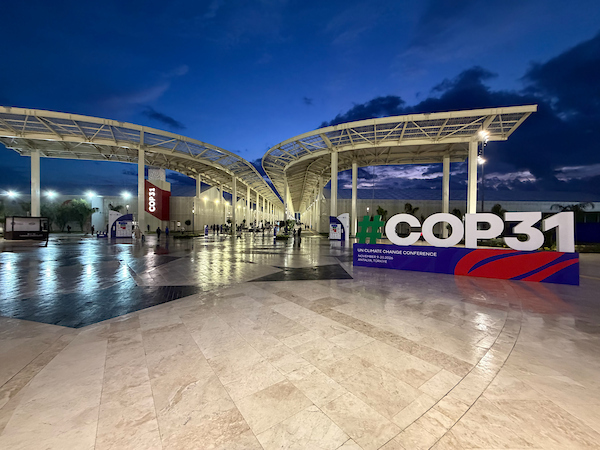
COP31 has reached the end of its first week with a great deal still to resolve. Countries arrived in Antalya with their 2035 climate plans (NDCs), and the Presidency has framed the conference as an Implementation COP, where commitments already made are expected to turn into delivery. The talks now need to show that they can do this.
The stakes are set out in UNEP’s Limiting Overshoot report. A higher peak in warming and a longer period above 1.5°C mean greater risks for people, nature and economies. Faster emissions cuts must therefore go hand in hand with stronger protection for communities already facing and at the risk of worsening climate impacts.
The World Leaders Climate Action Summit on 11 and 12 November brought together more than 70 heads of state and senior government officials. It disappointingly was long on appeals and short on commitments. The leaders of China, the United States and India, which together produce more than half of global carbon dioxide emissions, did not attend, and many European leaders also stayed away. The strongest messages came from Pacific island leaders and from UN Secretary-General António Guterres, who urged governments to end reliance on fossil fuels, increase support for poorer countries and replenish the Green Climate Fund and the Fund for Responding to Loss and Damage.
Week one has left ministers with too much unfinished business. They now need to show that they can bridge differences and deliver an agreement that responds to the climate crisis,
How negotiations opened for each thematic area during week 1:
- Adaptation: Belem work programme on the Global Goal on Adaptation
On adaptation, Parties were able to make only sluggish progress, postponing critical decisions, such as those on Adaptation Communications, to technical discussions in Bonn. On National Adaptation Plans, Parties were unable to agree on whether adaptation progress should be assessed against more standardized international metrics that would allow comparability but might reduce national nuance. Moreover, there was little consensus on whether identifying adaptation implementation gaps and determining the way forward should involve evaluating different financial flows and enabling conditions, or whether the focus should be on implementing climate finance obligations under Article 9 of the Paris Agreement. Ultimately, with the limited time reserved for these negotiations, substantial disagreements between Parties remained unresolved. Nevertheless, Parties agreed to forward the NAP negotiations to COP31 for further consideration during the second week, rather than postponing them to Bonn.
The Global Goal on Adaptation (GGA) is one of the most significant adaptation negotiation tracks at COP31, aiming to establish a common framework for assessing global adaptation progress and guiding future action. However, substantial disagreements remain over the operationalization of the Belém Adaptation Indicators, particularly the composition of the technical task force and the balance between scientific expertise, political oversight and national flexibility. More fundamentally, Parties remain divided over how adaptation ambition should be linked to adequate and predictable finance, especially to the concretization of the tripling of the adaptation goal, and how the Baku Adaptation Road Map should address the growing risks, costs and limits of adaptation in a world exceeding 1.5°C. With these key questions unresolved, negotiations have been forwarded to CMA8 for further consideration during the second week of COP31.
Taking into consideration the harsh realities of the world exceeding the 1,5 Celsius target, parties cannot meaningfully discuss increasing ambition on adaptation without addressing the availability, accessibility and predictability of finance - ambition and means of implementation must go hand in hand.
A promise to triple adaptation finance will not protect anyone until the money arrives. Wealthy countries must show how they will deliver, and make sure support reaches the people who need it,
- Loss and Damage
Loss and damage negotiations in week one centred on the joint annual report (JAR) of the Warsaw International Mechanism (WIM) Executive Committee and the Santiago Network, and on WIM governance. Parties are also considering the report of the Board of the Fund for Responding to Loss and Damage (FRLD) and giving guidance on its policies, programme priorities and eligibility criteria.
On WIM governance, Parties could not agree on where the mechanism should be domiciled. The matter was deferred once again, as the issue had not hindered progress to date. On the JAR, Parties agreed a draft decision text. Its main highlight is a paragraph regretting the impact of the withdrawal of in-kind pledges and urging their timely fulfilment. No new language on finance was included, but Parties recalled previously agreed language on funding for the Santiago Network and stressed the timely implementation of its resource mobilisation strategy under previously agreed conditions. Developing country Parties stressed that implementation must be catalysed, that the Santiago Network must deliver technical assistance faster, and that the three main loss and damage bodies must work coherently.
Heading into week two, ACT members are calling for additional guidance to the FRLD, particularly as the Fund enters its pilot phase and prepares for its first replenishment. This includes:
- Strong language on resource mobilisation and replenishment that reflects the significant gap between funding demand and available resources.
- Simplified access, an expedited Country Support System, and rapid disbursement with clear triggers, indicators and non-debt-creating instruments.
- Guidance to ensure the long-term model responds to countries’ needs, including rapid response and direct budget support.
- Explicit recognition of context-specific realities, such as ocean-related loss and damage, Indigenous Peoples’ rights and gender-responsive approaches, while promoting complementarity and coherence with other funding arrangements.
A Fund for responding to loss and damage that does not address access modalities, replenishment plans and address contextual realities is not fit for purpose. Mandates without resources are meaningless to suffering communities. The loss and damage architecture must work in a coordinated, coherent and complementary manner, equipped with adequate resources for the rising needs.
Addressing the full scope of loss and damage, including non-economic loss and damage, is essential to achieving climate justice. The impacts of the climate crisis go far beyond what can be measured in financial terms. They affect people's lives, cultural heritage, identities, territories, spiritual connections and the web of life. We must ensure that climate responses recognise these losses, uphold human dignity and provide meaningful support to the communities on the frontlines of the crisis.
- Finance
Implementation of climate action is contingent on provision, mobilization and delivery of climate finance. Rising global temperatures resulting in climate impacts demand rapid structural and systemic action that must be financed to safeguard countries and communities at the highest risk. However, COP 31 is yet to live up to this reality with its first week coming to an end amidst divergences between developed and vulnerable nations on important finance agenda items. Agreed in COP 30, the Climate Finance Work Programme yet again featured varying opinions amongst countries pertaining to its operationalization. The two year work programme’s scope and modalities are largely contested with developed countries not agreeing to vulnerable countries ask to have the purpose of the work programme discuss provision of climate finance and clarify how developed countries share the responsibility to jointly provide climate finance. Similarly, little progress was made on other finance items being considered at COP 31.
It’s deeply concerning that vulnerable countries that contributed least to the climate crisis are increasingly pushed to make a case to discuss the responsibility of developed countries to provide climate finance. The ICJ advisory opinion supports the principles, mandates, and responsibilities of countries within the climate Convention and its protocols. Whilst the current geopolitical context remains challenging, it does not set a premise for a backtracking of action, nor stepping away from the frameworks that govern the climate system for humanity and nature's sake.
- Mitigation and NDCs
UNEP’s recent Limiting Overshoot report underlines the stakes: the higher global temperatures rise, and the longer the world remains above 1.5°C, the greater the risks for people, nature and ecosystems. Yet mitigation negotiations during the first week of COP31 have made little progress towards greater ambition, with renewed calls to transition away from fossil fuels facing resistance.
Even if keeping the 1.5°C limit within reach seems increasingly difficult, we must never lose hope or give up. This is not simply about reducing emissions; it is about saving lives, caring for creation and protecting the rights and dignity of future generations. We urgently call on all Parties to turn their NDC commitments into concrete action. Governments should not fear climate action; they should seize every opportunity to accelerate the transition and prevent further loss and damage. The choices we make today will shape the future we leave to generations to come.
Our responsibility to care for God's Creation demands action, not just promises. Every fraction of a degree matters, especially for the world's most vulnerable communities. Governments must show leadership by accelerating emissions reductions and turning their commitment to transition away from fossil fuels into concrete action.
- Just Transition
Under the Just Transition track, discussions centred on the review of the Just Transition Work Programme (JTWP), its continuation beyond 2026 and the operationalisation of the Just Transition Mechanism (JTM). While there is broad support for extending the programme, significant differences remain over its future scope, priorities and how just transition pathways should be advanced, including the role of means of implementation in supporting nationally determined pathways. As negotiations move into week two, Parties must ensure that just transition is not reduced to a narrow focus on emissions reduction or energy transitions, but addresses the wider transformation of economies and societies. This requires a whole-of-economy approach that puts equity, inclusion and human rights at its centre, recognises the disproportionate impacts on developing countries and vulnerable communities, and addresses gender equality, care work, decent work and the distribution of costs and benefits. A transition of energy systems (away from fossil fuels to less polluting sources of energy) will not solve the problem of climate change if its implementation fails to be just; if its benefits are purchased at the cost of workers and communities of the most vulnerable who have contributed least to the problem. Because the root cause of climate change is historic economic injustice.
To avoid the most dangerous consequences of climate change, the rapid phase out of fossil fuels is essential.This transition can not be with without a justice perspective. A transition away from fossil fuel must include a a social responsible agenda. No one should be left behind when we journey to protect the future of life on earth. This is how we practice Love Thy Neighbor .
- Gender
Progress on the Belém Gender Action Plan is evident, with 110 actions already undertaken at national and regional levels. We welcome increased women’s representation across country delegations and UNFCCC bodies, and the strengthened role of National Gender Focal Points.
Yet COP31 negotiations have been deeply disappointing. Calls from climate-vulnerable countries for urgent technical and financial support went unanswered, while opportunities for stronger collective implementation, including on gender-responsive climate finance, were stalled. Our greatest collective achievement was the unity shown by Parties defending the BGAP.
COP31 has once again exposed how consensus-based decision-making can hinder meaningful progress when geopolitical interests take precedence over collective responsibility and the common good.
Geopolitical interests are not neutral: they express an economic model that turns land, water, seeds and labour into commodities, concentrating wealth and distributing harm. This inequality operates between North and South, and within countries, where national elites profit while the poor, Indigenous and urban poor communities bear the impacts. Women in remote areas erased from the text sit exactly where these inequalities meet.
The responsibility of men in this space. We have internalised mandates of competition, individualism, domination and accumulation. These same dynamics shape negotiations, where national and commercial interests are defended as victories and the demands of those most affected are treated as concessions. Recognising this is not guilt. It is responsibility. Climate justice will be feminist, it will belong to the peoples, and it will confront class inequality, or it will not be justice.
- Climate-induced Human Mobility
Climate-induced displacement and migration were expected to feature under the Australian Presidency, given its engagement in Pacific frameworks on the issue. In week one, the issue was largely avoided and in some cases explicitly deleted from draft texts. Observers attribute this to overarching questions on finance and the general political climate, and to opposition from Türkiye, Saudi Arabia and the Like-Minded Developing Countries (LMDCs). Bangladesh and others have raised deep concern.
The gap between the political attention the issue receives and the negotiating rooms is wide. Numerous pavilion side events have conveyed the urgency and scale of displacement, but this has not reached the draft texts:
- Cover decision: Migrants no longer appear in the list of vulnerable groups, although adding displaced people and refugees was once a settled advocacy ask. Fragility, conflict and other vulnerabilised groups are also missing. Displacement is absent from the section on overshoot, where it would have been a natural inclusion.
- Loss and damage: Finance and technical assistance dominate the agenda, and displacement receives almost no attention. Key technical questions remain open: how to integrate local knowledge into needs assessment, how funding can reach displaced people and the most vulnerable, how to address protracted displacement when people cannot return, and how to distinguish between disaster risk reduction and loss and damage.
- Adaptation: The only reference in the Global Goal on Adaptation text is a preambular mention of the contribution of migrants and other groups to adaptation. It was supported by Brazil, the Southern American group, the EU and others, and opposed by the Arab Group. A reference to human mobility in the National Adaptation Plans (NAPs) text was deleted.
- Overall focus: Discussions lean heavily on prevention and early warning, which are crucial, but leave out what comes after a disaster, including rebuilding, loss and damage and reparations.
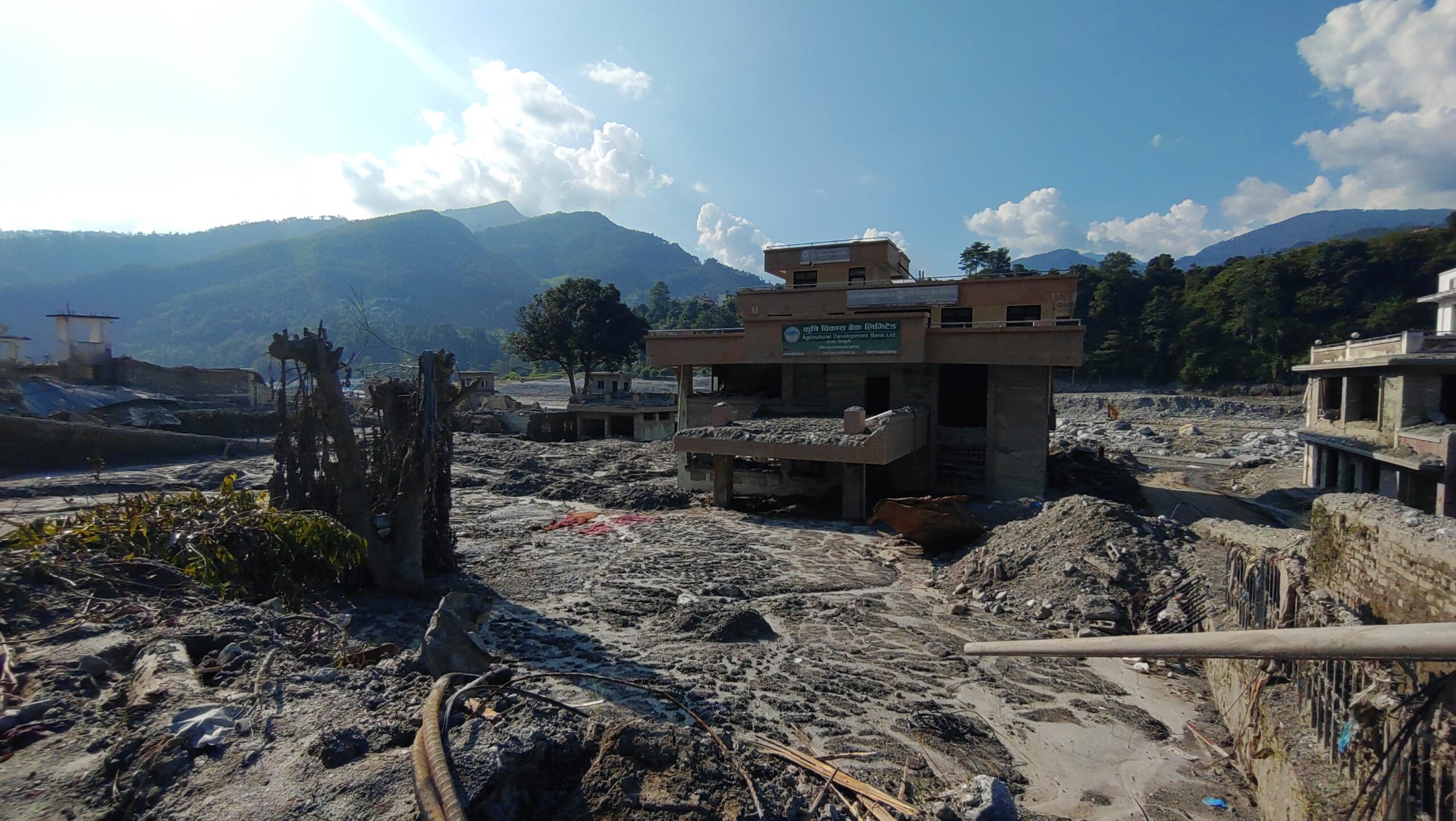
Displacement and migration were expected to be addressed under the Australian Presidency, given its engagement in Pacific frameworks, yet the issue has largely been avoided or deleted. In the cover decision, migrants are no longer even listed among vulnerable groups, and fragility and conflict are missing, although around 75 per cent of displacement takes place in fragile contexts. Even after the recent disaster-induced displacement in Nepal, displacement receives zero attention in the loss and damage discussions. In week two, migration, displacement and planned relocation must be included in the cover decision, in the Fund for Responding to Loss and Damage and in the National Adaptation Plans, so that protection is addressed through national planning.
Where we need to go in Week 2
COP31 enters its second week with key political disagreements unresolved. Negotiations have yet to deliver the breakthroughs needed on emissions reductions and climate finance, putting pressure on arriving ministers to turn their political mandates into progress. As negotiations continue, governments must do what is needed to address the climate crisis equitably while supporting the most vulnerable communities.
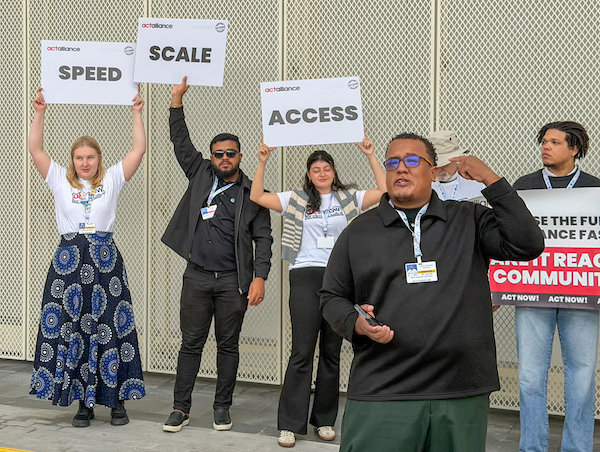
ACT Alliance and its ecumenical partners call upon ministers to accelerate a just transition away from fossil fuels, enable countries to implement adaptation plans, and strengthen support for unavoidable loss and damage. This requires credible climate finance, including a clear pathway to deliver the commitment to triple adaptation finance, with predictable and accessible finance for vulnerable communities.
We urge governments to turn their commitments into concrete action and transition from a fossil-fuel-dependent economy to one grounded in dignity, justice and respect for the web of life. A just transition cannot be considered just if it reduces emissions at the expense of people and communities. Governments must ensure that every transition policy is firmly rooted in human rights, protecting the rights to life, health, food, water, housing, decent work and a healthy environment. Climate action must not create new injustices, but build a future where no one is left behind.
The science, as set out in UNEP’s Limiting Overshoot report, shows that humanity must change course, and that those most vulnerable must be supported to do so. Delivering this depends on preserving the multilateral system and on settling the finance gap that holds back implementation.
The global climate governance frameworks and processes are not a ‘good to have’ but a ‘must have’ and ‘must preserve’, regardless of prevailing geopolitical realities. COP31 must therefore live up to its goal of demonstrating implementation potential by settling the persistent gap in finance that limits the implementation of actions. The lack or inadequacy of finance infringes on the rights of vulnerable communities to a dignified living in a rapidly changing climate.
Efforts to reform the UNFCCC should not become an ambition to undermine the existing frameworks through lowered ambition, by relinquishing the responsibilities of developed countries or by shifting the burden to the most vulnerable. Enhancing the effectiveness of the multilateral system must be about delivering on commitments to ambitious emission reductions, justly transitioning away from fossil fuels, and increasing the provision and mobilisation of fair, non-debt finance to support adaptation and loss and damage.
Ministers should negotiate with their children’s future in mind and with a thought for families already losing their homes and harvests. Every fraction of a degree they help prevent means less suffering.
While we have witnessed delays across the negotiations this week, and frustrations with the absence of key actors needed to make the financial and policy commitments required to change the tide of climate change impacts, we do not have to give in to complacency or despair. As it has done time and again, the faith community will continue to show up, engage, act and speak out for the care and repair of our shared common home. The COP31 Presidencies named this year’s conference the Implementation COP, but implementation must not be just a talking point. To make it more than that in name only, world leaders must act decisively with courage and ambition.