ACT Alliance Post-SB64 Reflections | June 2026
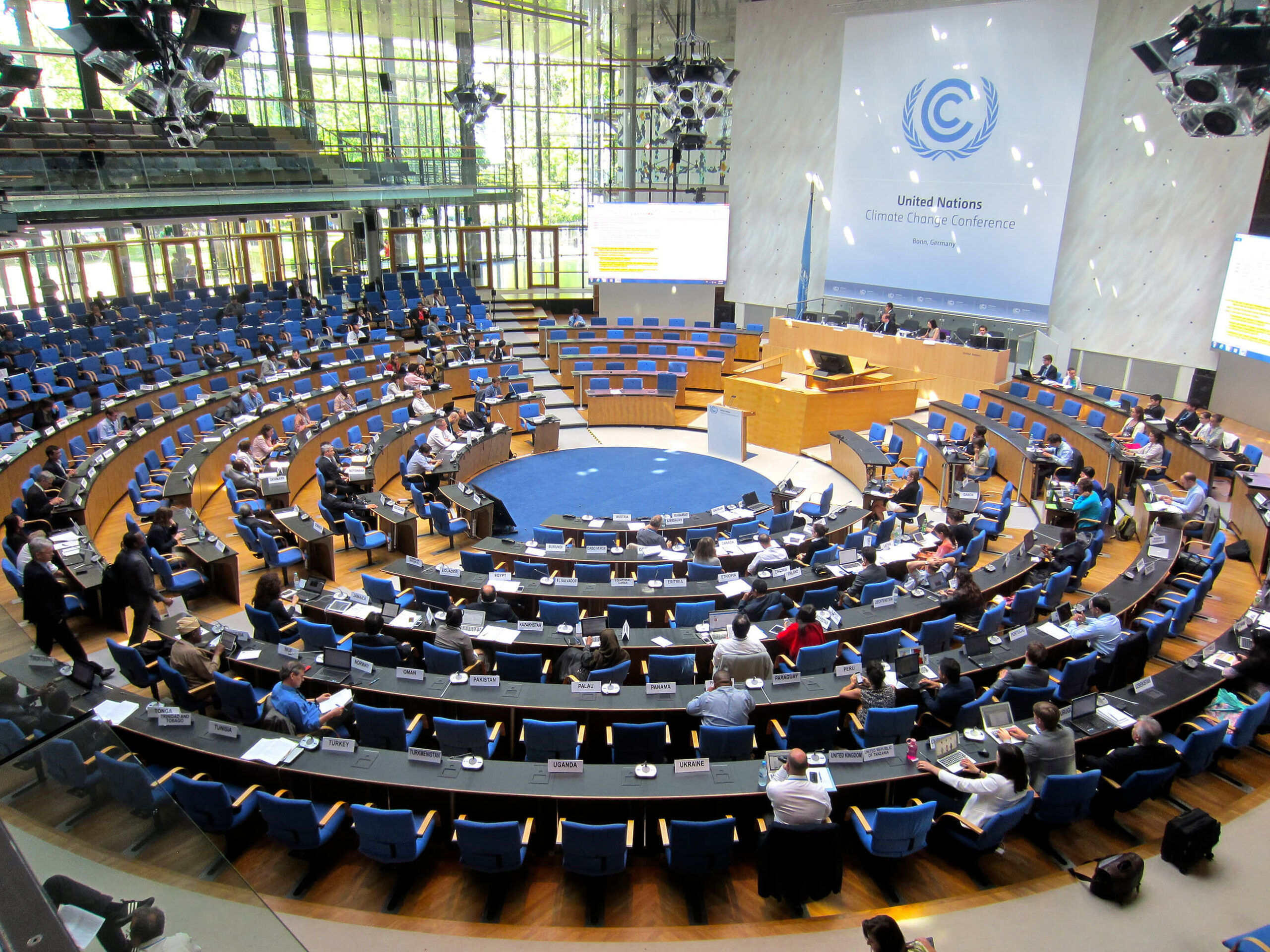
Two weeks of UN climate negotiations in Bonn have concluded, and the result is sobering, though not entirely unexpected. Climate Finance, Mitigation, and the Global Goal on Adaptation all struggled to make meaningful progress. Rather than resolve these disagreements, Parties largely deferred them to COP31 in Antalya. That should worry everyone.
The climate crisis is accelerating. The most critical political discussions are not. Instead of building momentum toward COP31, Bonn leaves negotiators facing the risk that the summit will open mired in procedural and political disputes rather than substantive action.
A new theme is meanwhile dominating the debate: implementation. Governments insist enough decisions have been made and the focus should now shift to delivery. There is truth in that. But implementation cannot become an excuse to avoid hard political choices. Without transparency, accountability and regular ambition-raising, it risks becoming a selective exercise, where governments spotlight their wins and quietly shelve the commitments they find inconvenient. The Action Agenda will likely dominate COP31 as a result. The challenge will be ensuring that this shift strengthens climate action rather than narrowing it. Most implementation initiatives so far focus on mitigation and the energy transition. Adaptation, loss and damage, and support for vulnerable countries must not be left behind.
"Too many of the difficult political discussions have simply been postponed to COP31, which may make the summit in Antalya even more challenging. We need to turn promises into action. But implementation cannot replace ambition. The risk is that implementation becomes a comfortable conversation about success stories, while the difficult discussions about finance, adaptation and loss and damage are left unresolved. If COP31 is to succeed, governments must show that implementation and ambition go hand in hand."
Finance
Climate finance ended SB64 as one of the most contested issues on the road to COP31. The Climate Finance Work Programme (CFWP) was a central agenda item, with many developing countries expecting it to provide meaningful space to advance Article 9.1 of the Paris Agreement, which establishes the obligation of developed countries to provide financial support for climate action. Most left disappointed. The workshops and stakeholder dialogues that took place exchanged views but produced no concrete outcomes on how to strengthen delivery. Whether the CFWP will be part of the formal COP31 negotiations agenda remains a key question to watch.
Finance also cut across other negotiation tracks. In the Global Goal on Adaptation negotiations, developing countries pushed to reference the COP30 commitment to triple adaptation finance. Disagreement proved insurmountable and the issue was deferred to COP31. In the Just Transition Work Programme, developing countries were equally clear: a just transition cannot happen without dedicated financial support. That question too returns to Antalya unresolved.
SB64 also saw the first two-day meeting of the Veredas Dialogue on Article 2.1(c) of the Paris Agreement, which addresses the much larger challenge of aligning all financial flows with climate-resilient and low-carbon development. Significant uncertainty remains about what implementation should look like in practice, not least because the key actors responsible for driving this alignment, including central banks, financial regulators and private financial institutions, largely operate outside the UNFCCC process. Discussions acknowledged the need to account for differentiated national realities and to avoid penalising climate ambition.
"Climate justice was the unfinished business of SB64. Negotiations advanced important conversations on implementation, but many developing countries left Bonn still waiting for clearer pathways to deliver the finance they have long been promised. Trust in the climate process depends on turning commitments into action. The road to COP31 must ensure that those most affected by climate change receive the support they need to build resilient futures."
Global Goal on Adaptation
Adaptation received significant political attention at SB64, but like finance and mitigation, the negotiations ultimately ended without agreement. The central question was no longer whether adaptation matters, but how implementation will be financed and measured. Parties broadly recognised that adaptation must be integrated into national development plans, food systems, water management, health systems and infrastructure, with discussions emphasising policy coherence across sectors rather than treating adaptation as a standalone issue.
The divide was familiar. Developed countries preferred to focus on frameworks, indicators, reporting and methodologies. Developing countries pushed back, arguing that moving into the implementation phase without the means of implementation flowing from developed to developing countries, as agreed in previous decisions, was futile. They insisted on clear language referencing the tripling of adaptation finance agreed at COP30, and on adequate, predictable, grant-based finance for adaptation. Neither position prevailed.
Other unresolved issues included the composition of the Belém-Addis Vision Technical Task Force, where agreement was reached on its necessity but not its membership, reflecting a wider debate over the respective roles of technical experts and Party representatives. Whether adaptation indicators should be globally standardised or nationally determined, and how to balance reporting requirements with implementation capacity in developing countries, also remained open.
"The main challenge in the adaptation negotiations was not a lack of understanding of what needs to be done. The challenge was ensuring that commitments are matched with the financial, technological and capacity-building support necessary to implement them. The Bonn session highlighted a persistent gap between rhetoric and action, with procedural issues continuing to overshadow the decisions necessary for real-world implementation."
Just Transition
SB64 delivered limited but useful progress on just transition. While other tracks remained blocked, Parties kept discussions moving by focusing on two practical areas: the design of a new Just Transition Mechanism and the review of the existing Just Transition Work Programme.
On the Mechanism, Parties began discussing what it should do in practice, including whether it should provide technical support, help countries prepare just transition plans, connect them with finance and technology, track implementation gaps, and bring together workers, communities, governments and civil society in decision-making. On the Work Programme, Parties discussed linking dialogue outcomes to formal decisions, strengthening participation of non-Party stakeholders and addressing means of implementation.
The harder questions, however, were not resolved. Parties did not agree on the Mechanism’s mandate, governance structure, funding links or eligibility criteria. Finance remains the biggest gap. Developing countries were clear that just transition cannot be delivered through dialogue alone; it requires predictable public finance, concessional resources, technology transfer and capacity-building. How the Mechanism will address adaptation, economic diversification, fossil fuel dependency, energy access and the social costs of climate action in developing countries all remain open for COP31.
"SB64 made one thing clear: a just transition cannot remain trapped in dialogue rooms while communities face rising climate impacts, energy poverty and economic uncertainty. COP31 must operationalise a Just Transition Mechanism with a clear mandate, inclusive governance, predictable public finance, technical support and direct links to country-owned transition plans. This mechanism must turn principles into practice by delivering climate justice people can feel in their daily lives."
Gender Action Plan
Since the Belém Gender Action Plan was adopted at COP30 with a nine-year implementation timeline, SB64 marked an important first step in rolling it out. Mandated events took place during the session, including an expert dialogue on gender and gender-disaggregated data, a workshop on the role of national gender and climate change focal points, and the first-ever annual gender-responsive climate finance dialogue. That the Just Transition decisions from COP30 explicitly include the care and health sectors, and highlight the importance of preventing violence against women, are further positive steps.
Participation from present Parties was active, but a significant gap was noted: many gender and climate focal points, primarily from the Global South, were absent due to financial constraints, visa restrictions, safety concerns and other barriers. The people who would benefit most from these processes were often unable to attend. Concern also exists that budget cuts to the UNFCCC Secretariat may undermine its capacity to coordinate gender-related efforts, monitor disaggregated data and follow up on commitments. The Women and Gender Constituency launched a campaign at SB64 calling for global mobilisation around the Belém GAP on 17 September, an opportunity for ACT Alliance, the ecumenical movement and civil society to demonstrate commitment to gender justice as part of climate action.
"The Belém Gender Action Plan is one of the few positive outcomes from COP30. To sustain hope and trust in the UN-led global climate negotiations, it is essential that Parties ensure this is not just another document, but a reflection of genuine ambition to ensure that no one is left behind. It presents an opportunity to advance the right to food, secure access to means of implementation, and strengthen women-, Indigenous-, gender-diverse- and youth-led climate action. It is high time to Act on the GAP."
Faith: Theological Reflection after Bonn SB64
The stalled negotiations in Bonn are not just a diplomatic setback. They reflect a deeper failure: the unwillingness of those with the greatest historical responsibility to act with the urgency the crisis demands. For ACT Alliance, this is not only a political question. The climate crisis is fundamentally a question of how humanity lives in relationship with creation and with one another.
Paul writes that all creation is groaning and waiting for liberation. That groaning has a human face: the farmer watching a harvest fail, the family displaced by a flood, the child breathing toxic air from burning biomass because clean cooking remains out of reach. Jesus identifies himself with the hungry, the thirsty, and the vulnerable. To carry one another’s burdens is not an optional addition to faith. It is its very core.
Rev. Lisa Svensson of the Church of Sweden puts it plainly:
"When we see ecosystems breaking down and people suffering from droughts, floods and hunger, the climate crisis becomes not only a technical issue but a spiritual one. Finance, responsibility, and just transition reflect a fundamental truth: justice requires concrete action and accountability, especially from those with greater power and resources. In ACT's work with those most affected, solidarity is not an idea. It is a lived reality. And even in this urgency, we are sustained by a hope that is not an escape from the world, but a force for transforming it."
ACT Alliance’s Position Towards COP31
Implementation and ambition are not alternatives. They are inseparable. Fostering implementation depends on collective multilateral action that accounts for the diverse capacities of countries and maintains the political commitment to raising ambition and ensuring accountability. Decisions at COP31 and actions to promote implementation must reinforce each other toward a low-carbon, climate-resilient world. The Action Agenda must not be treated as an alternative to the formal negotiation process, but as a catalyst for practical cooperation that builds on and strengthens agreed decisions.
The multilateral climate process under the UNFCCC remains the principle-based framework that gives all countries agency and the will to cooperate. COP31 must demonstrate that multilateral cooperation grounded in equity, justice and fairness still works. Greater convergence among countries on unresolved differences is not optional; it is essential for the credibility of the process and for the communities depending on its outcomes.
"Decisive action to drive greater implementation through responsive multilateral decisions will be required at COP31. A political outcome that establishes the legal basis for the provision of financial support to vulnerable nations will be central to its success. Resolute decisions that advance mitigation ambition to keep 1.5 degrees alive, support a just transition, and increase financial commitments to the Loss and Damage Fund will be key elements of any credible political package."