Co-authored by: Illari Aragon, Policy and Advocacy Lead, Climate Resilience, Christian Aid and Co-Chair of the ACT Alliance Climate Justice Working Group, and Julius Mbatia, Global Programme Manager, ACT Alliance.
Governments today are navigating multiple and overlapping pressures. They must accelerate the transition from fossil fuels to clean and renewable energy in a just and equitable manner, while ensuring that energy remains affordable, accessible and supports development for all. At the same time, they must respond to escalating climate impacts, including the prospect of a powerful El Niño event in the coming months, and manage the effects of geopolitical instability and concerns over global energy security arising from conflict in the Middle East. In this context, stronger international cooperation has never been more important, and the transition to renewable energy more urgent.
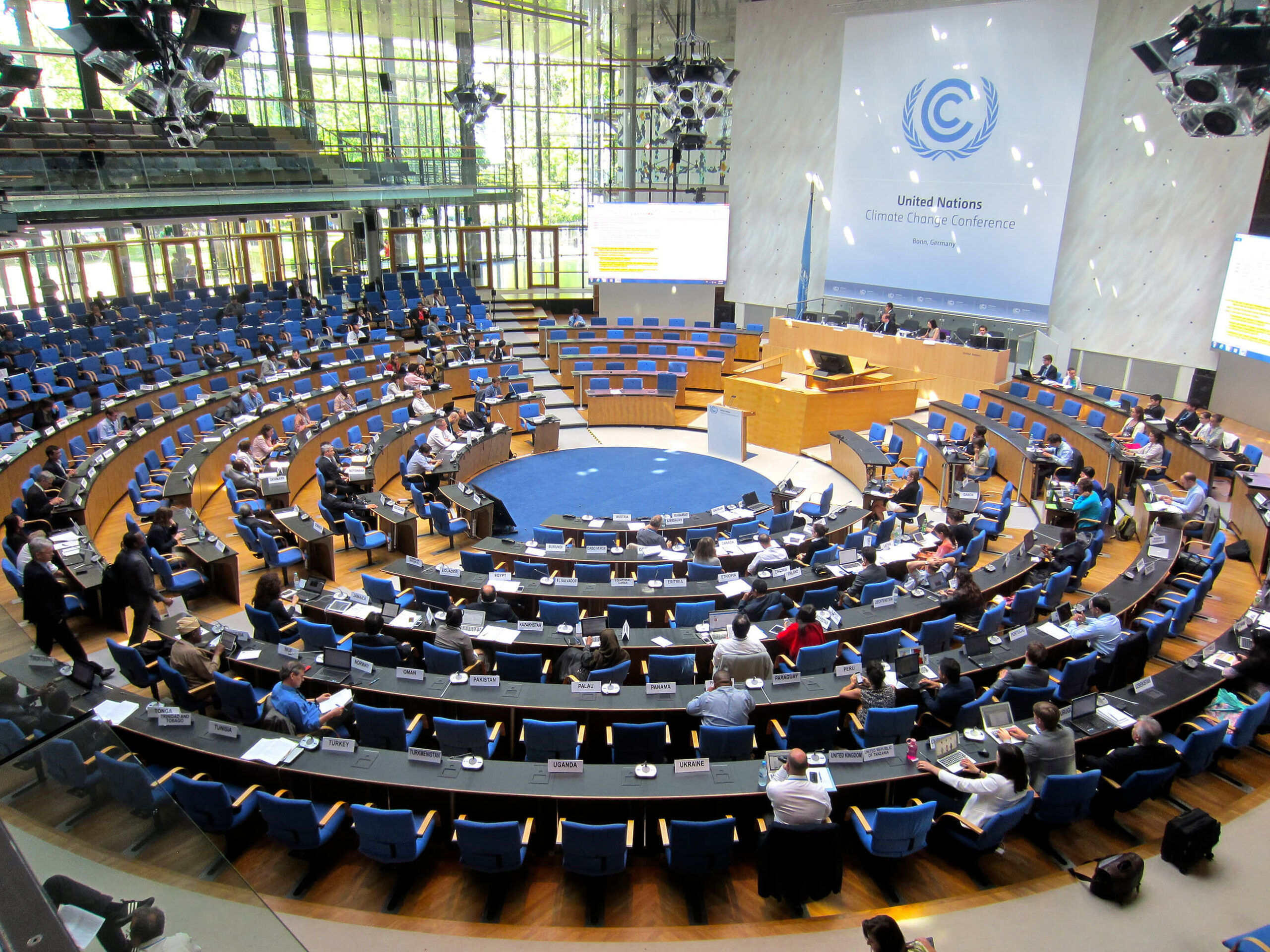
The 64th Session of the Subsidiary Bodies (SB64), taking place in Bonn from 8 to 18 June, arrives at this critical moment. It is an important opportunity to demonstrate that multilateral cooperation remains alive and capable of driving action on global climate challenges.
Delegates gathering in Bonn will face a demanding agenda. As the midpoint between now and COP31, the Bonn meetings play a critical role in shaping negotiations and advancing decision texts for adoption at COP31 in Antalya, Türkiye, in November. The outcome of these discussions matters enormously. Extreme heatwaves are currently sweeping Europe, India, and other parts of Asia. Cases of flooding and harsh hurricanes are on the rise, with increased and more severe droughts occurring across 40% of the global land mass. Communities worldwide are already experiencing the consequences of inaction. Adaptation, loss and damage, and climate finance must remain central to these talks.
SB64 should also keep attention on the root causes of the climate crisis. Building on discussions at the First Conference on Transitioning Away from Fossil Fuels in Santa Marta, countries have an opportunity to take this conversation forward and begin identifying practical pathways for a just and equitable transition at home. The formal outcomes of the Santa Marta Conference, to be announced during London Climate Action Week, can help inform and strengthen the UNFCCC process. They should reinforce and complement the Presidency-led Belém Roadmaps on Transitioning Away from Fossil Fuels and Deforestation, expected at COP31. Importantly, it must be explicitly recognised that a globally agreed, just and equitable transition arrangement encompassing all countries must be reached at COP31, with agreed actions on its rollout.
As faith-based organisations working alongside communities across the Global South, Christian Aid and the ACT Alliance look forward to engaging with partners, negotiators, and other stakeholders in Bonn.
Christian Aid will co-host an official side event on Saturday, 13 June at 11:00, focused on just energy transition and advancing thoughts on the Belém Action Mechanism. Christian Aid’s global partners will also be active throughout the conference, following negotiations and holding events and dialogues with delegates.
ACT Alliance, alongside members Brot für die Welt, Act Church of Sweden, and DanChurch Aid (DCA), will co-host a side event on “Delivering Scaled-Up Adaptation Finance in Vulnerable Countries in Fragile and Conflict Contexts” on Thursday, 18 June 2026.
Other events alongside partners include:
- DCA Closed Dinner for Adaptation and Finance Negotiators
- The Interfaith Liaison Committee (ILC) Informal Interfaith Gathering in the Spirit of Talanoa Dialogue
- The ILC side event on Faith, Science and Multilateralism: Strengthening Collective Action for Climate Change.
These are ACT Alliance’s priorities for SB64:
- The Belém Action Mechanism and Just Transition
There are still several loose ends from COP30 in Belém. One of the key outcomes of the last round of climate talks was the agreement to create the Belém Action Mechanism, but there remains little clarity about what it will do and how it will work.
Delegates at SB64 will begin discussing the design and operationalisation of this Mechanism, alongside the terms of reference for the review of the Just Transition Work Programme scheduled for COP31. These discussions will help determine whether the Mechanism can move beyond the high-level principles agreed at COP30 and become a practical structure for supporting countries with finance and technical assistance as they navigate a shift away from fossil fuels.
Discussions on the structure and functions of the Belém Action Mechanism are expected to focus on how it can drive practical, sector-wide transition actions by building on existing initiatives and institutions, while also addressing the barriers to equitable transitions in vulnerable countries. Importantly, an energy transition must be meaningful for people on the ground, connecting to their daily challenges and realities and bringing prosperity to their lives.
In Africa, the beating heart of a just energy transition is providing energy access to those who currently lack it. Close to 600 million people still have no access to electricity, and close to 950 million lack access to clean cooking solutions. The use of biomass for cooking has severe impacts on people's health, particularly women and children.
Discussions are also expected to highlight the situation with critical transition minerals. Many of these resources are concentrated in developing countries, creating significant opportunities for economic transformation but also raising serious concerns about environmental degradation, human rights, and the unequal distribution of benefits. Exchanges on critical minerals must set foundational principles for their use and ensure proportionate benefit sharing in the transition. These issues must be acknowledged and addressed openly.
- Climate Finance: From Commitments to Action
As climate talks shift from goal-setting to implementation, climate finance is becoming increasingly critical. It is the key enabler of action. Without finance, many countries will struggle to implement the resilience measures needed to adapt to climate change or to build green energy infrastructure that brings affordable clean energy and leaves fossil fuels in the ground.
In the COP30 Mutirão decision, Parties agreed to launch a new work programme on climate finance, which requires prompt operationalisation. SB64 must set the appropriate tone for meaningful exchanges on the urgency of translating Article 9.1 obligations into action. This Climate Finance Work Programme should play a central role in clarifying how the New Collective Quantified Goal (NCQG) and the wider goal of USD 1.3 trillion agreed at COP29 in Baku will be put into practice, and specifically how developed countries’ legal obligation under Article 9.1 of the Paris Agreement to provide finance is converted into real financial resources that support implementation of vulnerable nations’ climate plans.
The Work Programme must address questions around how much finance is genuinely provided, as opposed to mobilised from private sources, as well as key issues related to quality. When climate finance arrives primarily in the form of loans, it can undermine resilience efforts by increasing debt and financial pressures on recipient countries.
- Loss and Damage: Turning Mechanisms into Real Support
For many countries, loss and damage is not a future risk but a present reality. In many of the countries and communities where Christian Aid and ACT Alliance work, the impacts of the climate crisis are already deeply felt. COP31 must demonstrate how loss and damage mechanisms are delivering real support on the ground.
How the Fund for Responding to Loss and Damage (FRLD) addresses the needs of the most vulnerable, and the level of its capitalisation, will be a test for the credibility of the UNFCCC. The COP31 Presidency should invite developed countries to provide additional pledges to sustain the Fund.
At SB64, attention should advance the implementation of outcomes from the Warsaw International Mechanism (WIM) review, including progress on the regular Loss and Damage Report. A key priority is improving the methods used to assess and quantify loss and damage, an area where significant methodological gaps remain. A regular global report on loss and damage could help build a stronger evidence base, much as the Adaptation Gap Report has done for adaptation, and support more informed decision-making on finance and action.
With the Fund for Responding to Loss and Damage now operational, albeit at a disappointingly low level of capitalisation, the Santiago Network must prioritise demand-driven technical assistance to support countries in building the right institutional and structural capabilities to tackle loss and damage and access the Fund, including through preparation of funding requests. SB64 should advance greater coherence across the loss and damage architecture, comprising the Fund, the Santiago Network, and the specialised bodies under the Warsaw Implementation Mechanism Executive Committee, to prevent support from becoming fragmented or difficult for vulnerable countries to access.
- Adaptation: Tracking Progress and Driving Action
As international climate discussions increasingly shift from setting goals to delivering implementation, the ability to track resilience and demonstrate progress in adaptation has never been more important. Robust adaptation indicators will be critical for understanding whether efforts are reaching the people and systems most vulnerable to climate impacts.
Discussions at SB64 are expected to advance work on completing the set of indicators for the Global Goal on Adaptation (GGA). While data to track progress is important, that data must also drive more action. Countries must be supported in testing the robustness and usability of the adopted indicators and in further strengthening their data collection systems. Reporting against GGA indicators must lead to increased support, avoiding undue demands on vulnerable countries for data collection. Adaptation progress must not be judged solely by national efforts, but also by the adequacy of international cooperation and support provided to enable adaptation action. This is why the indicators include the means to track support.
The Road to COP31
The discussions in Bonn will help shape the road to COP31. The challenge is to ensure that international cooperation delivers the ambition, finance, and solidarity needed to respond to the climate crisis. This means supporting action that is fair, reflects countries’ differing responsibilities and capacities in relation to the climate crisis, and places the needs of the most affected people and communities at its centre.