Blog by Claudia Espinosa | Leer en español abajo
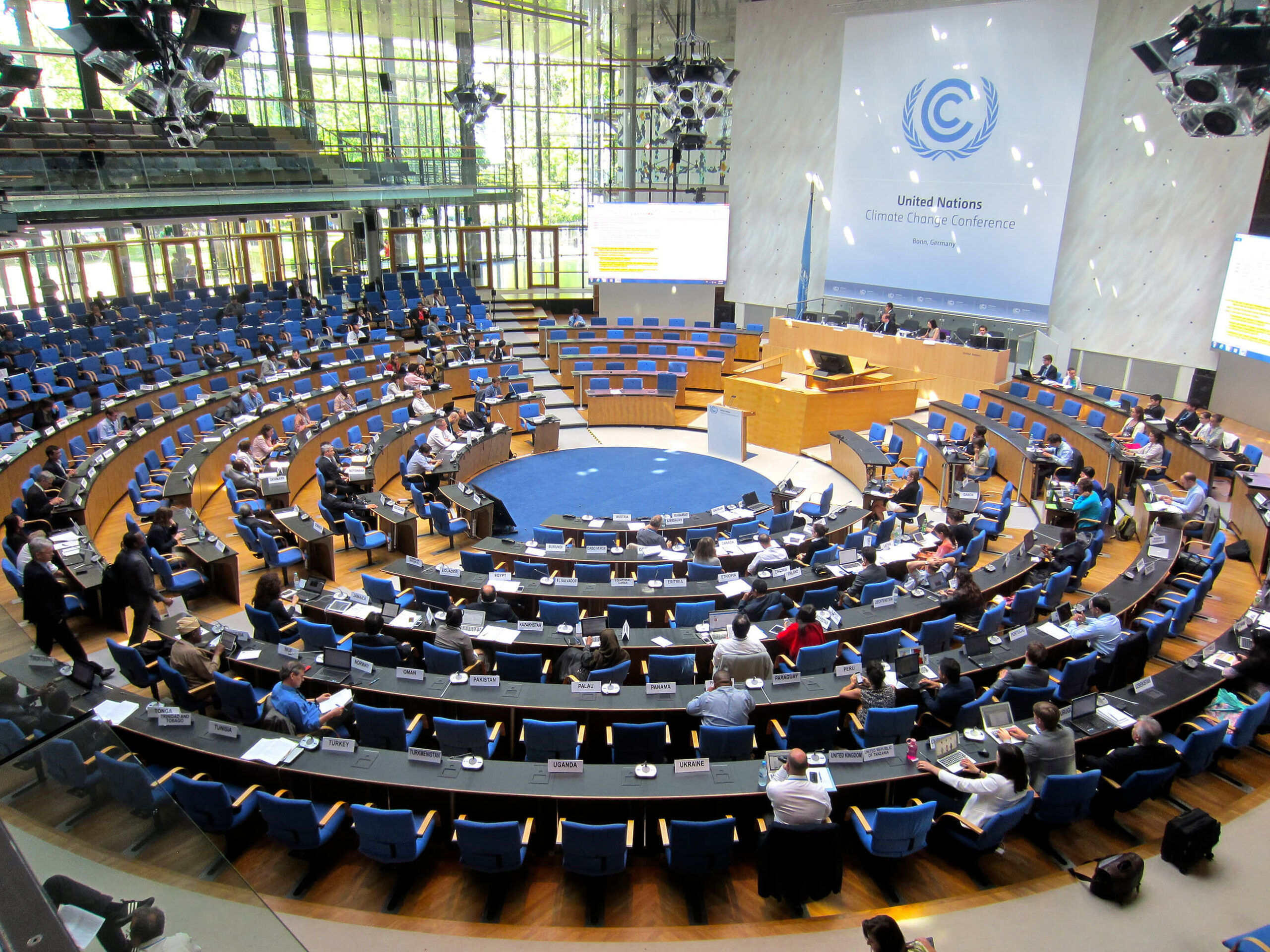
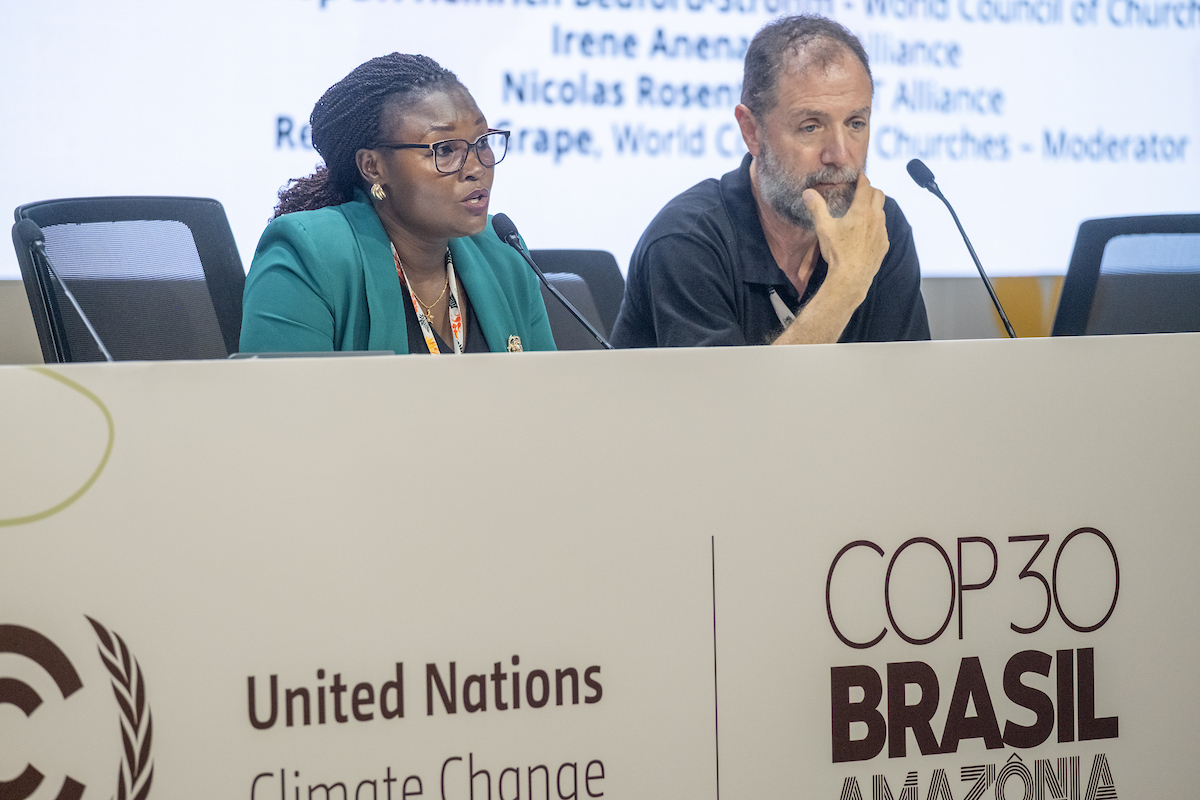
Two weeks ago, in Santiago, Chile, I participated in the Regional Forum on Sustainable Development and the Interreligious Forum held alongside it.
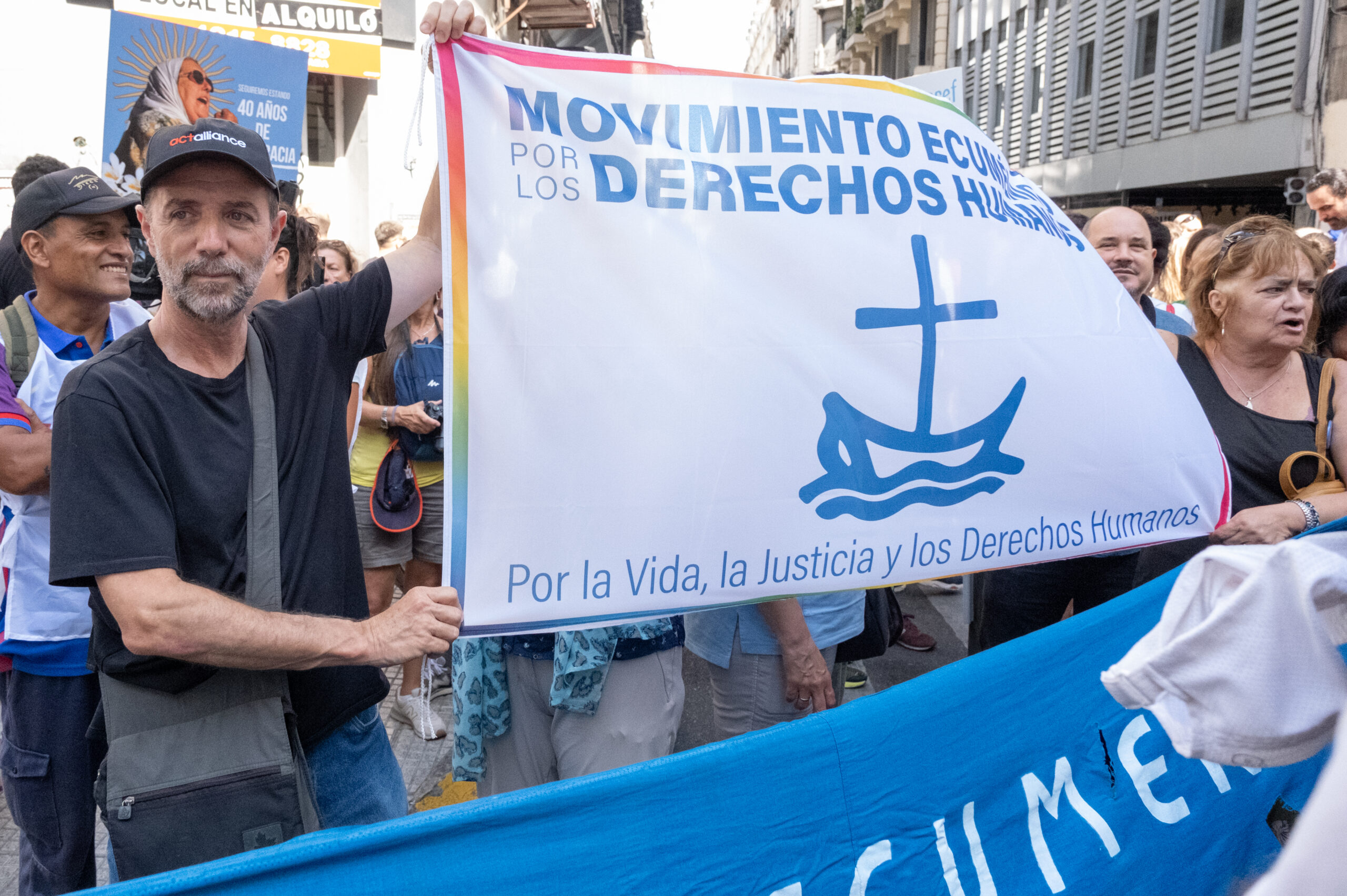
Thanks to Religions for Peace, the Interreligious Forum brought together religious leaders; faith-based organizations such as Caritas, World Vision, CADENA, among many others; representatives of CELAM and CLAI; representatives of the Mapuche people in Chile; the Fetzer Institute; secular human rights voices; representatives of the United Nations; and members of ACT Alliance, including CREAS, EPES Chile, and the ACT Secretariat, which I represented. It was one of those rare spaces where different traditions and worldviews did not erase one another, but enlarged the conversation.
What stayed with me most was the urgency of a deeper debate.
The Regional Forum was, in many ways, a reminder of how powerful the 2030 Agenda still is. I continue to see it as one of the most important global commitments we have: a shared promise that development must be about justice, equality, dignity and the refusal to leave anyone behind. It gives us a language, a direction and a set of goals that, at their best, reflect something profoundly ethical: the conviction that every human being deserves the conditions to live with dignity and to flourish.
But the Forum also exposed a painful contradiction:
We know what needs to be done. We have the goals. we have the indicators. We have the technical knowledge. We have reports, measurements, roadmaps and decades of accumulated evidence.
And still, millions of people remain excluded.
We know what needs to be done. We have the goals. we have the indicators. We have the technical knowledge. We have reports, measurements, roadmaps and decades of accumulated evidence. And still, millions of people remain excluded.
That is why, for me, one of the central lessons of Santiago was this: the crisis of the 2030 Agenda is not only a crisis of implementation. It is a crisis of systems, power and political will. We are failing to transform the structures that continue to produce inequality, abandonment and exclusion.
One example shared during the Forum has stayed with me. We have more buildings, more housing infrastructure and more urban development — and yet more people than ever are unable to secure a decent roof over their heads. That contradiction says so much. The problem is not simply scarcity. The problem is access. The problem is exclusion. The problem is whose suffering has become normalized.
In Latin America and the Caribbean, one of the most unequal regions in the world, this is impossible to ignore. We have built systems that protect capital with extraordinary efficiency, while leaving human rights exposed to negotiation, delay and denial.
And this is where faith actors must speak more clearly.
Faith can inspire solidarity, tenderness, courage, organization, community and hope. It can sustain movements, protect those in need and help imagine another future when the present feels unbearable.
But faith can also be manipulated.
It can be captured by regressive agendas. It can be instrumentalized to justify racism, misogyny, homophobia, exclusion and silence in the face of suffering. Its moral language, symbols, stories and public power can be used to defend the human family flourishing and the protection of the “casa comun”— or to weaken it.
But faith can also be manipulated. It can be captured by regressive agendas. It can be instrumentalized to justify racism, misogyny, homophobia, exclusion and silence in the face of suffering.
This is one of the great tensions of the present moment. The world is being reshaped at extraordinary speed, and faith is not outside that struggle. It is part of it. Faith can help resist dehumanization, or it can help legitimize it.
Silence, in that context, is not neutral.
This is why faith traditions and spiritualities have a vital role to play today: to remind the world of something profoundly simple, and profoundly radical — that human flourishing is not individualistic, competitive or reserved for the privileged few.
It is collective. It is relational. It is shared. It is sacred, because no one truly flourishes alone, and no society can call itself just when flourishing is denied to so many.
If fundamentalism and anti-rights movements capture faith and its spiritual capital, then even our most beautiful language can be emptied of justice.
The 2030 Agenda needs financing, policy coherence, accountability and technical expertise. But it also needs courage from faith actors: the courage to engage in honest self-critique, to question their own silences and complicities, and to enter the deeper conversation about why our systems remain so resistant to leaving no one, – no one- behind.
Without that courage, we will continue to speak of justice while leaving untouched the structures that deny it.
That is the invitation I carry with me after Santiago: to stand with a faith that does not look away. A faith that does not remain silent when rights are threatened. A faith that is willing to confront power, including its own.
Cuando la fe debe ser valiente: Reflexiones desde el Foro Regional sobre Desarrollo Sostenible
Hace dos semanas, en Santiago de Chile, participé en el Foro Regional sobre Desarrollo Sostenible y en el Foro Interreligioso realizado en paralelo.
Gracias a Religiones por la Paz, el Foro Interreligioso reunió a líderes religiosos; organizaciones basadas en la fe como Cáritas, World Vision, CADENA, entre muchas otras; representantes del CELAM y del CLAI; representantes del pueblo mapuche en Chile; el Instituto Fetzer; voces seculares de derechos humanos; representantes de Naciones Unidas; y miembros de ACT Alliance, incluyendo CREAS, EPES Chile y la Secretaría de ACT, a la cual representé. Fue uno de esos espacios poco comunes donde distintas tradiciones y cosmovisiones no se borran entre sí, sino que amplían la conversación.
Lo que más quedó resonando en mí fue la urgencia de un debate más profundo.
El Foro Regional fue, en muchos sentidos, un recordatorio de la fuerza que aún tiene la Agenda 2030. Sigo viéndola como uno de los compromisos globales más importantes que tenemos: una promesa compartida de que el desarrollo debe tratarse de justicia, equidad, dignidad y de la decisión de no dejar a nadie atrás. Nos ofrece un lenguaje, una dirección y un conjunto de objetivos que, en su mejor expresión, reflejan algo profundamente ético: la convicción de que toda persona merece las condiciones necesarias para vivir con dignidad y florecer.
Pero el Foro también expuso una contradicción dolorosa.
Sabemos lo que hay que hacer. Tenemos los objetivos. Tenemos los indicadores. Tenemos el conocimiento técnico. Tenemos informes, mediciones, hojas de ruta y décadas de evidencia acumulada.
Y aun así, millones de personas siguen siendo excluidas.
Por eso, para mí, una de las lecciones centrales de Santiago fue esta: la crisis de la Agenda 2030 no es solo una crisis de implementación. Es una crisis de sistemas, de poder y de voluntad política. Estamos fallando en transformar las estructuras que siguen produciendo desigualdad, abandono y exclusión.
Un ejemplo compartido durante el Foro se quedó conmigo. Tenemos más edificios, más infraestructura habitacional y más desarrollo urbano; y, sin embargo, más personas que nunca no logran acceder a un techo digno. Esa contradicción dice muchísimo. El problema no es simplemente la escasez. El problema es el acceso. El problema es la exclusión. El problema es el sufrimiento de quiénes hemos terminado normalizando.
En América Latina y el Caribe, una de las regiones más desiguales del mundo, esto es imposible de ignorar. Hemos construido sistemas que protegen el capital con una eficiencia extraordinaria, mientras dejan los derechos humanos expuestos a la negociación, la demora y la negación.
Y es aquí donde los actores de fe deben hablar con mayor claridad.
La fe puede inspirar solidaridad, ternura, valentía, organización, comunidad y esperanza. Puede sostener movimientos, proteger a quienes más lo necesitan y ayudarnos a imaginar otro futuro cuando el presente parece insoportable.
Pero la fe también puede ser manipulada.
Puede ser capturada por agendas regresivas. Puede ser instrumentalizada para justificar el racismo, la misoginia, la homofobia, la exclusión y el silencio frente al sufrimiento. Su lenguaje moral, sus símbolos, sus relatos y su poder público pueden ser utilizados para defender el florecimiento de la familia humana y la protección de la casa común, o para debilitarlos.
Esta es una de las grandes tensiones del momento presente. El mundo está siendo reconfigurado a una velocidad extraordinaria, y la fe no está fuera de esa disputa. Es parte de ella. La fe puede ayudar a resistir la deshumanización, o puede contribuir a legitimarla.
El silencio, en ese contexto, no es neutral.
Por eso, las tradiciones de fe y las espiritualidades tienen hoy un papel vital: recordarle al mundo algo profundamente simple y profundamente radical: que el florecimiento humano no es individualista, competitivo ni reservado para unos pocos privilegiados.
Es colectivo. Es relacional. Es compartido. Es sagrado, porque nadie florece realmente en soledad, y ninguna sociedad puede llamarse justa cuando se les niega el florecimiento a tantas personas.
Si los fundamentalismos y los movimientos antiderechos capturan la fe y su capital espiritual, incluso nuestro lenguaje más bello puede quedar vacío de justicia.
La Agenda 2030 necesita financiamiento, coherencia de políticas, rendición de cuentas y conocimiento técnico. Pero también necesita verdadero coraje por parte de los actores de fe: la valentía de hacer una autocrítica honesta, de cuestionar sus propios silencios y complicidades, y de entrar en una conversación más profunda sobre por qué nuestros sistemas siguen siendo tan resistentes a no dejar a nadie, absolutamente nadie, atrás.
Sin esa valentía, seguiremos hablando de justicia mientras dejamos intactas las estructuras que la niegan.
Esa es la invitación que me llevo de Santiago: sostener una fe que no mira hacia el otro lado. Una fe que no guarda silencio cuando los derechos están amenazados. Una fe dispuesta a confrontar el poder, incluido el propio.